Vegetarian Whole Food Recipes
Your kitchen doesn’t need meat to feel satisfying, and it definitely doesn’t need processed shortcuts to taste good. You’re about to get practical, no-nonsense recipes built from real ingredients – beans, grains, vegetables, nuts – the stuff that actually fuels you. No gimmicks, no bland “diet food” myths, just straightforward cooking that happens to be vegetarian.
Key Takeaways:
- Whole ingredients like beans, oats, and root vegetables do more heavy lifting than any fancy meat substitute ever could – the closer a food is to its natural state, the more it fills you up and keeps you full for hours.
- Getting enough protein on a vegetarian plate isn’t some elaborate math problem. Lentils, chickpeas, tofu, and a handful of nuts sprinkled through the day add up faster than most people expect.
- A little prep work on Sunday – cooking a big pot of grains or chopping veggies ahead – saves you from the 6pm scramble and makes plant based meals feel easy instead of like a chore.
What’s the deal with “whole foods” anyway?
Ask ten people what “whole food” means and you’ll get ten different answers, most of them fuzzy. The simplest way to think about it: an ingredient in its original form, or close to it, with nothing stripped away and nothing weird added. An apple is a whole food. Apple juice concentrate with added sugar is not. Brown rice qualifies; a rice cake dusted with “natural flavor” doesn’t come close. It’s not about being perfect or eating like a caveman. It’s about choosing the version of a food that still has its fiber, its nutrients, and its original structure intact, instead of the version that’s been pulled apart and reassembled in a factory.
Your body actually notices the difference between these two versions, even if your taste buds take a minute to catch up. Whole ingredients digest slower, keep you fuller longer, and deliver nutrients in the combinations nature intended, not isolated and fortified back in. Processed junk, on the other hand, is engineered to be eaten fast and craved often. That’s the whole business model. Once you start noticing which foods on your shelf are whole and which are heavily altered, you can’t really unsee it, and that awareness becomes the foundation for everything else you cook.
The pantry staples you actually need
Building a whole food kitchen doesn’t require a pantry overhaul overnight. Start with the basics: dried beans and lentils, whole grains like oats, quinoa, and brown rice, raw nuts and seeds, and a solid rotation of oils that haven’t been chemically stripped, like extra virgin olive oil. Add unsweetened spices and dried herbs, since flavor without additives has to come from somewhere. These items form the backbone of countless meals, and none of them come with an ingredient list longer than the food itself.
Canned tomatoes, tahini, and a good vinegar round things out nicely. You don’t need forty items cluttering your shelves. You need a smaller number of versatile ones you’ll actually reach for during a busy week. Keep frozen vegetables around too; they’re picked and frozen at peak ripeness, so they count as whole foods despite the freezer bag. A well stocked pantry like this means you’re rarely more than twenty minutes from a decent meal, no matter how empty the fridge looks.
Why “natural” labels are often total lies
Marketing teams love the word “natural” precisely because it means almost nothing. No consistent regulation forces a company to prove a product is minimally processed just because the label says so. A cereal box can scream “made with natural ingredients” while still containing refined flour, added sugars, and preservatives that keep it shelf stable for a year. Reading that word should make you more skeptical, not less. It’s a green light printed by someone trying to sell you something, not a nutritional guarantee.
Flipping the package over tells you more than the front ever will. Check the ingredient list, and if it reads like a chem
Seriously, why I think plants are enough for dinner
Skeptics always ask me the same question: where’s the main course if there’s no meat on the plate? A pot of lentils simmered with garlic, cumin, and a splash of tomato can carry a dinner just as well as anything from a butcher case. Chickpeas roasted until crisp and tossed with grains turn into something you’d actually crave on a Tuesday night. The trick isn’t replacing meat with a sad substitute; it’s building a dish where beans and grains are the star, not the understudy. Once you stop thinking of legumes as a side, the whole meal planning problem sort of solves itself.
Grains bring the structure that makes a bean dish feel like dinner instead of a snack. Farro holds its chew even after sitting in a warm stew for twenty minutes. Barley soaks up broth and turns creamy without any dairy involved. Pair either one with black beans or split peas, add a hit of acid from lemon or vinegar, and you’ve got a bowl that fills you up for hours. It’s not about cutting corners on flavor or protein, it’s about giving grains and legumes the starring role they’ve earned.
Making beans taste like a million bucks
Canned beans get a bad reputation, but the fix is embarrassingly simple: rinse them well, then simmer with aromatics before they hit your plate. A few minutes with garlic, bay leaf, and a glug of olive oil turns bland chickpeas into something with actual depth. Toasting cumin or smoked paprika in the pan first, then adding the beans, wakes up flavors that plain canned beans just don’t have on their own. Adding a spoonful of miso or a splash of soy sauce near the end gives you that savory backbone people usually associate with meat.
Texture matters just as much as seasoning. Mashing half your beans while leaving the rest whole creates a stew that feels hearty instead of watery. A finishing drizzle of good olive oil and a squeeze of citrus right before serving cuts through the richness and wakes the whole dish up. Try black beans with lime and cilantro, or white beans with rosemary and lemon zest. Small additions like these turn a humble can into something worth seconds.
The secret to a perfect veggie roast
Roasting vegetables well comes down to heat and patience, not fancy ingredients. Crank your oven to at least 425°F, spread vegetables in a single layer, and give them room to breathe on the pan. Crowd the tray and you’ll get steamed vegetables instead of that caramelized edge you’re after. Root vegetables like carrots, parsnips, and beets need more time than something like zucchini or peppers, so grouping by density saves you from unevenly cooked trays.
Seasoning before roasting matters, but so does seasoning after. Salt draws out moisture, so a light hand before the oven and a heavier hand once vegetables come out keeps them
My take on making breakfast actually filling
Breakfast fails you when it’s just one texture and zero fat. A bowl of plain fruit or a slice of dry toast digests fast, your blood sugar spikes, and by ten thirty you’re rummaging through a drawer for something sugary. What actually keeps you full is a combination: something creamy, something crunchy, and a solid dose of fat from nuts, seeds, or avocado. Your gut slows down when it has to work through different textures and densities, and that slower digestion is what stretches satiety out for hours instead of minutes.
Fat gets a bad reputation at breakfast, but it’s honestly doing you a favor. A tablespoon of nut butter or a handful of walnuts on your morning bowl adds calories that digest slowly and blunt any sugar spike from the fruit sitting next to them. Pair that fat with a fiber source, like chia seeds or ground flax, and you’ve built a meal that resists the crash. The goal isn’t restriction here. It’s balance, layered right into the bowl.
Oats that aren’t mushy and gross
Texture ruins oatmeal for a lot of people, and fair enough, plain mushy oats aren’t exactly exciting. Toasting your oats dry in a pan for a few minutes before cooking them changes everything. It brings out a nutty flavor and firms up the structure so they hold their shape instead of turning to paste. Cooking them in less liquid than the package suggests helps too. Try a ratio closer to one to one and a half instead of the standard two to one, and you’ll notice the difference immediately.
Toppings matter just as much as technique. Skip the single banana slice and think layered: toasted coconut flakes, a spoonful of tahini, some cacao nibs for crunch that doesn’t soften over time. Cold overnight oats solve the texture problem entirely since the oats never turn gluey in the first place. Steel cut oats, cooked properly, give you a chewier bite that plain rolled oats just can’t match.
Why you should try savory breakfasts
Sweet breakfasts train your palate to crave sugar first thing, and that craving doesn’t exactly quiet down as the day goes on. Savory options, think sautéed greens with tofu scramble or a bowl of leftover grains topped with tahini and hot sauce, skip that sugar spike altogether. Your energy stays flatter and steadier, without the nine a.m. slump that follows a syrup soaked stack of pancakes.
Protein and fat show up naturally in savory dishes in ways sweet bowls often lack. A scramble made from chickpea flour, loaded with turmeric and nutritional yeast, delivers a dense, satisfying meal that tastes nothing like a consolation prize. Roasted vegetables from last night’s dinner, reheated with a fried egg or crispy tempeh on top, turn breakfast into something clos
Here’s how to prep so you don’t lose your mind
Three hours on a Sunday buys you five stress-free dinners. That’s the trade you’re making when you commit to batch cooking, and once you see it in practice, you’ll wonder why you spent so long winging it every single night. Whole food cooking has a reputation for being time-consuming, and honestly, if you’re chopping onions fresh every evening after work, that reputation is earned. But the actual cooking part, grains, beans, roasted vegetables, isn’t complicated. It’s the timing that trips people up. You end up with cold rice while the broccoli’s still raw, and dinner turns into a forty-minute negotiation with yourself.
Staples are the whole game here. Cook a big pot of grains, a batch of beans or lentils, and two trays of roasted vegetables, and you’ve basically built the skeleton for a week of meals. Nothing fancy, no seasoning decisions required at this stage. You’re just getting the raw materials into containers so future you isn’t starting from zero at six in the evening.
My Sunday afternoon “big-batch” routine
Grains go on first because they take the longest and need the least attention. Quinoa or farro can simmer away for thirty minutes while you’re doing everything else, so get that pot going before you touch another ingredient. Beans are next, unless you’re using canned, in which case just rinse and set them aside. While all that’s happening, chop two or three vegetables, whatever’s cheap that week, and toss them onto sheet pans with a bit of oil.
Two trays go into the oven at the same time, one roasting at a higher heat for something like cauliflower or sweet potato, the other lower for softer vegetables like zucchini. You’re rotating pans, not standing over anything. By the ninety-minute mark you’ve got grains, legumes, and roasted vegetables all done and cooling on the counter, ready to be portioned out before they even hit the fridge.
Containers that won’t leak in your bag
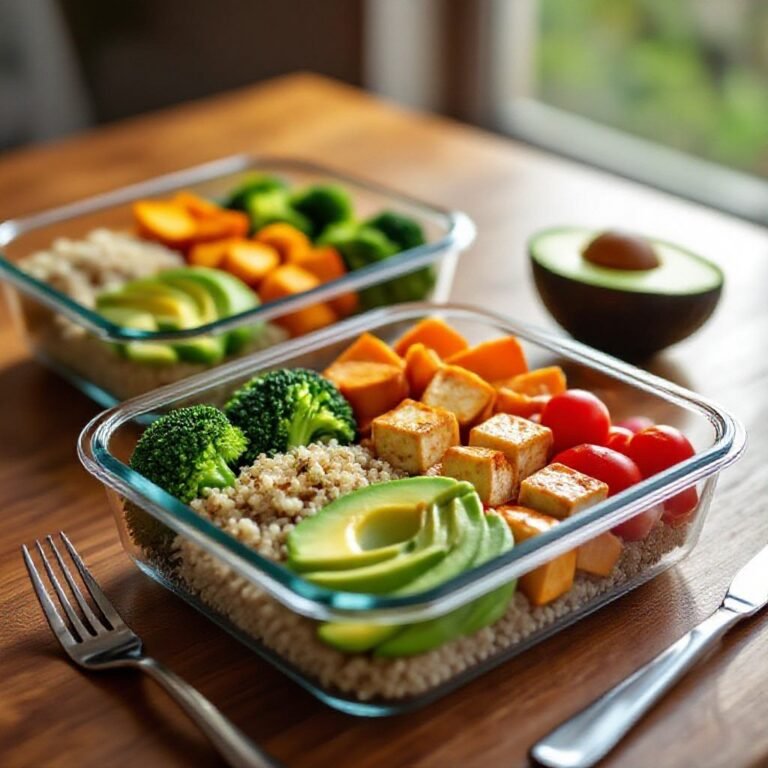
Glass containers with locking, silicone-sealed lids are worth the extra few dollars over the flimsy plastic ones. Cheap containers warp in the dishwasher and the lids stop sealing properly within a month, which you’ll discover the hard way when a beans mishap ends up all over your work bag. Look for ones rated for both freezer and microwave use, since you’ll want the flexibility to freeze half your batch and reheat the rest without transferring dishes.
Divided containers earn their keep for lunches you’re carrying somewhere. Keeping grains separate from a dressed salad or roasted vegetables stops everything from turning soggy by noon. Stackable square shapes fit better in a bag than round ones too, so you’re not wasting space or crushing your lunch under a laptop. A decent set of six to eight containers is usually enough to cover a full week’s rotation of staples.
Honestly, flavor is everything in a veggie kitchen
People give up on vegetables too fast because they steamed a broccoli floret once and thought “well, that’s boring.” But bland veggies are a cooking problem, not a produce problem. You’ve got two tools that do more work than anything else in your kitchen: herbs and acid. Skip them and even a perfectly roasted sweet potato tastes like cardboard with extra steps. Use them right and a pile of chickpeas turns into something you actually crave. That’s the whole secret, really. Once you get comfortable reaching for a handful of fresh basil or a splash of vinegar without measuring anything, you stop thinking of vegetarian cooking as a diet and start thinking of it as just good food.
You don’t need a spice rack the size of a pharmacy to pull this off. A few good habits, applied consistently, change everything about how your meals taste. Start layering flavor from the first step of cooking instead of dumping salt on at the end and hoping for the best. Your onions, garlic, and aromatics deserve a real head start in the pan before anything else goes in.
Spices that do the heavy lifting
Cumin, smoked paprika, and coriander are the three you’ll reach for constantly once you get the hang of them. Toast whole cumin seeds in a dry pan for thirty seconds before grinding them, and you’ll taste the difference immediately compared to the stuff that’s been sitting in a jar for two years. Smoked paprika gives roasted cauliflower or black beans a savory depth that almost tricks your brain into thinking there’s bacon somewhere nearby. There isn’t. That’s the point.
Building layers matters more than owning every spice on the shelf. Try blooming your spices in oil for a minute before adding vegetables, since that step wakes up the oils and spreads the flavor evenly through the whole dish instead of leaving little pockets of raw spice taste. Turmeric with black pepper, cinnamon in a savory lentil stew, chili flakes finished with a drizzle of good olive oil, these combinations turn simple grain bowls into something with actual personality.
Don’t forget the squeeze of lime
Acid is the ingredient home cooks skip most often, and it’s probably costing you more flavor than any missing spice ever could. A squeeze of lime or lemon at the very end of cooking brightens everything, cutting through richness and making all the other flavors snap into focus. Roasted vegetables, bean soups, grain salads, they all wake up with a hit of citrus right before serving. Vinegar works the same magic; a splash of rice vinegar or apple cider vinegar can rescue a dish that tastes flat and you can’t figure out why.
Taste as you go and add acid last, after salt and heat have already done their job. Your palate will tell you when something needs it, usually that moment when a dish tastes “fine” but not exciting. Pickled on
What’s the real deal with getting enough protein?
Somebody at every dinner party asks the same question the moment they hear you’re eating plant-based: “But where do you get your protein?” It’s exhausting, honestly, because the science has been settled for decades. Your body doesn’t need a single perfect protein source at every meal. It pools amino acids over the course of a day, sometimes even longer, and builds what it needs from that reserve. The old myth about combining rice and beans in the same sitting or you’d somehow fall short? That idea got debunked by researchers ages ago, yet it still floats around like it’s gospel.
Muscle building doesn’t require meat, and you don’t need to obsess over grams at every meal either. Athletes, bodybuilders, and everyday folks have built serious strength on lentils, tempeh, and seitan for years. What actually matters is total protein intake across your week and whether you’re eating a varied enough diet to cover all nine essential amino acids. Eat a mix of legumes, grains, nuts, and vegetables regularly, and you’ll hit your targets without ever thinking about “complete proteins” again.
The plant-based powerhouses I love
Lentils sit at the top of my list, and for good reason. A single cup cooked packs around 18 grams of protein along with fiber that keeps you full for hours. Chickpeas come in close behind, and they’re endlessly versatile, whether you’re roasting them for a crunchy snack or blending them into hummus. Quinoa deserves a mention too since it’s technically a complete protein on its own, meaning it carries all nine essential amino acids without needing a partner food.
Edamame makes a fantastic snack straight out of the pod, delivering roughly 17 grams of protein per cup. Hemp seeds and pumpkin seeds sneak into smoothies or salads without anyone noticing, yet they’re quietly contributing several grams each. Seitan, made from wheat gluten, might be the biggest surprise of the bunch, since it clocks in with more protein per serving than chicken. Stock your pantry with these staples, and protein worries disappear fast.
Tofu isn’t as scary as you think
Tofu gets a bad reputation it doesn’t deserve. People picture bland, spongy cubes floating in some sad stir fry, but that’s a preparation problem, not a tofu problem. Pressing out excess moisture before cooking makes an enormous difference, letting the tofu soak up marinades and crisp up beautifully in a hot pan. Firm and extra firm varieties hold their shape for stir fries and grilling, while silken tofu blends into sauces, dressings, and even desserts without anyone detecting it’s there.
Nutritionally, tofu holds its own against animal proteins, offering around 10 grams per half cup along with calcium and iron. Try cubing it, tossing it in cornstarch, and air frying until golden. That single trick conver

Conclusion
You don’t need a chef’s coat or a pantry the size of a grocery store to eat this way. What you need is a handful of solid staples, a couple of go-to seasoning combos, and the willingness to try a lentil stew or a chickpea scramble even if it feels unfamiliar at first. Your plate can be built almost entirely from beans, grains, vegetables, nuts, and fruit, and still leave you full, satisfied, and covered on protein. That’s not a compromise. That’s just good cooking.
Give yourself permission to experiment without pressure. Some meals will flop, some will surprise you, and a few will become the recipes you make on repeat for years. Batch-cook when you can, season boldly, and stop treating protein like some mysterious puzzle only meat can solve. Your kitchen, your rules, your pace. Start with one or two changes this week, build from there, and you’ll find whole food vegetarian cooking becomes less of a project and more of a habit you actually enjoy.