Healthy Diet Snack Ideas
A snack can bridge the gap between meals without leaving you sluggish or hungry again ten minutes later. Pairing foods like apple slices with peanut butter or plain yogurt with berries gives you a mix of fiber and protein in a simple, satisfying bite. The best choice is one that fits your appetite, schedule, and everyday routine.
Key Takeaways:
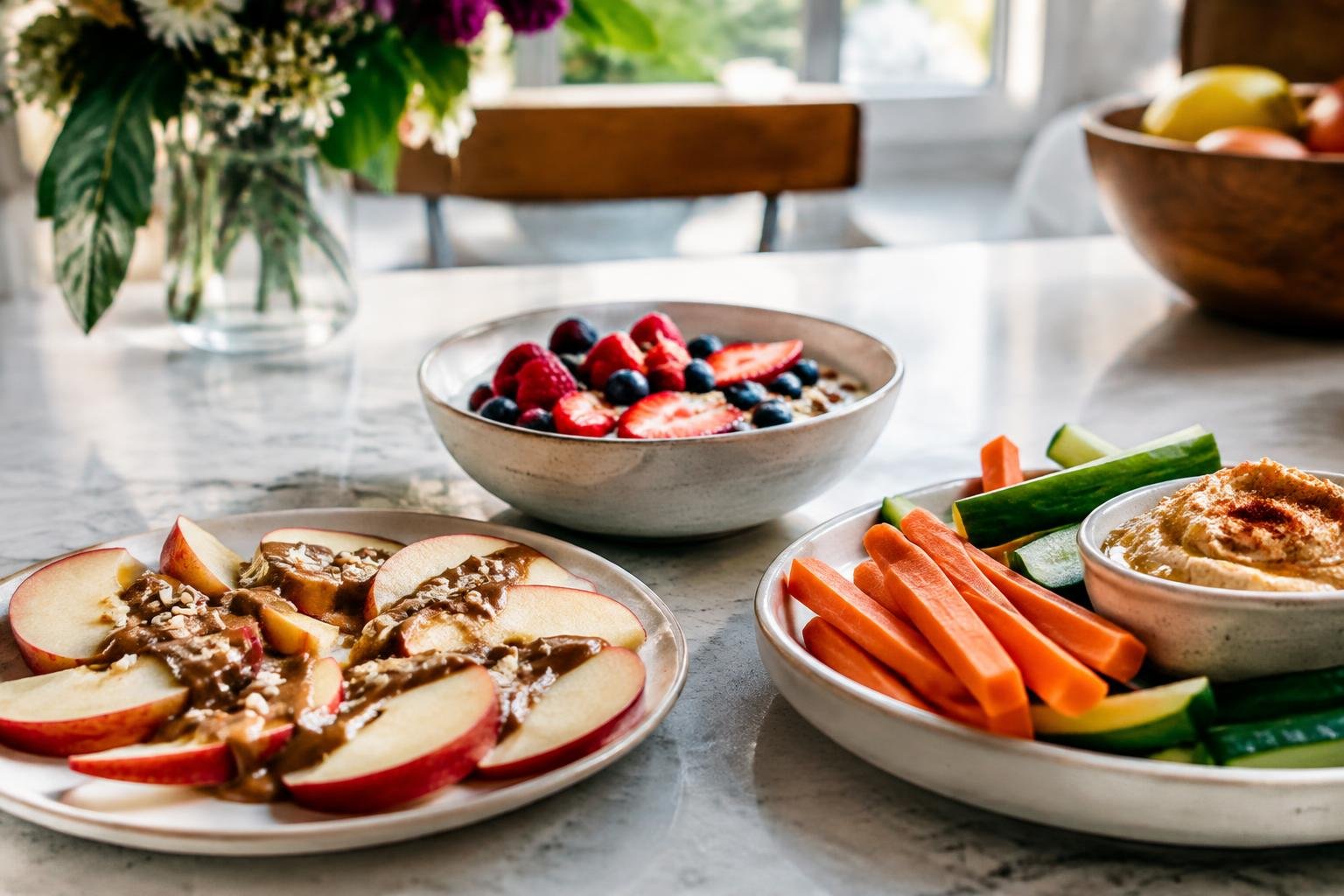
- Pair protein or healthy fats with fiber for a snack that feels more satisfying, like apple slices with peanut butter or hummus with carrot sticks.
- Keep easy options within reach: plain yogurt with berries, a handful of nuts, or whole grain crackers with cheese can work on busy days.
- Choose snacks you enjoy and adjust portions to your appetite; a banana and a spoonful of nut butter can be just right between meals.
What Makes a Snack Healthy, Anyway?
A healthy snack isn’t defined by a special label or a perfect ingredient list. It’s a small eating occasion that gives you something useful, such as energy between meals, without crowding out the foods you need across the day. Your appetite, schedule, and what you ate earlier all matter. A snack before a long afternoon meeting may need more staying power than a bite after dinner.
Balance is a practical guide, not a strict formula. Pairing different nutrients can make a snack more satisfying than choosing something that’s mostly quick energy on its own. For instance, adding a source of protein or fat to a carbohydrate can slow digestion and help you feel comfortably full. You don’t need every snack to check every nutrition box; aim for a choice that fits your hunger and routine.
Protein, Fiber, and Other Filling Basics
Protein and fiber are useful because they tend to make a snack more filling. Protein comes from foods such as yogurt, eggs, beans, nuts, and cheese; fiber is found in fruit, vegetables, oats, and whole grains. A combination can work well: an apple with peanut butter offers fruit fiber alongside protein and fat, while plain yogurt with oats brings protein and fiber together.
Fat also adds staying power and flavor, so it needn’t be something you avoid. A small handful of nuts, for example, pairs unsaturated fats with some protein and fiber. Your goal isn’t to maximize one nutrient, but to choose a mix that suits your hunger. If a snack leaves you reaching for more food right away, adding a protein rich or fiber rich food may make it more satisfying.
A Quick Look at Portion Sizes
Portion size depends on how hungry you are and how long it’ll be until your next meal. A small snack might be enough between meals, while a longer gap or a busy stretch could call for something more substantial. Try serving food into a bowl or onto a plate instead of eating straight from a large package; it gives you a clearer sense of what you’ve had.
Packaged portions can offer a handy reference, but they’re not a rule for your appetite. A single serving of crackers may not feel like enough on its own, while a few pieces with cheese could satisfy you longer. Check in with your hunger as you eat, and adjust the amount without treating the label as a limit. The table gives a simple way to think about balance and portions.
| Snack component | Everyday example | What it adds |
|---|---|---|
| Protein | Plain yogurt | Helps make a snack more filling |
| Fiber | Whole grain crackers | Adds fiber and a more substantial bite |
| Fruit or vegetables | Apple or sliced carrots | Provides fiber and variety |
| Unsaturated fat | Nuts or peanut butter | Adds flavor and staying power |
My Go-To Healthy Snack Ideas for Busy Days
On a packed day, a good snack needs to fit the gap between one thing and the next. Think about what you can eat during a short break, carry on a commute, or keep at your desk without a fork and a plate. A mix of protein, fiber, and healthy fats can help you feel satisfied; a crisp apple with nut butter or plain yogurt with berries makes a practical starting point.
Keep the choice simple enough that you’ll actually reach for it. A small snack can tide you over between meetings, while a more substantial option may suit the stretch between lunch and a late dinner. For days when you’re out and about, pack something that travels well and won’t leave you hunting for a fridge.
No-Cook Snacks You Can Grab and Go
For the quickest option, pair a piece of fruit with a satisfying extra. A banana and a handful of almonds, or pear slices with a cheese stick, are easy to eat on a train or between appointments. If you prefer something savory, try whole grain crackers with a single-serve hummus cup; keep the crackers sealed until you’re ready so they stay crisp.
Hard-boiled eggs, roasted chickpeas, and unsweetened trail mix are handy choices when your schedule leaves little room for a proper break. Check trail mix labels for added sugar, and choose a portion that feels right rather than eating straight from a large bag. For an especially busy morning, toss a clementine and a small pack of nuts into your bag before you head out.
Simple Snacks to Make at Home
At home, you can put together a filling snack in minutes. Spoon cottage cheese into a bowl and top it with sliced tomatoes and black pepper, or mash avocado onto whole grain toast. Both options work well when you’ve got a few minutes between calls and want something more substantial than a handful of crackers.
For a quick sweet bite, stir oats, nut butter, and a little honey together, then shape the mixture into small bites. You can also blend a smoothie with milk, banana, and a spoonful of peanut butter; it’s easy to sip while you answer emails. Keep portions modest if dinner’s close, and add fruit or a protein-rich ingredient when you need the snack to hold you longer.
- Choose a leakproof container for yogurt.
- Pack a napkin for juicy fruit.
- Keep a spoon in your work bag.
Sweet or Savory? Here’s What to Snack On
Your craving can point you toward a snack that feels satisfying, not just convenient. A piece of fruit may hit the spot when you want something sweet, while crisp vegetables or popcorn can suit a salty, crunchy mood. Pairing a snack with something filling, such as yogurt or hummus, can make it more substantial.
Use the ideas below as starting points, then adjust portions to fit your appetite. If you’re between meals, a small combination of flavors and textures can be more satisfying than reaching for one snack after another.
Naturally Sweet Snacks with Fruit
Ripe fruit brings plenty of sweetness on its own, and a simple pairing can make it feel like a treat. Try apple slices with plain yogurt, or top a bowl of berries with a spoonful of cottage cheese. For a cool snack, freeze grapes or blend a banana with yogurt and eat it soft serve style. Each option gives you a different texture without relying on candy or syrup.
When you want something warm, slice a pear or apple and heat it with cinnamon until tender. You can add a spoonful of oats for a little chew, or enjoy it as is. Keep washed grapes or mandarins within reach, too; they’re easy to grab when you want a quick sweet bite.
Crunchy, Savory Snacks That Hit the Spot
For a salty crunch, air popped popcorn is an easy choice. Season it with paprika, black pepper, or a light dusting of grated cheese, then pair it with a boiled egg if you want a more filling snack. Crisp cucumber rounds and bell pepper strips work well with hummus, while toasted whole grain bread topped with avocado offers a crunchier, savory bite.
Roasted chickpeas bring a firmer crunch; toss them with olive oil and cumin, then bake until crisp. If you’d rather skip cooking, try whole grain crackers with cheese or a handful of nuts alongside cherry tomatoes. Mix and match based on what sounds good, and let the crunch do its job.
| Craving | Snack idea | Texture or flavor |
|---|---|---|
| Sweet and cool | Frozen grapes | Juicy, icy sweetness |
| Sweet and warm | Heated apple with cinnamon | Soft, fragrant fruit |
| Salty and crisp | Seasoned popcorn | Light, savory crunch |
| Crunchy and filling | Bell pepper with hummus | Crisp vegetables, creamy dip |
How I Prep Snacks Without Making It a Whole Thing
You don’t need a Sunday afternoon devoted to meal prep to have snacks ready. A few small choices during ordinary kitchen tasks can save you from rummaging for something at the last minute. When you wash fruit after shopping, portion some into containers; while dinner cooks, set aside a couple of snack portions for tomorrow.
Keep the routine flexible, too. Prep only what you’ll realistically eat in the next few days, and leave some ingredients whole so they stay fresh longer. A short list on the fridge can help you spot what’s ready and what needs using up, without turning snack planning into another chore.
Easy Batch-Prep Ideas
Choose one or two simple jobs rather than prepping a week’s worth of everything. Wash grapes and berries, cut carrots and cucumbers, or portion crackers into small containers while you’re already putting groceries away. If you’re boiling eggs for a meal, cook a few extra and chill them for later. Small batches take only a little time, and you can change the lineup next week.
Build a few grab-and-go combinations from what you have on hand. Put sliced vegetables in one container and a dip in a separate, smaller one; pair fruit with a handful of nuts in a lidded cup. A sticky note can flag what’s ready to eat, especially when several containers look alike. Keep each portion easy to pick up and carry.
- Use clear containers so you can see what’s inside.
- Label the prep date on foods that need using soon.
- Keep a clean cutting board nearby for quick prep.
- Set aside a shelf for ready-to-eat snacks.
Keeping Snacks Fresh and Ready
Good storage starts with letting washed produce dry well; trapped water can make tender berries spoil faster. Line a container with a clean paper towel, add the fruit, and keep the lid slightly vented if the container allows it. Store cut vegetables in a sealed container in the fridge, with a damp paper towel to keep them crisp.
Pack wet and dry ingredients separately until you’re ready to eat. Crackers go soft beside cut fruit, and dressing can wilt greens before lunchtime. Keep dips chilled, and use an insulated lunch bag with a cold pack if a snack will be out of the fridge for a while. Put older prepped items near the front so they’re easy to reach first.
Need Snacks for Special Diets?
Dietary needs can change which ingredients work for you, but they don’t have to leave you with bland or complicated choices. A few easy swaps can turn familiar snack combinations into options that suit your needs, whether you avoid animal products, gluten, or nuts.
Labels deserve a quick check, especially on packaged dips, crackers, and flavored yogurts, where ingredients can vary by brand. If you’re preparing food for someone else, ask about allergies and cross contact before serving; a snack that fits one person’s diet may not be safe for another.
Vegetarian, Vegan, and Gluten-Free Options
For a vegetarian snack, pair cottage cheese with sliced pear, or add a hard boiled egg to a few gluten free crackers. Vegan choices can be just as filling: spread hummus on cucumber rounds, or serve edamame with a little salt and lemon. If you eat both vegan and gluten free, check that your hummus and crackers are labeled for your needs, then add naturally gluten free produce such as carrots or grapes.
Plant based yogurt with berries works for many vegan diets, but check the label for milk ingredients and choose a gluten free granola or seeds for crunch. Dietary rules can differ, too. Some people with celiac disease need stricter precautions against cross contact than someone choosing to avoid gluten for another reason, so match your ingredient checks to your own needs.
Nut-Free Snacks and Easy Swaps
If nuts aren’t safe for you, sunflower seed butter can replace peanut or almond butter on apple slices, provided the product is suitable for your allergy needs. For a savory option, try roasted chickpeas or pair cheese with plain popcorn. Seeds aren’t automatically safe for everyone with a nut allergy, so check with your healthcare professional and read the package rather than assuming a swap works.
Packaged snacks can carry allergy warnings or be made on shared equipment, even when nuts aren’t listed as an ingredient. Look for clear allergen information, and choose simple foods such as a banana, a hard boiled egg, or a small container of yogurt when labels are uncertain. If you’re bringing snacks to school or work, keep the original packaging nearby so ingredients and warnings are easy to verify.
| Dietary need | Snack idea | What to check |
|---|---|---|
| Vegetarian | Cottage cheese with pear | Dairy ingredients, if relevant |
| Vegan | Hummus with cucumber | Packaged dip ingredients |
| Gluten-free | Fruit with labeled gluten free crackers | Package label and cross contact |
| Nut-free | Apple slices with sunflower seed butter | Allergen warnings and suitability |


Final Words
Your best snack is one that fits your hunger, your schedule, and the foods you enjoy. Pairing protein or healthy fats with fiber can make a snack more satisfying: try apple slices with peanut butter, plain yogurt with berries, or hummus with carrots and whole grain crackers. If you’re heading out, pack something that won’t need much fuss, such as a banana or a small container of roasted chickpeas. And if you want a cookie now and then, you can enjoy it without treating one choice as a setback.
A little planning can make healthier options easier to reach. Keep washed fruit at eye level in the fridge, portion nuts into a small container, or set aside leftovers for an afternoon bite. Pay attention to what actually keeps you satisfied, since a snack that works before a walk may not suit a long stretch at your desk. Your routine doesn’t need to be perfect; a few practical choices, repeated when they fit, can make everyday eating feel more balanced.