Healthy Fresh Veggie Snacks
A crisp carrot stick or cool cucumber slice can make a satisfying snack without much fuss. Fresh vegetables bring crunch, flavor, and useful nutrients to your day, and you can eat them plain or pair them with hummus or yogurt dip. Keep washed, cut vegetables in the fridge, and you’re more likely to reach for them when hunger strikes.
Key Takeaways:
- Fresh veggies make easy, crunchy snacks: try cucumber rounds, sweet pepper strips, or snap peas straight from the fridge.
- Pair vegetables with something satisfying, such as carrot sticks with hummus or cherry tomatoes with a cheese stick.
- Wash and cut produce ahead, then store it in a sealed container so it’s ready to grab when hunger strikes.
What Makes a Veggie Snack Actually Healthy?
A snack earns its healthy reputation through what it gives you, not just what it leaves out. You want enough nourishment to feel satisfied, along with a portion that fits your appetite. A bowl of crisp vegetables can be a useful start, but its value depends on the whole snack: a generous amount of salt or a sugary coating can change the picture quickly.
Think about how the snack works in your day. If you’re bridging a long gap between meals, a little more staying power may matter; if you just want something crunchy, a lighter portion might do. The goal isn’t to make every bite perfect. It’s to choose food that tastes good and gives your body something useful.
Fiber, vitamins, and other good stuff
Vegetables bring fiber, vitamins, minerals, and water to a snack, though the mix varies by type. Fiber supports digestion and can help a snack feel more filling, while water-rich produce adds volume without making the portion feel heavy. Different colors often signal different plant compounds, so a mix can offer a broader range of nutrients than relying on one vegetable every time.
How you prepare produce can affect what you get. Leaving edible skins on, as with a thoroughly washed cucumber, keeps more of the fiber than peeling it. A quick rinse is usually enough for firm produce, while leafy items need a careful wash. Fresh vegetables aren’t a substitute for every other food group, but they’re a practical way to add useful nutrients between meals.
Pairing veggies with protein or healthy fats
Vegetables are nutritious, but on their own they may not keep you satisfied for long. Add protein or unsaturated fat when you need a snack with more staying power. Protein can slow digestion and support muscle maintenance; fats help your body absorb vitamins such as A, E, and K. A spoonful of hummus, a few nuts, or plain yogurt alongside vegetables can make the snack more substantial.
Portion still matters, especially with foods that pack a lot of energy into a small amount. A measured scoop of nut butter or a small handful of almonds can complement vegetables without taking over the snack. For a simple balance, combine produce with one protein or fat source, then adjust the amount to your hunger. You don’t need a complicated recipe or a perfectly calculated plate.
What to watch for in dips and packaged snacks
Dips can add flavor and useful nutrients, but their labels deserve a glance. Check serving size, sodium, added sugars, and saturated fat; a dip that seems modest can contribute more than you expect if you keep going back for another scoop. Plain yogurt based dips and hummus can offer protein, while creamy options may vary widely in salt and fat. Compare products rather than judging by the front label alone.
Packaged vegetable snacks aren’t automatically equivalent to fresh produce. Some are fried, heavily salted, or made with vegetable powders rather than substantial pieces of vegetables. Look at the ingredient list and nutrition facts, and check whether the first ingredients match what you’re hoping to eat. Keep these quick checks in mind:
- Look for vegetables near the top of the ingredient list.
- Compare sodium across similar dips.
- Check whether a snack is baked, fried, or dried.
- Notice added sugar in flavored dips.
My Go-To Fresh Veggies for Snacking
Your best snack vegetables are the ones you actually enjoy eating, whether that means a crisp bite between errands or something fresh beside your afternoon sandwich. A few familiar choices can cover different cravings: cool and juicy, sweet and crunchy, or bright with a little earthy flavor. You don’t need a complicated recipe to make them appealing; the natural taste and texture do plenty of the work.
Think about what sounds good in the moment. Carrots bring a gentle sweetness, cucumbers feel refreshing, and peppers offer a juicy crunch with a livelier flavor. Cherry tomatoes and snap peas are easy to enjoy on their own, while mixing several kinds gives you more variety in every bite. Here are some dependable picks to keep in mind.
Crunchy favorites like carrots, cucumbers, and peppers
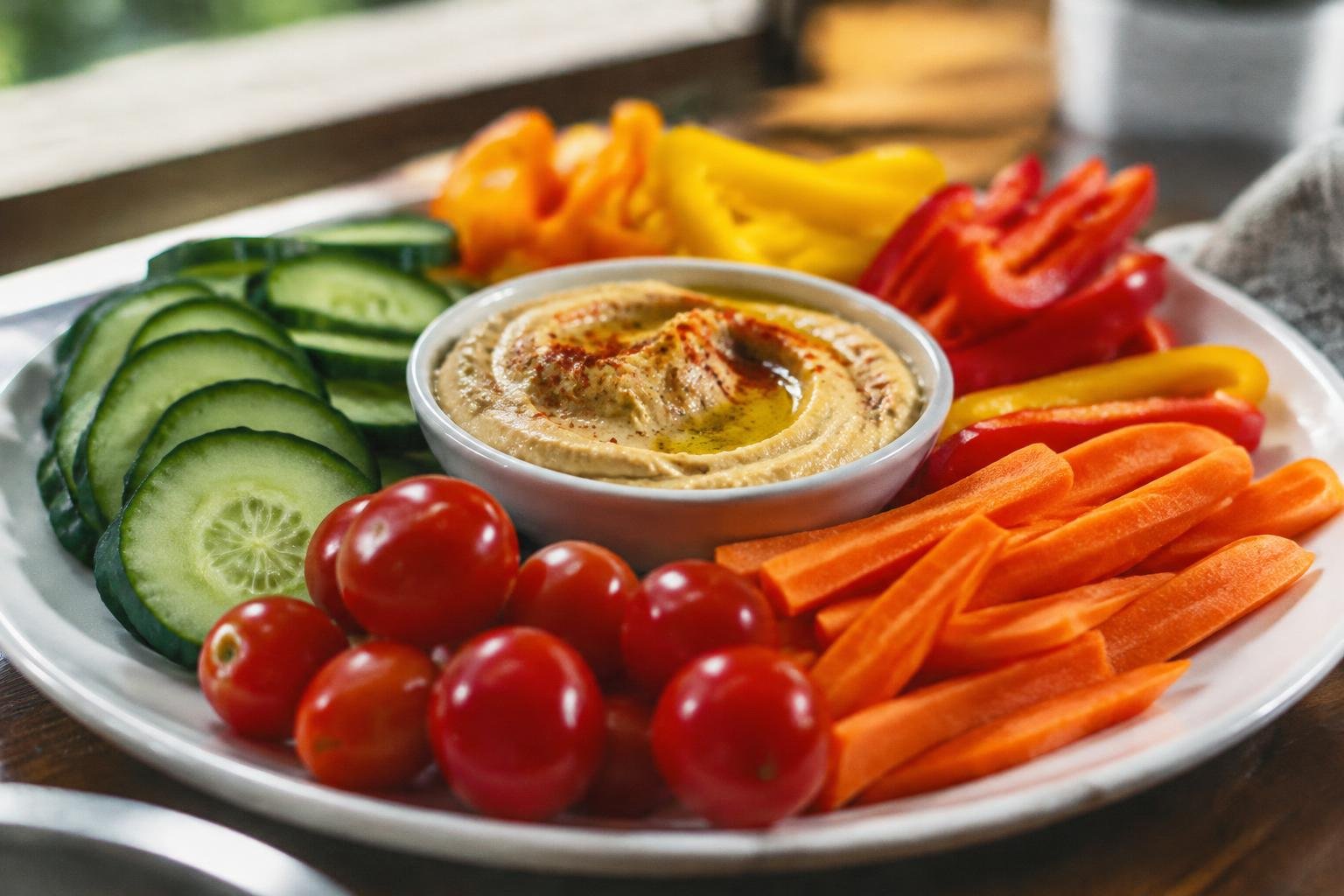
Carrots are a classic for good reason: their firm crunch and mild sweetness make them satisfying without needing a dip. Cucumber slices offer the opposite feel, cool and watery with a clean flavor that works especially well when you want something light. Bell peppers bring more snap and a noticeable sweetness, particularly the red and yellow varieties. You can enjoy each one by itself, or take a bite of pepper after cucumber for a fresher, brighter contrast.
Shape can change the experience, too. A carrot stick gives you a hearty crunch, while thin cucumber rounds are easy to nibble between tasks. Pepper strips are broad enough to hold a little hummus, but they’re tasty plain as well. If you like a savory edge, try a pinch of salt on cucumber or pepper; just a little can bring out their natural flavor without masking it.
Quick picks like cherry tomatoes and snap peas
Cherry tomatoes are a juicy, sweet-tart snack that feels more substantial than their small size suggests. Bite into one and you get a burst of acidity along with the soft flesh, a nice change from the crisp texture of carrots or peppers. They’re especially good when you’re craving something fresh but don’t want a dry, crunchy bite. A mix of red and yellow tomatoes can also make a simple snack feel more inviting.
Snap peas offer a different kind of quick bite: crisp pods with a mild, grassy sweetness. You can eat the whole pod, so there’s no need to separate the peas from their shells. Their tender crunch pairs nicely with a creamy dip, though they’re pleasant on their own, too. Try alternating a snap pea with a cherry tomato; the contrast between crisp and juicy keeps each mouthful interesting.
Mixing colors, flavors, and textures
A colorful selection often makes snacking feel more appealing before you’ve taken a bite. Pair orange carrots with green cucumber and red pepper for a mix that looks lively and offers different levels of sweetness. You’ll also get a useful range of textures: firm, crisp, and juicy. There’s no need to make a perfect platter. Even two vegetables can bring enough contrast to keep a snack from feeling repetitive.
For a simple combination, try cucumber rounds with cherry tomatoes and a few snap peas. The cucumber is cool, the tomato is juicy, and the peas add a crisp finish. If you prefer stronger flavors, add pepper strips or choose a mix of green and red vegetables. A little variety gives you more than color; it lets you choose a bite that suits your mood, from refreshing cucumber to sweet, crunchy carrot.
| Vegetable | Flavor | Texture |
|---|---|---|
| Carrots | Mildly sweet | Firm and crunchy |
| Cucumbers | Cool and clean | Crisp and juicy |
| Bell peppers | Sweet and bright | Juicy with a snap |
| Cherry tomatoes | Sweet-tart | Soft and juicy |
| Snap peas | Mildly sweet | Crisp and tender |
How to Prep Veggies So They’re Ready When You Are
A little prep after you unpack the groceries can make fresh vegetables far easier to reach for on a busy day. Set out a clean board, a sharp knife, and a few containers before you start; keeping the tools together saves time and means you’re less likely to leave produce half-prepped on the counter.
Choose vegetables that suit your schedule. If you’ll eat them within a day or two, you can wash and cut more of them at once. For produce you plan to keep longer, prep only what holds up well and leave delicate vegetables whole until you need them. A few minutes of planning can spare you from tossing a limp cucumber later.
Wash and cut ahead without losing crunch
Rinse vegetables under cool running water, rubbing firm skins like carrots and cucumbers with clean hands. A clean produce brush can loosen dirt from ridged or root vegetables. Skip soap and detergent; they aren’t meant for washing food. Then dry everything thoroughly with a clean towel or salad spinner. Extra water clinging to cut surfaces can speed up wilting, especially in leafy vegetables.
Cut sturdy produce into pieces you can grab easily, but keep delicate items such as tomatoes whole until serving. A sharp knife makes clean cuts instead of crushing the flesh, which matters for crisp vegetables like celery. For a tidy prep session, work from the cleanest produce to the dirtiest, and wash your board and knife with hot, soapy water after handling unwashed roots.
Store cut veggies to keep them fresh
Give each vegetable a clean, dry container, or separate different types with a piece of paper towel to catch excess moisture. Snap on a tight lid and place the container in the refrigerator, rather than leaving cut produce exposed to cold, dry air. If you notice condensation building up, replace the damp towel; soggy bottoms can soften cucumber slices and carrot sticks.
Some vegetables do better with a little moisture, while others stay crisper when kept dry, so avoid packing everything into one container. Keep cut produce away from raw meat and seafood, and use clean hands or tongs when taking out a portion. Check the containers each day; discard pieces that feel slimy, smell off, or show mold, and wash the container before refilling it.
Pack them for work, school, or the road
For a work bag or school lunch, use a leakproof container that won’t pop open if it tips. Pack vegetables only after they’re dry, and keep wetter pieces, such as sliced tomatoes, in a separate compartment so they don’t dampen crisp ones. A small insulated lunch bag with a frozen cold pack helps keep cut produce chilled during the trip.
Road snacks need a little extra thought because a parked car can warm up quickly. Keep the bag in the cabin, out of direct sun, and put it back in a cooler whenever you stop. If you’re packing for several people, individual containers make portions easy to grab and reduce repeated handling. Add a clean fork or napkin before leaving home.
- Label containers with the prep date.
- Use a separate board for produce if yours has deep grooves.
- Pack a small ice pack beside the container, not on top of it.
Easy Snack Combos That Seriously Hit the Spot
A good veggie pairing brings more than crunch: a dip adds flavor, while a second ingredient can make the snack feel more satisfying. Think crisp cucumber with tangy yogurt, or sweet bell pepper alongside creamy avocado. You can mix and match based on what’s already in your fridge, so snack time doesn’t turn into a recipe project.
Texture matters, too. Pair juicy tomatoes with something crisp, or balance crunchy carrots with a smooth spread. A little contrast keeps each bite interesting, and familiar flavors make it easier to reach for fresh vegetables on a busy afternoon. Keep a few dependable combinations in mind, then swap ingredients as needed.
Veggies with hummus, yogurt dip, or guacamole
Carrot sticks and hummus are a reliable match, especially when you want earthy, savory flavor with plenty of crunch. Try cucumber rounds with thick Greek yogurt mixed with lemon and dill; the cool, tangy dip suits cucumber’s mild taste. Sweet bell pepper strips work beautifully with guacamole, where creamy avocado softens their crisp bite.
For a simple change, pair cherry tomatoes with hummus or dip radishes into herbed yogurt. Each combination offers a different balance: hummus brings a nutty note, yogurt adds freshness, and guacamole gives you a buttery texture. If your dip tastes a little flat, a squeeze of lemon or a pinch of black pepper can perk it up.
Quick combinations for busy days
When you’re short on time, pair snap peas with a small piece of cheese, or tuck cucumber slices beside whole grain crackers and a smear of hummus. These combinations need little more than a rinse and a quick plate. Cherry tomatoes and mozzarella are another easy option; add a few basil leaves if you have them.
For a more substantial bite, combine celery with peanut butter, or serve bell pepper strips with a hard cooked egg. The vegetables bring crunch and freshness, while the companion ingredient adds a savory or creamy counterpoint. Keep washed produce near the front of the fridge, and a snack like carrots with cheddar takes just a moment to assemble.
Make-ahead snack boxes
Pack a snack box with sturdy vegetables that hold their texture, such as carrot sticks, radishes, and bell pepper strips. Add a small container of hummus or yogurt dip, keeping it separate so the vegetables stay crisp. Grapes or apple slices can round out the box with a sweet note that pairs nicely with savory dips.
For variety, set up a box with cucumber chunks, snap peas, and cubes of cheese, then add a little container of guacamole. If you’re packing apple alongside it, a squeeze of lemon can help slow browning. Choose a snug container with separate compartments, and store cut vegetables chilled until you’re ready to head out.
| Vegetable | Pairing | Flavor or texture match |
|---|---|---|
| Carrot sticks | Hummus | Sweet crunch with a nutty dip |
| Cucumber rounds | Lemon dill yogurt | Cool, mild, and tangy |
| Bell pepper strips | Guacamole | Crisp sweetness with creamy avocado |
| Snap peas | Cheese | Fresh crunch with a savory bite |
How Much Should You Snack?
A snack doesn’t need a fixed size; it should fit the gap between meals and leave you comfortably satisfied. If dinner’s an hour away, a few cucumber slices may be plenty. If you’ve got a long afternoon ahead, add more substance and take a little longer to eat.
Use your appetite, schedule, and activity as guides rather than treating a serving as a rule. A snack is a chance to respond to hunger, not an obligation to finish what’s on the plate. Keep it simple, then adjust next time based on how you feel.
Build a satisfying snack without overthinking it
Start with a handful of crisp vegetables, then add one or two foods that make the snack feel complete. Carrot sticks with hummus, or sliced bell pepper alongside a boiled egg, are easy combinations to portion without measuring. If you’re still hungry, add a little more; there’s no need to turn snack time into arithmetic.
For a quick visual guide, try one of these starting points:
- A small bowl of cherry tomatoes with a few cubes of cheese
- Cucumber rounds with a spoonful of cottage cheese
- Celery sticks with a thin spread of peanut butter
Tune in to hunger and fullness
Before reaching for a snack, pause and check what you’re noticing: a rumbling stomach, low energy, or simply the habit of eating at your desk? Any of those can be useful information. If you’re hungry, put a portion on a plate and step away from the screen; eating straight from a container makes it harder to notice how much you’ve had.
Eat at a comfortable pace, then check in partway through. You don’t have to wait until you’re stuffed, and you don’t have to stop just because a suggested portion is gone. A few extra bites may make sense after a brisk walk, while a smaller snack may suit a quiet afternoon.
Adjust portions for kids and adults
For children, offer a modest amount first, such as a few pepper strips and a small scoop of dip, and let them ask for more if they’re still hungry. Their appetite can vary from one day to the next, especially around active play or a late lunch. Keep the choice simple and let them respond to their own hunger.
Adults can use the same flexible approach, adjusting for meal timing, activity, and appetite. A small snack might bridge the gap before lunch; a more filling one can help when dinner is several hours away. If you’re packing for a family, portion each person’s share separately so everyone can eat at their own pace.
Keep Fresh Veggie Snacks Safe and Tasty
Freshness starts with clean hands, a clean knife, and produce rinsed under running water before you cut it. Scrubbing firm vegetables like carrots with a clean produce brush helps remove dirt from their ridged surfaces. Skip soap on produce; rinsing is the right move.
Pay attention to where your vegetables sit, too. Keep cut produce away from raw meat, poultry, and seafood, and use a clean board rather than one that’s handled raw ingredients. A little care with washing, cutting, and storage helps keep a crisp cucumber or sweet pepper pleasant to eat instead of turning into a soggy, questionable snack.
Refrigerate cut vegetables promptly
Once you’ve sliced vegetables, get them into the refrigerator promptly rather than leaving them on the counter while you finish other chores. Use a clean, covered container, and keep the fridge at 40°F (4°C) or colder. A lidded container also keeps cut carrots from picking up the smell of last night’s leftovers.
If you’re packing snacks for later, use an insulated bag with a cold pack, especially if it’ll be a while before you can refrigerate them. Don’t leave cut vegetables at room temperature for more than two hours, or more than one hour in temperatures above 90°F (32°C). If they’ve sat out longer, play it safe and throw them away.
Know when produce has gone past its best
Check vegetables before serving, and trust your senses. A little surface dryness on a cut carrot isn’t the same as sliminess, an unpleasant smell, or visible mold. If a bell pepper feels mushy or a cucumber has developed a sour odor, discard it rather than tasting it to see whether it’s okay.
Bruises and small dry spots can be quality issues, not automatic signs that the whole vegetable is unsafe. You can trim a minor damaged area from a firm vegetable with a clean knife, then inspect the flesh underneath. But soft, wet decay or mold on a soft vegetable calls for tossing the whole piece; don’t just cut around the spot.
Keep dips and veggies separate until snack time
Pack hummus, yogurt dip, or dressing in its own clean, covered container instead of pouring it over vegetables you plan to save. Moisture can soften sliced cucumbers and peppers, and a shared dip bowl can pick up germs from repeated dipping. For a lunch bag, tuck the dip beside the vegetables with a cold pack.
At home, put out only the amount you expect to eat and keep the rest chilled. If a serving bowl has been sitting out past the safe room temperature limit, discard the leftover dip and any vegetables that have been sitting in it. A fresh spoon for refills beats topping up a bowl that’s already been on the table.
| Snack item | Storage check | When to discard |
|---|---|---|
| Cut carrots | Covered container in a cold refrigerator | If slimy, moldy, or unpleasant-smelling |
| Sliced cucumber | Keep chilled and separate from dip | If mushy or sour-smelling |
| Hummus or yogurt dip | Covered, chilled, with a clean serving spoon | If left out beyond the safe time limit |


Summing up
Fresh veggie snacks can be simple, satisfying, and easy to fit into your day. Keep washed carrots, cucumber slices, bell pepper strips, or snap peas within reach, then pair them with hummus, yogurt dip, or a few cubes of cheese when you want something more filling. A little prep after grocery shopping can save you from reaching for whatever happens to be closest when hunger hits.
Pay attention to freshness and portion size, too. Store cut vegetables in a sealed container in the refrigerator, and pack only what you’re likely to eat during a break or commute. If a snack doesn’t feel satisfying, add a protein rich dip or another filling food rather than piling on more vegetables alone. Your best routine is the one that suits your taste, schedule, and appetite – even a handful of crunchy peppers beside lunch is a good place to start.