Vegan Low Fat Meal Prep
Vegan meals don’t have to rely on heavy sauces or generous pours of oil to taste satisfying. With low fat meal prep, you can build filling lunches around beans, lentils, grains, and vegetables, then add flavor with lemon, herbs, garlic, or salsa. A container of rice, black beans, and roasted peppers makes a practical start.
Key Takeaways:
- Build meals around beans, lentils, tofu, whole grains, and plenty of vegetables. A bowl of brown rice with black beans, salsa, and roasted peppers is an easy start.
- Use cooking methods that need little or no added oil, such as steaming, baking, and simmering. Season vegetables with lemon, garlic, herbs, or a splash of soy sauce for plenty of flavor.
- Prep a few flexible basics rather than a full week of identical meals: cook a pot of lentils, roast a tray of vegetables, and make a grain you can pair with different sauces.
Why I Think Low-Fat Vegan Meal Prep Can Actually Work
A filling meal doesn’t need to rely on a heavy pour of oil or a rich sauce. You can build a plate around foods that bring their own substance: potatoes, lentils, brown rice, and plenty of vegetables. Pairing those ingredients gives you a mix of textures and keeps lunch from feeling like a side dish in a container.
Meal prep also gives you a chance to make the balance visible. A bowl with rice, black beans, roasted squash, and cabbage has heft, color, and variety before you add any dressing. And if you’re still hungry, you can adjust the portions of beans or grains rather than counting on extra fat to make the meal satisfying.
What “low fat” means in everyday cooking
In everyday cooking, low fat doesn’t have to mean fat free. It means you’re paying attention to how much oil, coconut milk, tahini, or other concentrated fat goes into a meal, rather than adding them by habit. For example, you might roast vegetables on parchment with a splash of water or broth instead of coating them in oil. A spoonful of nut butter in a sauce can still fit; you’re simply using it for flavor, not making it the main event.
That distinction matters because vegan ingredients can be rich in fat, too. A generous handful of nuts or a thick layer of avocado can change the feel of a bowl quickly. You don’t need to ban those foods. Try measuring a small amount, then round out the meal with salsa, lemon juice, herbs, or a broth based sauce. You’ll get a lively plate without making every bite heavy.
How to keep meals satisfying with beans, grains, and vegetables
Beans and whole grains give a meal a sturdy base, while vegetables add bulk, flavor, and contrasting textures. You might combine brown rice with chickpeas, roasted carrots, and a heap of shredded greens; the chewy grains and beans make it feel like lunch, not a snack. For a softer option, stir lentils into tomato soup and serve it with a baked potato. The key is giving the plant ingredients enough room on the plate to do their job.
Texture helps, too. Pair creamy beans with crisp cabbage, or add steamed broccoli beside tender barley. A sharp, bright finish from vinegar, lime, or pickled onions can keep a lower fat meal from tasting flat. Try these simple combinations:
- White beans with lemon and chopped parsley
- Barley with roasted mushrooms and peas
- Black lentils with crunchy cucumber
My Go-To Low-Fat Vegan Grocery List
A useful grocery list gives you enough variety to mix meals without filling your cart with specialty products. Think in building blocks: beans, grains, vegetables, fruit, and a few bold seasonings. You can turn brown rice and black beans into a bowl one day, then pair them with greens and salsa the next.
Choose produce you’ll actually want to eat, whether that’s crisp cabbage, frozen broccoli, ripe bananas, or a bag of apples. Frozen vegetables and canned beans can make weeknight choices easier, while dry grains stretch across several meals. The options below are flexible, familiar, and easy to find at most grocery stores.
| Category | Good picks | Everyday use |
|---|---|---|
| Beans and lentils | Chickpeas, black beans, red lentils | Bowls, soups, and curries |
| Grains | Oats, brown rice, barley | Breakfast and hearty sides |
| Produce | Cabbage, carrots, frozen broccoli | Salads, stir-fries, and snacks |
Budget-friendly staples to keep on hand
Start with dry lentils, split peas, and beans if you like cooking from scratch; canned versions are handy when time’s tight. Oats make an easy breakfast, while brown rice, potatoes, and whole wheat pasta give you filling bases for lunch or dinner. Compare unit prices, and pick the format that fits your routine rather than buying a bulk bag you won’t use.
For vegetables, cabbage, carrots, onions, and frozen spinach tend to work across many dishes. Add canned tomatoes and corn for quick soups or a simple bean bowl. A carton of unsweetened soy milk can cover oatmeal and sauces, and bananas or seasonal fruit provide an easy snack. These are practical basics, not a rigid shopping list; swap in what’s affordable at your store.
Flavor boosters that don’t rely on added oil
Keep lemon or lime juice, vinegar, and low sodium vegetable broth nearby. They add brightness to lentils, greens, and grain bowls without needing a pour of oil. Mustard brings a sharp note to dressings, while salsa can wake up beans or baked potatoes in seconds. Choose products with ingredients you recognize and check labels if you’re watching sodium.
Spices and herbs do plenty of work in a low fat kitchen. Smoked paprika, cumin, garlic powder, chili flakes, and black pepper make pantry staples taste distinct; dried oregano or curry powder can steer the same chickpeas in a different direction. Nutritional yeast adds a savory, slightly cheesy flavor to vegetables and pasta. A spoonful of tahini is richer, so use it sparingly when you want that sesame taste.
Here’s How I Prep a Week of Meals Without the Fuss
I keep prep manageable by giving each task a place in the day: grains can simmer while you rinse vegetables, and beans can cook while you clear the counter. You don’t need to turn Sunday into an all-day kitchen shift. A short plan and a few reusable containers are plenty.
Before you start, check what’s already in your fridge and set out the pans, pots, and storage you’ll use. Then work from the longest cooking time to the shortest, so you’re not standing around waiting for one pot to finish. Small routines make the kitchen feel calmer.
Batch-cook grains, beans, and vegetables
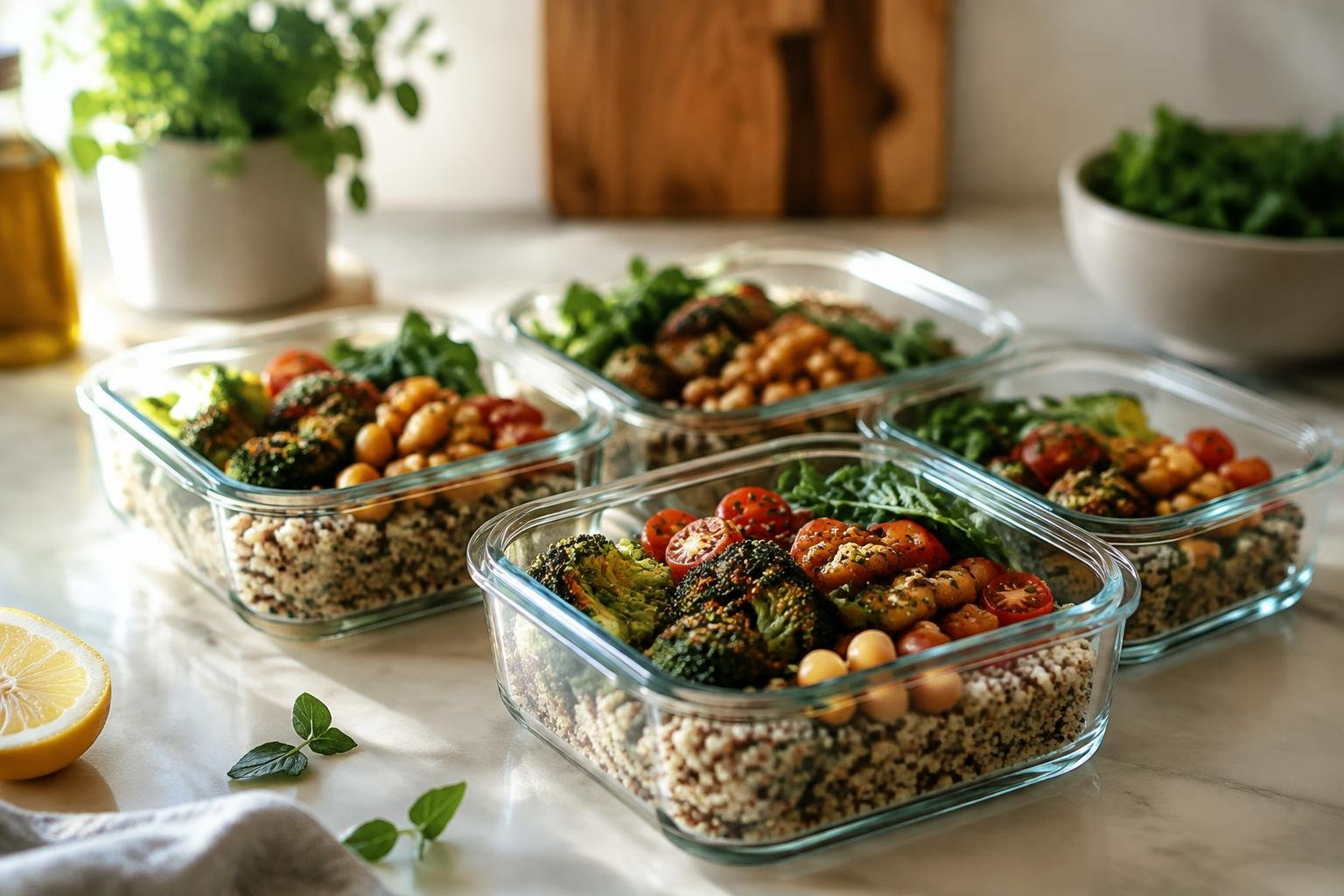
Start with ingredients that take care of themselves. Put brown rice or quinoa on the stove, and cook dried beans in a pressure cooker or on the stovetop if you’ve planned ahead. While they cook, wash and chop sturdy vegetables such as carrots, broccoli, and cabbage. Roast or steam them in batches, using parchment or a splash of water instead of oil if that suits your routine.
Keep the flavors flexible. Cook grains plain, and season vegetables lightly with garlic, pepper, or lemon so they’ll work in more than one meal. If you’re using canned beans, drain and rinse them while the other food cooks; there’s no need to heat them until serving. Let hot ingredients cool before packing, and keep a clean spoon handy for portioning.
Store everything so it stays fresh
Once the food has cooled, divide it into shallow, airtight containers rather than leaving a large pot on the counter. Shallow portions cool more evenly, and clear containers make it easy to spot what needs using. Refrigerate cooked grains, beans, and vegetables promptly; don’t leave them at room temperature for hours while you tidy up.
Pack ingredients separately when they have different textures or moisture levels. Store leafy greens dry, keep dressings in small sealed jars, and add them just before eating so the greens don’t wilt. Label containers with the contents and prep day, then place the items you’ll use first near the front of the fridge. Freeze portions you won’t get to soon, and thaw them in the refrigerator.
- Use a dry towel to line a greens container.
- Keep a small marker beside your food containers.
- Choose stackable containers to free up shelf space.
What Can You Actually Make? Easy Meal Ideas
A useful prep plan gives you a few building blocks, not a row of identical containers. Cook a pot of grains, roast or steam a couple of vegetables, and prepare beans or lentils; then combine them in different ways as the week unfolds. A batch of brown rice can sit under a breakfast bowl one day and a savory lunch the next.
Keep the flavors flexible, too. Lemon, herbs, salsa, mustard, and a mild curry sauce can take the same ingredients in different directions without much fuss. You can prep the basics ahead, then add fresh touches such as sliced fruit, chopped greens, or a squeeze of lime just before eating.
Quick breakfasts and packable lunches
For breakfast, stir oats with soy milk and grated apple the night before, then add cinnamon in the morning. If you prefer something savory, spoon warm beans and salsa over a baked potato, or tuck tofu scramble and spinach into a whole grain wrap. A fruit and oat jar travels well, too, and you can switch the fruit from berries to pear as the week goes on.
Lunches are easy to mix from grains, vegetables, and a filling plant food. Pack quinoa with chickpeas, cucumber, tomato, and lemon, or pile lentils and roasted vegetables into a container with a little mustard dressing. For a sandwich, mash white beans with lemon and herbs, then add lettuce and sliced tomato. Keep crunchy toppings separate until lunch so they don’t turn soft in the container.
Easy dinners and snacks
At dinner, turn a pot of lentils into a tomato and spinach stew, or serve it over rice with steamed broccoli. A tray of roasted vegetables can become a quick noodle bowl with edamame and ginger, while black beans, corn, and salsa make a straightforward filling for baked potatoes. Change the herbs or sauce, and yesterday’s ingredients feel different without starting from scratch.
Snacks can use the same simple ingredients without becoming another cooking project. Pair apple slices with a small container of unsweetened soy yogurt, or grab carrot sticks with a lemony white bean dip. Roasted chickpeas add crunch to a handful of grapes, and leftover baked sweet potato wedges are good cold or briefly reheated. These are easy options to keep on hand between meals.
| Meal | Easy combination | Flavor switch |
|---|---|---|
| Breakfast | Oats, soy milk, apple | Cinnamon or berries |
| Lunch | Quinoa, chickpeas, cucumber | Lemon or salsa |
| Dinner | Lentils, rice, broccoli | Tomato or ginger |
| Snack | Carrots with white bean dip | Lemon and herbs |
The Real Deal About Portions and Nutrients
A balanced container gives you more than a low-fat main dish: pair vegetables and fruit with a filling source of carbohydrate and a protein-rich ingredient. You might pack brown rice, roasted broccoli, and lentils, then add fruit on the side. Let your appetite and activity guide the portion; a small serving that leaves you hungry isn’t a win.
Meal prep also makes nutrient gaps easier to spot before you pack the lid. Check the ingredients across a few days, not just one plate: beans can contribute protein and iron, while fortified foods may supply nutrients that aren’t dependable in unfortified plant foods. A quick label check can tell you whether your plant milk is fortified.
Get enough protein, fiber, and calories
Build each meal around a substantial protein source, such as beans, lentils, tofu, tempeh, or edamame. A bowl of vegetables and rice may look generous, but adding chickpeas or tofu makes it more sustaining. Rotate your choices through the week so you’re not relying on one ingredient for every meal.
Fiber comes along with many of these foods, as well as vegetables, fruit, and whole grains. For enough energy, include a satisfying portion of foods like oats, potatoes, brown rice, or whole grain bread rather than filling the container with low calorie vegetables alone. A practical plate might pair lentils with potatoes and greens. If your portions leave you hungry soon after eating, add more of the grains or legumes.
Pay attention to vitamin B12, calcium, iron, and omega-3s
Vitamin B12 needs a reliable source in a vegan eating pattern, such as a B12 supplement or a fortified food used regularly. Check labels on plant milks, breakfast cereals, and nutritional yeast; fortification varies by product, and nutritional yeast isn’t always fortified. Calcium can come from fortified plant milk, calcium set tofu, or certain greens.
For iron, include beans, lentils, tofu, or iron fortified cereal, and pair them with vitamin C rich foods such as tomatoes, citrus, or bell peppers. Ground flaxseed, chia seeds, and walnuts provide plant based omega 3 fats; stir a spoonful of ground flax into oatmeal or add chia to a meal.
- Choose calcium set tofu when available.
- Keep fortified plant milk chilled and easy to pour.
- Store ground flaxseed in the refrigerator.
When Meal Prep Gets Boring, Try These Fixes
A batch of lentils can feel fresh on Monday and pretty dull by Thursday, especially if every portion tastes the same. You don’t need to cook a whole new menu to break that pattern. Small changes in seasoning or portion size can make prepared food suit your mood and schedule without adding much work.
Keep a few options on hand, then decide what you need when you’re ready to eat. A squeeze of lemon, a pinch of chili, or a smaller container can shift the meal without turning prep into another chore. The table below matches simple fixes to common moments.
| What’s getting stale | Try this | Easy example |
|---|---|---|
| Same flavor all week | Change the sauce | Lemon tahini one day, tomato salsa the next |
| A meal tastes flat | Add herbs or spice | Cumin and cilantro on beans |
| Your schedule shifts | Keep portions separate | Pack grains and vegetables in different containers |
| You need a smaller meal | Store components in flexible amounts | Use half a serving of rice with extra greens |
Switch up sauces, herbs, and spices
Keep the main ingredients simple, then change the flavor at the last minute. A bowl of chickpeas, rice, and steamed vegetables can take a spoonful of salsa, a squeeze of lemon, or a little vinegar and mustard. Each option adds character without requiring a second cooking session.
Fresh herbs and spices work, too. Try parsley with garlic on one portion, then smoked paprika or curry powder on another. Store sauces separately so they don’t soften roasted vegetables or grains before you eat them. If a seasoning blend contains salt, taste before adding more; a quick finish of lime can brighten beans without extra oil.
Make flexible portions for busy days
Pack meal components in separate containers when your week is hard to predict. You can combine lentils, greens, and potatoes for a full plate, or take a smaller portion of each when lunch is squeezed between errands. Keeping the pieces apart also makes it easier to add whichever vegetable you have left.
Set aside a couple of single servings in freezer safe containers if plans often change. Thaw one in the refrigerator when you know you’ll need it, and keep quick additions such as frozen peas or bagged spinach nearby. On a late evening, you can stir those into soup or warm them with a prepared grain instead of forcing yourself to eat a meal that no longer fits the day.

Summing up
Vegan low fat meal prep works best when you build meals around ingredients you’ll actually enjoy eating: beans, lentils, whole grains, vegetables, fruit, and flavorful sauces. A pot of lentils can become a lunch bowl one day and taco filling the next, while roasted vegetables add variety without much extra work. Keep portions satisfying, and include reliable protein sources such as tofu, edamame, or chickpeas rather than relying on salad alone.
Your plan doesn’t need to be perfect to make the week easier. Prep a few flexible basics, store sauces separately, and change the seasoning when a meal starts to feel repetitive. If you’re hungry between meals, adjust your portions or add a piece of fruit and a serving of beans. With a little planning, you can keep weekday cooking simple and still enjoy meals that feel fresh, filling, and fully yours.