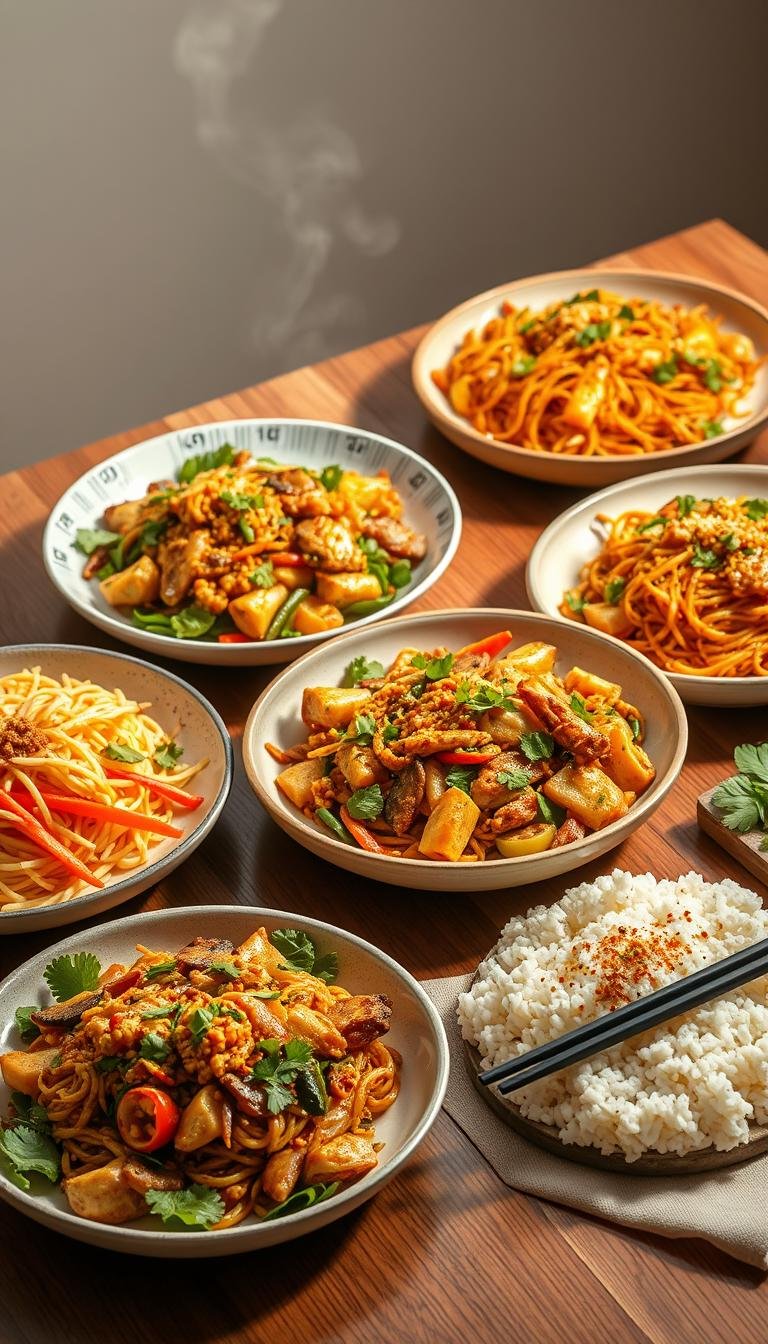
Real Asian Noodles That Are Easy to Cook
Did you know Americans eat over 6 billion servings of Asian noodles every year? Cooking real Asian noodles at home might seem hard, but it’s actually easy. You can find these noodles in your kitchen.
You don’t need to be a pro chef to cook authentic Asian dishes. With the right ingredients and techniques, you can make amazing meals at home. These easy-to-cook noodles will change how you cook.
Whether you’re always on the go or just want to try new recipes, this guide is for you. It shows how easy and fun cooking Asian noodles can be. It makes complex cooking simple and accessible.
Key Takeaways
- Asian noodle cooking is simpler than most people believe
- Basic ingredients can create complex flavor profiles
- Home cooking can rival restaurant-quality meals
- Minimal equipment is required for excellent results
- Authentic Asian cuisine is adaptable to home kitchens
Essential Asian Noodle Types for Your Kitchen
Exploring the world of noodles is an exciting journey. It brings a cultural culinary experience right to your kitchen. Each type of Asian noodle has its own texture and taste, making meals special.
Ramen noodles are known for their springy texture. They are thin and wavy, coming from Japan. They make dishes rich and warm, perfect for cold days.
Udon noodles are thick and chewy, made from wheat. They’re great for hearty broths and stir-fries. This noodle type offers a unique eating experience.
Rice noodles are a lighter choice, loved in Southeast Asia. They’re gluten-free and soak up flavors well. Soba noodles, made from buckwheat, have a nutty taste. They’re often served cold or in hot soups.
Egg noodles are golden and flavorful. They’re perfect for Chinese and Malaysian dishes. Adding them to your cooking makes your meals more authentic.
Want to Cook Delicious Plant-Based Meals From Scratch But Have No Idea Where To Start?
Basic Equipment Needed for Asian Noodle Cooking
Starting your journey in Asian cooking is easy with the right tools. You don’t need a lot of fancy equipment. A few essential items can make cooking and meal prep quick and simple.
A good wok is key for Asian cooking. It’s perfect for stir-frying noodles fast and evenly. Look for a non-stick wok to help beginners avoid food sticking.
Chopsticks are more than just for eating. They’re vital for mixing, checking noodle doneness, and making authentic dishes. Choose a sturdy pair of chopsticks that feel right in your hand.
A bamboo steamer opens up new cooking possibilities. It’s great for steaming dumplings, veggies, and noodles. With a large pot, you’ll have a versatile setup for easy Asian cooking.
Sharp knives are essential for cutting veggies and noodles. A chef’s knife and a paring knife will cover most needs. Sharp knives mean quicker prep and cleaner cuts, helping you save time.
Pro tip: Choose tools that can do multiple jobs. This saves space and makes learning Asian cooking fun and easy.
Understanding Noodle Cooking Times and Textures
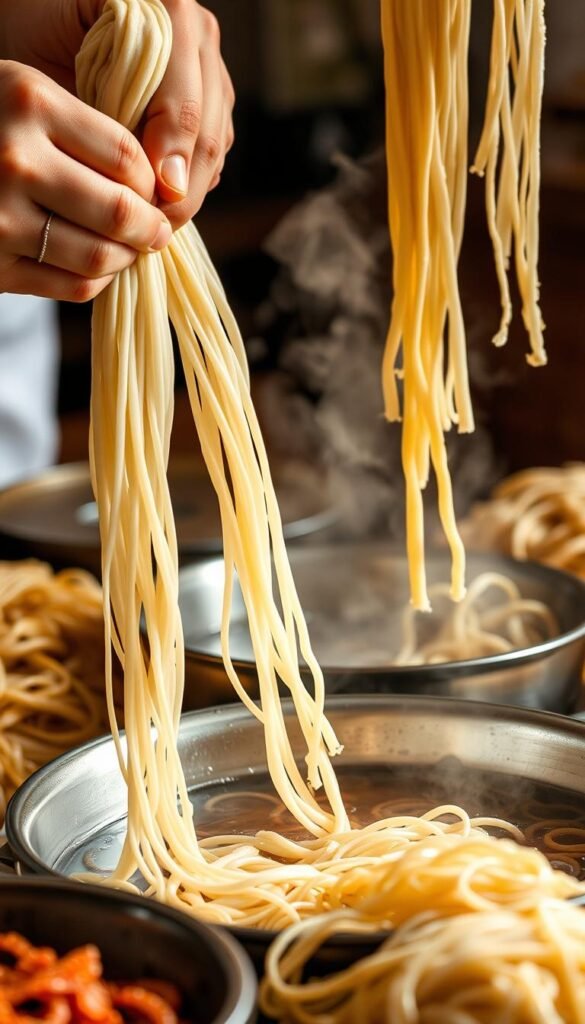
Learning how to cook noodles is key to making real Asian dishes at home. Each noodle type needs a special way to cook for the right texture and taste. For example, rice noodles just need a quick soak in hot water. But wheat noodles need careful boiling to avoid becoming too soft.
How you cook noodles can change the taste of your dish a lot. Thin rice vermicelli cooks in 3-5 minutes, while thicker udon noodles take 8-10 minutes. It’s important to watch the noodles closely and check their texture often. Drain them just before they reach your perfect texture, as they’ll soften more after cooking.
The temperature of the water is also very important. The water should be boiling steadily. Some noodles need a quick dip, while others need to boil fully. Rinsing with cold water after cooking stops the cooking process and prevents clumping.
Texture is everything, say professional chefs. Noodles should have a bit of chew, making your meal better. With practice and patience, you can make noodle dishes as good as those in restaurants, right in your kitchen.
Quick and Authentic Sauce Combinations
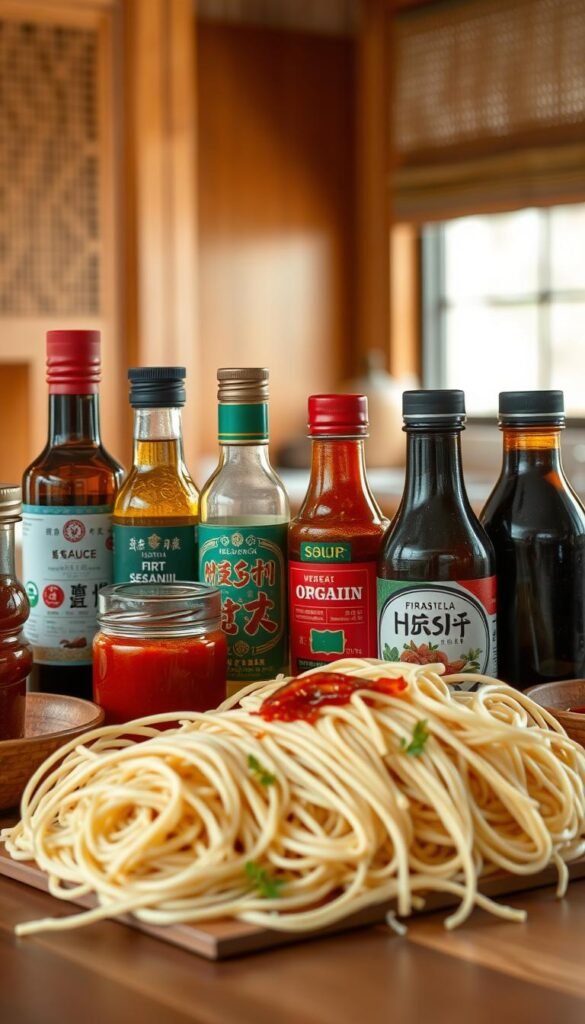
Making tasty noodle dishes is easy. Just a few ingredients can turn basic noodles into gourmet meals in minutes. Authentic Asian sauces are key to making quick noodle recipes shine.
Begin with a classic teriyaki sauce. It’s made from soy sauce, mirin, and brown sugar. This mix takes under 5 minutes to make and is great with rice or wheat noodles. For a kick, try a chili oil sauce with garlic, red pepper flakes, and sesame oil. It adds heat instantly.
Peanut sauce is another tasty choice. Mix smooth peanut butter with rice vinegar, soy sauce, and honey. This creates a creamy sauce that noodles love. These recipes let you try new flavors without spending hours cooking.
Pro tip: Make these sauces ahead and keep them in the fridge. They last up to a week, making cooking on busy nights easier. Your homemade sauces will make simple noodle dishes unforgettable, just like your favorite Asian restaurant.
Want to Cook Delicious Plant-Based Meals From Scratch But Have No Idea Where To Start?
Real Asian Noodles That Are Easy to Cook
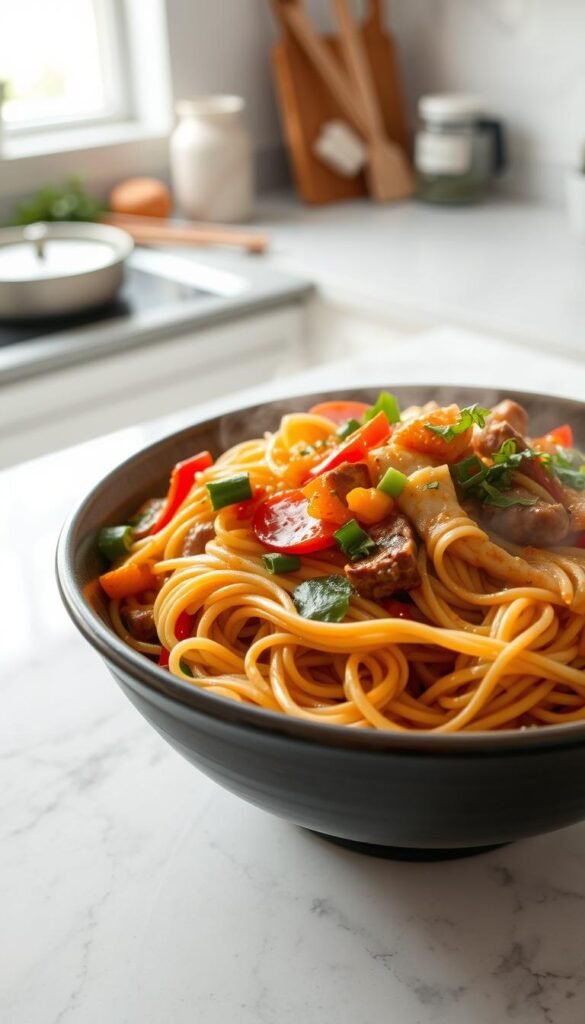
Exploring authentic Asian cuisine is simple. You can make real Asian noodles at home with little effort and lots of flavor. These recipes are perfect for beginners and experienced cooks alike, bringing Asia’s flavors to your kitchen.
Pad Thai is a great dish for beginners. It combines rice noodles, eggs, protein, and a tangy sauce in under 20 minutes. Singapore noodles are another quick choice, with thin rice vermicelli, veggies, and chicken or shrimp.
Lo mein is a great way to start cooking like a pro. It uses egg noodles, soy sauce, veggies, and protein. The secret is to keep your wok or pan hot and stir ingredients fast for that restaurant feel.
Begin with these easy recipes and get better with practice. Mastering these dishes will delight your taste buds. Enjoy these tasty, quick, and easy noodle dishes.
Common Mistakes to Avoid When Cooking Asian Noodles
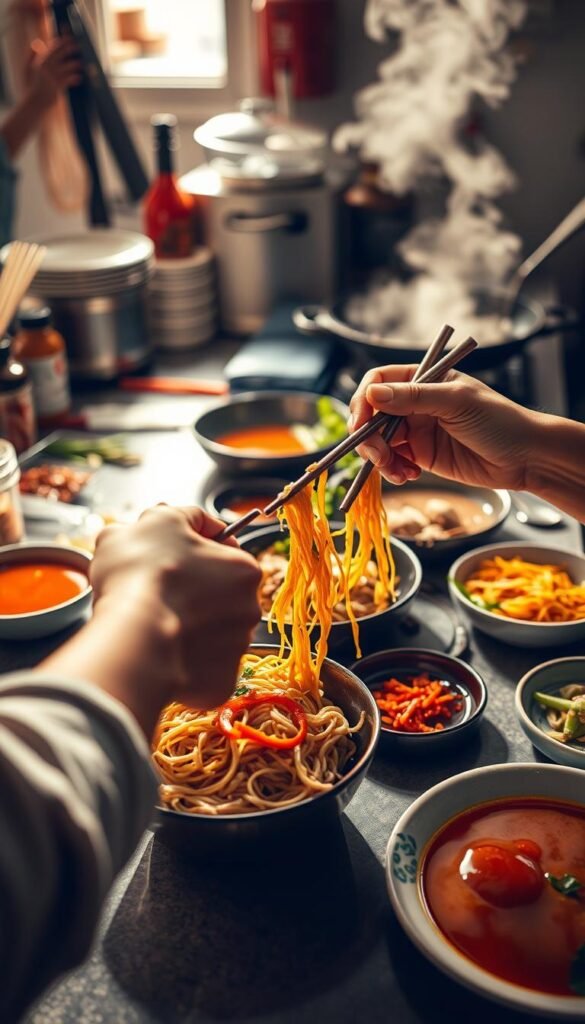
Learning to cook Asian noodles is simpler than you think. A few key techniques can make your dish shine. But, many home cooks make mistakes that can ruin their noodles.
One big mistake is overcooking your noodles. Each type of noodle cooks differently. Rice noodles, for example, are very delicate. Always check the package and test the noodles a minute before the recommended time. You want them to be tender but with a bit of firmness.
Rinsing noodles is another common error. Not all noodles need rinsing. For hot dishes like stir-fries, skip rinsing to keep sauces on. But, for cold noodle salads, a quick rinse in cold water is good.
Seasoning is also important. Underseasoned noodles can make your dish taste bland. Add salt to your cooking water and taste your noodles before adding other ingredients. A little salt can make a big difference in flavor.
Lastly, watch your cooking water and pan temperature. High heat can make noodles mushy, while low heat doesn’t cook them right. Keep the heat medium and watch your noodles closely for the best results.
Best Protein and Vegetable Pairings for Noodle Dishes
Improving your noodle dishes begins with choosing the right protein and vegetables. For balanced meals, pick chicken with rice noodles or beef with thick wheat noodles. These pairings make for a filling and tasty meal.
Preparing meals quickly is easy with fast-cooking proteins like shrimp or tofu. These can be prepped ahead and added to noodles in no time. Adding veggies like bell peppers, broccoli, and snap peas not only adds color but also nutrients.
Classic combos are always a hit. Try udon noodles with grilled salmon and edamame, or lo mein with marinated steak and green veggies. For vegetarians, tofu with bok choy or tempeh with stir-fry veggies are great. The goal is to mix textures and flavors for a memorable meal.
Try new protein and vegetable combinations to find your favorite noodle dish. Don’t hesitate to mix unusual ingredients – that’s where the magic is. Your taste buds will love the journey through Asian noodle cuisine.
Making Restaurant-Quality Noodles at Home
Turning your kitchen into a noodle paradise is simpler than you think. Chefs have secrets to make your homemade dishes stand out. They turn simple meals into unforgettable culinary experiences.
First, get good at cooking at high heat. Your wok or skillet should be very hot before adding food. This method cooks food fast and brings out deep, rich flavors.
Quick stir-frying is key to avoid soggy noodles. It keeps the texture perfect.
Another pro trick is sauce reduction. It makes sauces thick and glossy. Use soy sauce, rice vinegar, and sesame oil for depth. Patience is important – let the sauce simmer to concentrate flavors.
Tossing noodles is an art. Use long chopsticks or tongs to coat every strand with sauce. Move smoothly and quickly to spread heat and flavor evenly. Aim for a restaurant-quality look in your kitchen.
With practice, your noodle dishes will be as good as your favorite Asian restaurant. Keep trying, tasting, and adjusting. Soon, you’ll impress everyone with your cooking.
Traditional Serving Suggestions and Garnishes
Turning a good noodle dish into an amazing one is all about garnishes. It’s about adding small touches that make a big difference. These details turn a simple meal into a true Asian cuisine masterpiece.
Start by looking into classic garnishes that add both looks and flavor. Chopped scallions give a fresh, sharp taste. Cilantro adds a bright, herbaceous flavor. Toasted sesame seeds add a nutty crunch.
Each Asian region has its own garnishing traditions. In Japan, bonito flakes add a smoky flavor. Vietnamese dishes often have fresh herbs like Thai basil. Korean bowls might have toasted seaweed or pickled veggies.
How you present your dish is just as important as its taste. Use white bowls to make garnishes stand out. Arrange herbs and toppings in a way that looks good and invites you to try each bite. Your goal is to make a dish that’s pleasing to both the eyes and taste buds.
Garnishing is an art. Try different textures, colors, and techniques to find your own style. This will make your Asian cuisine dishes truly special.
Conclusion
Mastering quick noodle recipes is now within your reach. You’ve learned the essential techniques to transform your kitchen into an authentic Asian cooking space. From understanding noodle types to perfecting cooking times, you’re equipped with skills that will impress your family and friends.
Asian cooking made simple isn’t just a concept anymore—it’s your new reality. The techniques and insights you’ve gained will help you create restaurant-quality dishes with confidence. Whether you’re craving a spicy Thai stir-fry or a comforting Japanese ramen, you now have the knowledge to craft delicious meals in minutes.
Your culinary journey doesn’t stop here. Keep experimenting with different noodle varieties, sauces, and protein combinations. Each dish is an opportunity to explore new flavors and refine your skills. Remember, cooking is about passion, creativity, and enjoying the process of creating something delicious.
So grab your wok, stock up on ingredients, and start your Asian noodle adventure. Your taste buds will thank you for the exciting culinary experiences ahead!
Want to Cook Delicious Plant-Based Meals From Scratch But Have No Idea Where To Start?