Low Calorie Vegan Meals
Can lighter, plant-based dishes really leave you satisfied? Many people think lighter food means less flavor or hunger soon after eating. Yet, the secret rests in how you build your plate with low calorie vegan meals.
Use nutrient-dense foods, such as legumes, fresh vegetables, and whole grains. These healthy vegan recipes can create delicious, filling meals without heavy ingredients. That way, you can enjoy a hearty dinner while eating lighter.
Whether you need quick breakfast ideas or simple weekly prep strategies, these plant based meals suit everyone. We will show how tofu, fruit, and measured fats can keep your energy high and cravings away.
Key Takeaways
- Prioritize fiber-rich legumes and vegetables to stay full longer.
- Use whole grains to provide sustained energy throughout your day.
- Incorporate tofu and other proteins to support muscle health.
- Measure healthy fats carefully to keep your dishes light yet satisfying.
- Prepare simple sauces ahead of time to elevate your home cooking.
What Makes Low Calorie Vegan Meals Filling and Satisfying
Making low calorie vegan meals that keep you full is easier than it seems. Focus on protein and fiber, which slow digestion and help you feel satisfied longer.
High protein vegan meals give your body building blocks for muscle and help curb hunger. High fiber vegan meals add bulk without many calories, creating filling vegan meals that keep you energized.
Beans, Lentils, Tofu, Tempeh, and Edamame
Plant-based proteins form the backbone of a satisfying diet. Beans and lentils work well in hearty soups or simple lentil recipes with strong nutrition. Their fiber can help regulate blood sugar throughout the day.
Tofu, tempeh, and edamame are excellent choices for high protein vegan meals. Their dense texture makes dishes feel substantial, and stir-fries or salads can boost protein in low calorie vegan meals.
Leafy Greens, Cruciferous Vegetables, and Fresh Fruit
For large portions without too many calories, choose foods with lots of volume. Spinach and kale provide essential vitamins and add volume to your bowl. Broccoli and cauliflower offer a satisfying crunch and plenty of fiber.
Fresh fruit adds natural sweetness and texture to your diet. These whole plant foods contain water, which helps you stay hydrated and full. Colorful, nutrient-dense foods make high fiber vegan meals delicious and satisfying.
How to Balance Calories and Nutrition on a Vegan Diet
Creating healthy vegan recipes takes a smart mix of protein, fiber, and healthy fats. Rather than counting calories alone, focus on ingredient quality. This choice helps you stay energized while enjoying your food.
To build filling vegan meals, add a solid protein source to your plate. Legumes, lentils, and soy products are staples that can keep you satisfied for hours. They support many high protein vegan meals that are nutritious and delicious.
Avocado, Nuts, Seeds, and Tahini
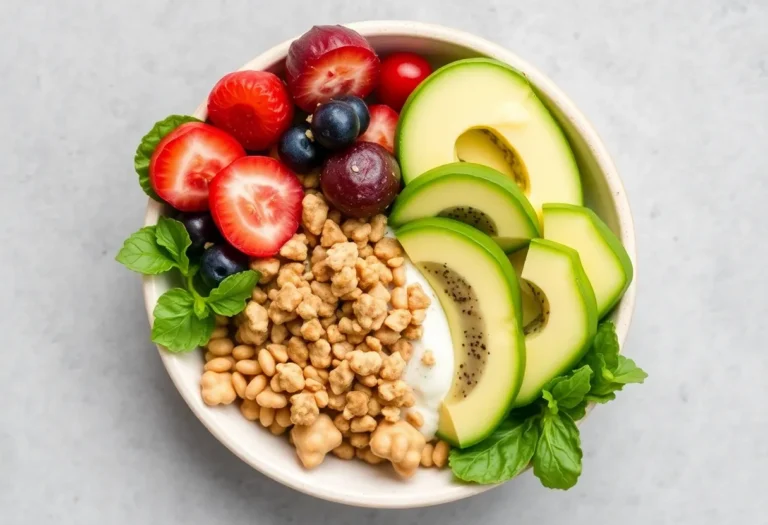
Healthy fats from avocado, nuts, seeds, and tahini provide key nutrients and a creamy texture. However, these foods are calorie-dense, so watch your portions.
Use these fats as flavorful accents instead of the main part of your dish. A little tahini or a few avocado slices can lift your meal without too many calories. This strategy keeps your diet balanced while preserving rich, satisfying flavors.
When to Choose Lower-Calorie Fat Sources
Choose lower-calorie options when you want to lighten your plate. Water-rich vegetables and lean proteins like tofu can help. Many creative tofu recipes offer a hearty texture without much fat.
Use herbs, spices, and vinegar-based dressings for flavor instead of heavy oils. Swap dense fats for fresh produce to make high protein vegan meals that feel light. Experimenting with these methods can help you create filling vegan meals that support your wellness goals.
Low Calorie Vegan Breakfasts for Busy Mornings
Master a quick vegan breakfast with a few simple strategies. When you rush out the door, a plan helps you follow your health goals. These easy vegan meals use filling, high-volume ingredients without many calories.
Key Ingredients and Portion Guidance
Stock your pantry with staples such as rolled oats, chia seeds, and firm tofu. Measure portions to stay within your calorie targets. Use a small kitchen scale or standard measuring cups for consistent servings each morning.
Ways to Add Protein and Natural Sweetness
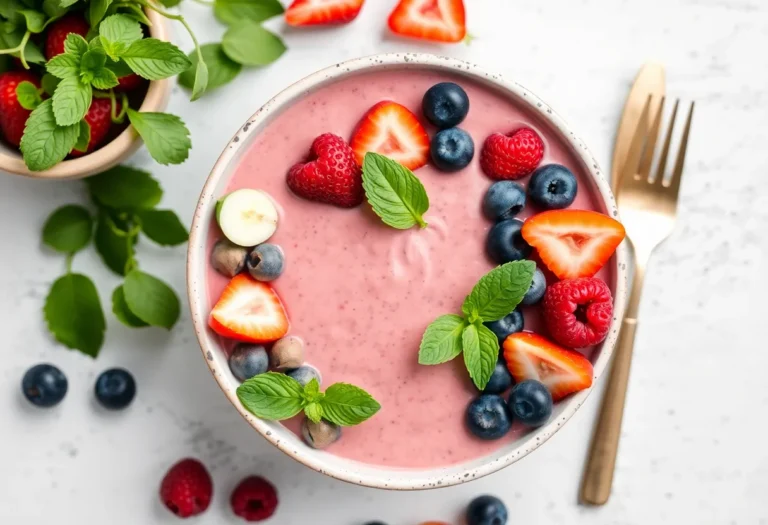
Add a scoop of plant-based protein powder to your bowl for more morning energy. If you prefer whole foods, stir in a tablespoon of hemp hearts or flax seeds. For natural sweetness, skip refined sugar and use fresh berries or pure vanilla extract.
Vegetables That Add Volume and Flavor
Adding vegetables to breakfast can support weight management. Stir baby spinach into oatmeal or sauté diced zucchini for your tofu scramble. These additions provide essential fiber and nutrients while keeping meals light.
Seasonings That Create an Eggy Taste
If you miss eggs, nutritional yeast adds a similar savory flavor. Mix it with a pinch of kala namak, also called black salt, for a sulfurous taste. This simple trick makes tofu scramble feel like a traditional diner breakfast.
How to Keep Smoothies Thick Without Too Many Calories
You do not need high-calorie nut butters for a creamy smoothie. Add frozen cauliflower florets or steamed, chilled zucchini to your blender. These vegetables taste almost neutral with fruit and create a thick, satisfying texture.
Toppings That Add Texture Without Overloading the Bowl
Toppings can quickly add calories, so choose them wisely to keep meals light. Sprinkle a teaspoon of toasted sunflower seeds or a few cacao nibs for crunch. These small additions improve your low calorie vegan recipes without breaking your daily budget.
Using Quinoa, Apples, and Cinnamon for Lasting Fullness
For a warm, comforting start, try cooked quinoa with diced apples and a dash of cinnamon. Quinoa is a strong source of plant-based protein that keeps you satisfied for hours. This simple combination shows how whole ingredients create a delicious, filling morning meal.
Light Vegan Lunches You Can Prepare at Home
Your kitchen is a great place to make delicious, light midday meals. Cooking at home helps you control ingredients and keep your vegan lunch nutritious and filling.
Building a Flavorful Broth Without Heavy Ingredients
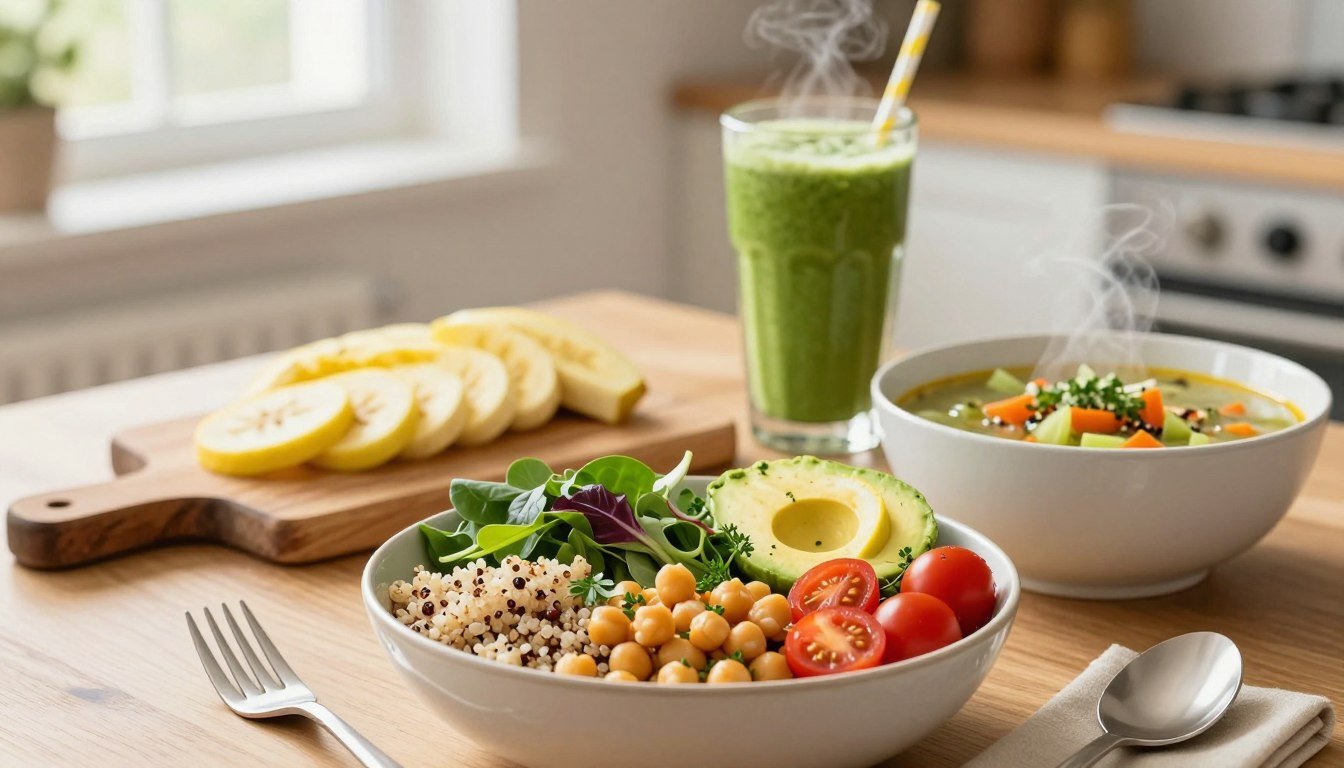
Begin your meal with a clear vegetable broth. Add ginger, garlic, and star anise for deep flavor without extra fat. These light soups offer warmth and hydration while keeping calories low.
Meal-Prep and Storage Tips
Store prepared ingredients in airtight glass containers to keep them fresh. Keep wet items, such as dressings, separate from greens until mealtime. This habit keeps your lunch crisp and tasty all week.
Making a Creamy Dressing With Vegan Yogurt
Make rich, smooth vegan sauces with unsweetened plant-based yogurt. It creates a creamy texture similar to oil-heavy dressings. Add fresh herbs and lemon juice for a bright, tangy finish.
Crunchy Add-Ins That Keep the Wraps Interesting
Texture matters when you build vegan wraps. Add shredded carrots, sliced radishes, or toasted sunflower seeds for a satisfying crunch. These foods add volume and fiber without many extra calories.
Preparing Crispy Tofu With Minimal Oil
Many tofu recipes use deep-frying, but an air fryer or non-stick pan can create a golden crust. Press the tofu well to remove extra moisture before cooking. A light cornstarch coating adds crunch with very little oil.
Balancing Salty, Tangy, and Spicy Flavors
Great meals balance bold flavors. Use soy sauce or tamari for salt, vinegar for tang, and chili flakes for heat. Together, these flavors make low calorie vegan recipes feel exciting and indulgent.
Using Salsa and Lime Instead of Calorie-Dense Sauces
Replace heavy store-bought condiments with fresh salsa and lime juice. They add bold flavor to your vegan lunch with very few calories. Use them on bowls or add them to your favorite vegan sauces.
Easy Low Calorie Vegan Dinners for the Whole Family
Make evenings easier with these easy vegan meals, built around fresh, wholesome ingredients. Create a tasty vegan dinner that satisfies your family without adding extra calories. These healthy vegan recipes use colorful produce and smart cooking methods.
Simmer crushed tomatoes with cumin, smoked paprika, and garlic to make a hearty base. This method adds deep flavor without heavy fats. It is a great start for your favorite low calorie vegan recipes.
Serving Options Beyond White Rice
Replace refined white rice with nutrient-rich choices like cauliflower rice or barley. These foods add volume with fewer calories. They balance your plate and help you feel full longer.
Making a High-Fiber Sauce From Pantry Ingredients
Lentil recipes can make a thick, protein-rich sauce from simple pantry staples. Blend cooked lentils with tomato paste and herbs for a rich topping. This budget-friendly idea helps you make high fiber vegan meals.
Choosing Pasta Portions and Vegetable Additions
When serving pasta, fill half your bowl with steamed broccoli, zucchini, or spinach. This keeps the noodle portion smaller while making the meal filling. It is a simple way to support a healthy weight.
Roasting Peppers, Onions, and Tofu Together
Sheet pan dinners can save busy nights. Toss cubed tofu, bell peppers, and onions with a light balsamic glaze before roasting. This mix offers a satisfying crunch and plenty of plant-based protein.
Building a Satisfying Plate With Corn Tortillas and Salsa
Corn tortillas make a great low-calorie base for family taco night. Top them with black beans, fresh pico de gallo, and shredded cabbage. This keeps dinner light and adds a satisfying texture.
Combining Roasted Vegetables With Quinoa or Brown Rice
Make colorful vegan bowls with roasted seasonal vegetables and a small scoop of quinoa or brown rice. These grains have more fiber than processed choices. They create a nutritious, filling base.
Finishing the Bowl With a Light Lemon-Tahini Drizzle
A little dressing goes a long way. Whisk lemon juice, a teaspoon of tahini, and water for a creamy finish. This light drizzle gives high fiber vegan meals a bright, tangy flavor without excess calories.
Quick Vegan Meals for When You Are Short on Time
You do not need hours in the kitchen to enjoy a healthy, plant-based meal. When your schedule is packed, these quick vegan meals help you stay on track without losing flavor or nutrition.
Choosing High-Fiber Wraps and Fresh Fillings
One of the best ways to make easy vegan meals is using high-fiber wraps. Fill them with canned black beans, pre-pressed tofu, and crunchy vegetables, such as shredded carrots or spinach. These vegan wraps are portable, filling, and need almost no cooking time.
Fast Toppings That Add Protein and Flavor
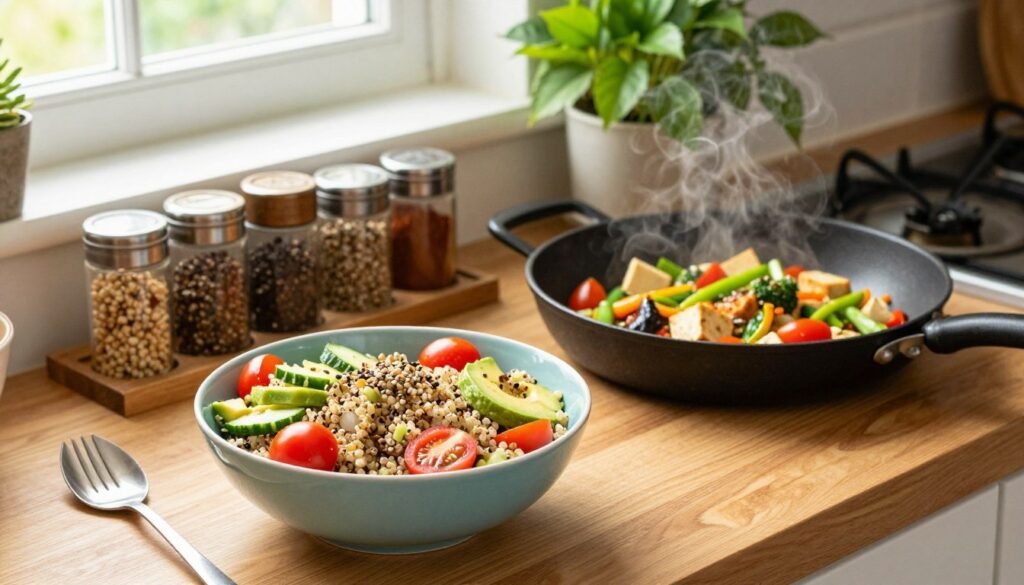
Keep protein-rich toppings in your pantry to improve dishes quickly. Sprinkle hemp seeds, toasted pumpkin seeds, or nutritional yeast over bowls for a savory boost. These small additions turn simple ingredients into satisfying, nutrient-dense meals in seconds.
Using Frozen Vegetables to Reduce Prep Time
Frozen vegetables are a secret weapon for anyone who wants to save time. They come pre-chopped and washed, so you avoid tedious knife work. Toss a bag of frozen broccoli or mixed peppers into your pan for instant color and volume at dinner.
One-Pan Cooking Tips for Better Texture
To keep one-pan meals from becoming mushy, add vegetables at the right time. First, sear your tofu or beans for a nice crust before adding softer frozen vegetables. This simple technique preserves texture and keeps cleanup minimal.
Keeping Instant Noodle Meals Light and Nutritious
Instant noodles can provide a convenient base when you upgrade them wisely. Use only half the provided seasoning packet to lower sodium significantly. Stir in a handful of edamame and fresh greens to add nutrients and create a balanced, quick meal.
Low Calorie Vegan Snacks and Small Meals
When hunger strikes between meals, choose these satisfying plant-based options. The right vegan snacks can support your energy without slowing your progress. These small bites bridge the gap between main plant based meals.
Choose foods with plenty of volume and fiber to stay full longer. Add some protein, such as raw carrots or cucumber with creamy white bean dip. This snack offers a satisfying crunch and plant-based protein.
For a warm choice, try air-popped popcorn, which has high volume and few calories. You can also enjoy a small bowl of unsweetened vegan yogurt with fresh berries. These vegan snacks are easy to prepare and help control portions.
Edamame offers a quick protein boost when you need one. Steam a small portion and sprinkle it with a pinch of sea salt. These low calorie snacks are simple, nutritious, and keep you feeling great until your next meal. Keep them available to avoid processed alternatives.
Flavorful Sauces and Toppings That Keep Meals Light
Elevating plant based meals does not require heavy oils or complex ingredients. Fresh herbs, dried spices, and acidic ingredients like vinegar or citrus juice create deep flavor. A splash of lime or spoonful of fresh salsa can transform a dish without adding many calories.
When you want creaminess, choose healthier alternatives to traditional heavy dressings. You can make delicious vegan sauces with blended white beans, tomato bases, or unsweetened plant-based yogurt. These choices create rich texture while helping you control oil intake and portion sizes.
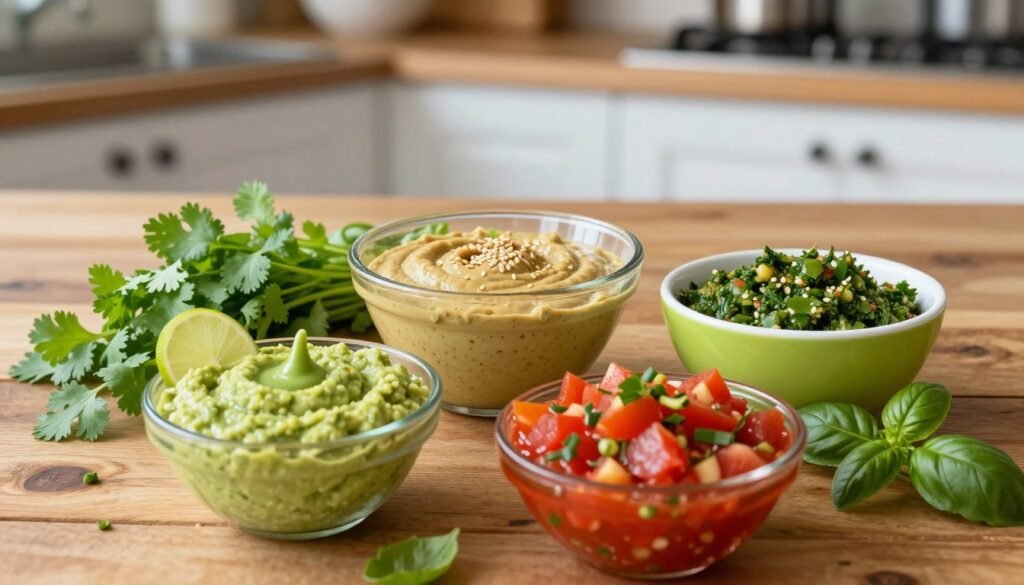
Lemon-tahini sauce adds creaminess to favorite bowls. Thin tahini with lemon juice and a little water for a smooth sauce that coats vegetables. This method keeps a satisfying mouthfeel while lowering your meal’s overall energy density.
Toasted seeds or chopped nuts add crunch against soft textures. These nutrient-dense ingredients also contain many calories, so measure portions carefully. That small sprinkle helps keep plant based meals within your target range while adding flavor and satisfaction.
How to Meal Prep Low Calorie Vegan Meals
Simplify your week with a flexible system for plant-based meals. Prepare versatile parts instead of cooking the same dish every day. This vegan meal prep plan keeps cooking manageable and meals tasty.
Batch-Cooking Beans, Lentils, Grains, and Tofu
Begin by cooking a large batch of grains, such as quinoa or brown rice. These staples create a base for high fiber vegan meals all week. Keep several legumes ready, so you have plenty of protein on hand.
Try different lentil recipes to bring variety to your protein sources. Press and bake tofu ahead of time for a firm texture in high protein vegan meals. Store these foods in separate airtight containers for quick lunches or dinners.
Preparing Vegetables for Bowls, Wraps, and Stir-Fries
Wash, chop, and roast your favorite vegetables during weekend prep. Pre-cut peppers, broccoli, and kale make healthy vegan bowls easy on busy weeknights. Store roasted vegetables apart from raw greens to protect their texture.
When ready to eat, combine cooked grains and proteins with fresh vegetables. This method creates colorful vegan wraps that travel well. Store sauces separately until the last minute, so each meal stays crisp and tasty.
Common Mistakes That Make Vegan Meals Higher in Calories
Creating healthy vegan recipes takes more than avoiding animal products. Plant-based food is not always light, and some favorite dishes may have greater energy density than planned.
Using too much cooking oil is a common mistake. Fats are necessary, but pouring oil from the bottle can add hidden calories. Use a non-stick pan or light spray to keep your low calorie vegan meals on track.
Calorie-dense toppings, such as tahini, nuts, seeds, and coconut milk, can also cause problems. These foods are nutritious, but calories rise quickly when you do not measure them. A small handful of nuts or one tablespoon of seeds adds flavor without overdoing it.
Be cautious with processed vegan snacks and store-bought sauces. Many packaged foods seem healthy but contain high amounts of sugar or fat. Check labels to keep your choices aligned with your goals.
Finally, watch your portions of grains and vegan cheeses. Too much rice or pasta can push your meal over its target limit. Fill half your plate with colorful vegetables for satisfying, nutrient-dense meals, and enjoy delicious food while supporting your wellness goals.



Conclusion
Sustainable habits start with the ingredients you choose for your daily menu. Create delicious low calorie vegan meals with fresh vegetables, hearty legumes, and firm tofu. These staples support a vibrant lifestyle.
Whole grains and seasonal fruits add essential nutrients to your plate. Measure fats carefully to keep your energy steady throughout the day. These plant based meals use fiber and volume to keep you full for hours.
Strong seasonings and fresh herbs turn simple ingredients into exciting dishes. You do not need heavy oils or huge portions for a satisfying dinner. Use texture and variety to keep your palate interested in every bite.
Use these strategies as a flexible guide for your cooking adventures. Customize every recipe to match your personal taste preferences. Start experimenting today to see how easy healthy eating can be in your own home.
Share your favorite creations with friends or family members who want to eat better. Your journey toward better health is rewarding and gets easier with every meal you prepare. Keep exploring new flavors and enjoy nourishing your body with wholesome food.