Healthy Low Carb Snacks
A snack can keep hunger at bay without leaving you sluggish or reaching for another handful ten minutes later. Healthy low carb snacks pair naturally low carbohydrate foods, such as cucumber or eggs, with satisfying protein or fat. Think crisp bell pepper strips with hummus or a boiled egg with a few olives: simple choices that fit into an ordinary day.
Key Takeaways:
- Build snacks around low-carb foods with staying power, such as hard-boiled eggs, cheese, or cucumber slices with hummus.
- Pair protein or healthy fats with crunchy vegetables: try celery with peanut butter or bell pepper strips with tuna salad.
- Keep easy options on hand for busy days, like olives, a small handful of nuts, or plain Greek yogurt topped with a few berries.
What Counts as a Healthy Low-Carb Snack?
A low-carb snack isn’t just a food with a small number beside “total carbohydrate.” You’ll also want to consider fiber and protein, since they affect how filling a snack is and what its carbohydrate count means. Fiber is a type of carbohydrate your body doesn’t digest in the same way as sugars and starches; protein, by contrast, is listed separately on most nutrition labels. These numbers give you a clearer picture than a low-carb claim on the front of a package.
Think of the label as a quick check, not a pass or fail test. A snack can fit your carb goals and still be short on fiber or protein, while another may have more total carbs because it contains fiber. Your needs vary, too: the serving size you choose and the rest of your meals matter. Knowing how these parts relate makes it easier to judge what “low-carb” actually means.
Net carbs, without the confusion
“Net carbs” usually means total carbohydrate minus fiber, based on the idea that fiber isn’t fully digested and absorbed like sugars and starches. For example, if a serving lists 10 grams of total carbohydrate and 4 grams of fiber, the simple calculation gives 6 grams of net carbs. That’s a useful shorthand, but it isn’t a separate number required on every nutrition label.
Take the claim with a little care. Some packaged foods also subtract certain sugar alcohols, and those ingredients don’t all affect people in the same way. Check the total carbohydrate, fiber, serving size, and ingredient list rather than relying on a prominent net-carb number alone. If you track carbs for a medical reason, use the counting method recommended by your clinician; the arithmetic on a package may not match the plan you’ve been given.
What to look for on a nutrition label
Start with the serving size, then check total carbohydrate and fiber for that exact portion. If you eat twice the listed amount, you’ll take in twice the listed carbs and fiber, too. Next, look at protein, which can contribute to a snack’s staying power, and scan the ingredients for added sugars such as syrup, cane sugar, or honey. The order matters: ingredients are listed by weight, from most to least.
A label gives you context, not a complete verdict. Compare similar serving sizes, especially when one package calls a tiny portion a serving and another lists a more realistic amount. Fiber and protein can help you assess the balance, while total carbs show the full count before any net-carb calculation. Here’s a simple guide to the numbers you’ll see:
| Label item | What it tells you | What to check |
|---|---|---|
| Serving size | The portion behind the listed numbers | Whether it matches what you’ll eat |
| Total carbohydrate | Carbs, including fiber and sugars | The amount per serving |
| Dietary fiber | Carbohydrate that isn’t fully digested | How much is included in total carbs |
| Protein | Protein per serving | How it fits your needs and portion |
Why I Think Low-Carb Snacks Work Best When They’re Balanced
A low carb label doesn’t tell you whether a snack will keep hunger at bay. A handful of plain crackers may fit your carb target, but it can leave you reaching for something else soon after. Pairing nutrients gives your body more to work with and makes a snack feel like a small, satisfying bite rather than a placeholder.
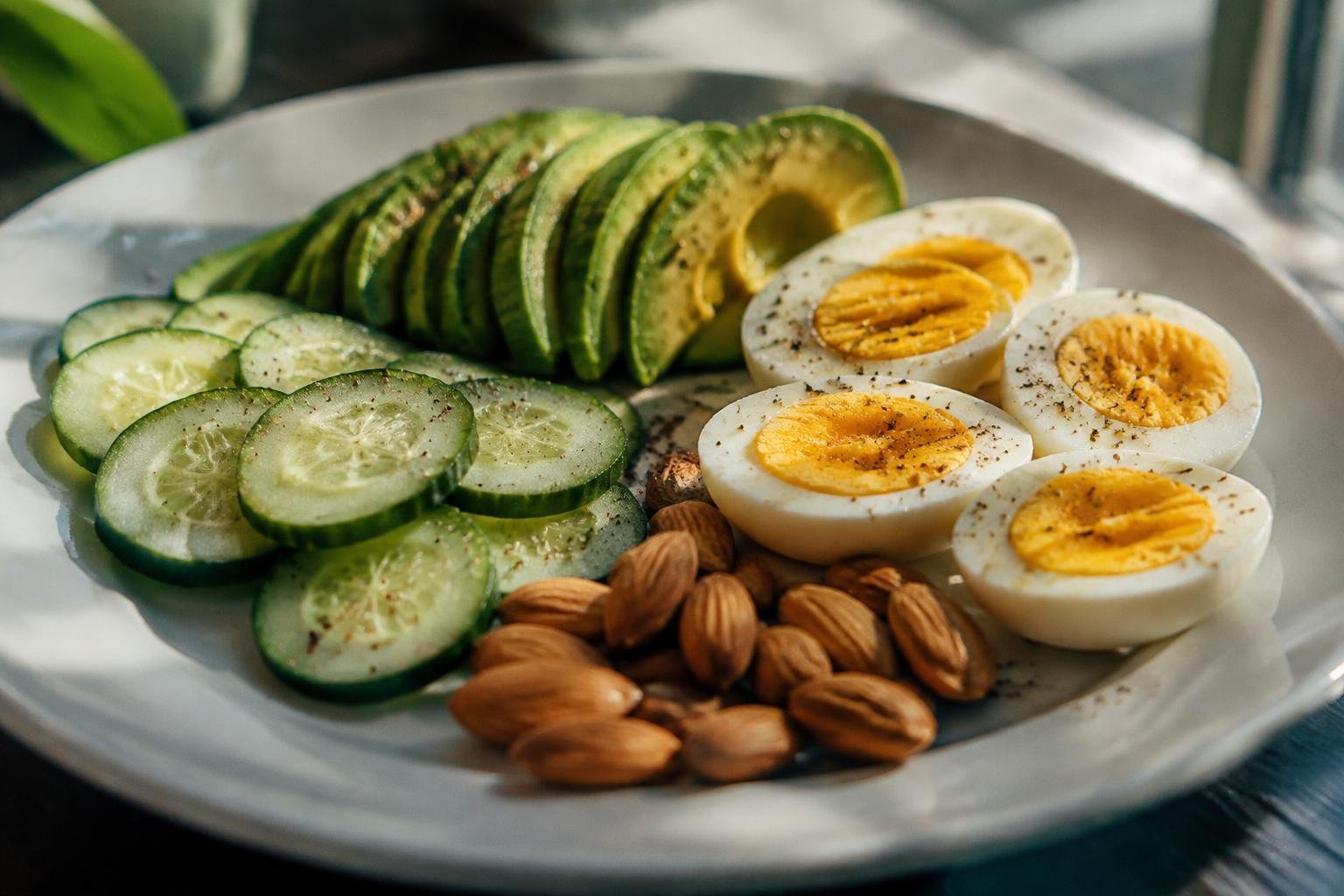
Think of balance as a simple mix, not a strict formula. A boiled egg with a few cucumber slices, for instance, brings protein, fat, and crunch without much fuss. You don’t need every snack to contain all three in exact amounts; the aim is to choose foods that add staying power and suit your appetite.
Protein and staying full
Protein can make a snack more filling, which is handy when your next meal isn’t right around the corner. Try cottage cheese with a few cherry tomatoes, or roll turkey slices around a strip of bell pepper. Both options offer more staying power than a small portion of a low protein snack on its own. You’ll also get a clear sense of what you’re eating, rather than relying on a packaged snack’s carb count to tell the whole story.
For a plant based choice, reach for a few cubes of baked tofu or edamame. These can work well if you want something savory, and they’re easy to pair with vegetables for a bit of texture. Protein needs vary, so pay attention to your own hunger: if a snack leaves you satisfied until your next meal, you’ve likely found a useful combination.
Fiber and healthy fats
Fiber adds texture and can slow how quickly a snack is eaten, while fat contributes richness and satisfaction. Celery with almond butter is a familiar example: the crisp stalk gives you fiber, and the nut butter adds fat. You can also pair avocado with a few radishes or add chia seeds to plain yogurt. Portions matter, especially with calorie dense foods such as nuts and seeds, so a small serving is often enough to round out a snack.
Choose fats from foods such as olives, avocado, nuts, or seeds, and pair them with fiber rich vegetables when you can. A few olives alongside sliced cucumber is simple; pumpkin seeds over a small serving of cottage cheese adds crunch. The combination doesn’t have to be elaborate. A practical mix of textures and nutrients can make a modest snack feel complete.
- Pair crunchy vegetables with a creamy dip.
- Keep unsalted nuts in a small container.
- Add seeds to plain yogurt for extra texture.
So, What Are Some Actually Tasty Low-Carb Snacks?
A good snack can be simple and still feel like something you’d choose, not something you’re settling for. Think crisp, creamy, salty, or sweet, with flavors that work together. A few familiar ingredients can turn into satisfying bites without much fuss: cucumber with herbed cream cheese, or a square of dark chocolate alongside a spoonful of peanut butter. You don’t need special products or complicated recipes, either.
Mixing textures keeps these ideas interesting. Pair crunchy celery with a soft cheese, or add a little tang with olives and feta. For a sweeter note, berries bring freshness to plain Greek yogurt, while cinnamon can make ricotta taste dessert-like. The options below give you plenty to play with, whether you’re after a savory nibble or a small treat.
Savory bites you’ll want to make again
For a quick savory snack, wrap a slice of turkey around a pickle spear, or tuck smoked salmon into cucumber rounds with a dab of cream cheese. Both combinations bring salt and crunch without needing a recipe. If you want something warm, roast broccoli florets with olive oil and grated Parmesan until the edges turn crisp. A hard-boiled egg with a little mustard is another easy choice, especially when you’re craving a familiar, hearty flavor.
Cheese can do more than sit beside crackers. Try mozzarella with cherry tomatoes and basil, or mash tuna with mayo and spoon it into halved mini peppers. Avocado also makes a good base: top a half with crumbled feta, chili flakes, and a squeeze of lime. For a simple mix-and-match guide, pair a crunchy vegetable with a creamy dip or a protein-rich topping.
| Snack | Flavor and texture | Easy pairing |
|---|---|---|
| Cucumber and cream cheese | Cool and creamy | Fresh dill |
| Turkey and pickle | Salty and crisp | Mustard |
| Broccoli with Parmesan | Warm and crunchy | Olive oil |
| Mozzarella and tomato | Soft and juicy | Basil |
Sweet treats that keep carbs in check
Berries are an easy way to add sweetness without reaching for candy. Spoon raspberries or sliced strawberries over plain Greek yogurt, then add a sprinkle of chopped walnuts for a little crunch. Ricotta works well, too; stir in cinnamon and a few drops of vanilla for a soft, cheesecake-like taste. If you prefer something you can nibble slowly, pair a few berries with a piece of dark chocolate.
For a richer bite, spread almond butter on celery and add a few unsweetened coconut flakes, or fill a couple of strawberries with a small spoonful of mascarpone. Chia pudding can be made with unsweetened milk and vanilla, then topped with berries when you’re ready to eat. Choose plain yogurt and nut butters without added sugar, since sweetened versions can change the flavor and carbohydrate content quite a bit.
The Real Deal About Snacking at Home, Work, or On the Go
Your best snack is often the one that fits where you’ll eat it. At home, you can grab something from the fridge; at work, it needs to survive a commute and sit neatly in a desk drawer. For a day out, think about packaging, temperature, and whether you’ll have a place to wash your hands.
A little planning makes the choice feel easy rather than like another task. Keep a few options in the spots where you tend to need them, and you’re less likely to be stuck with whatever’s in the vending machine. A small container, a napkin, or a cooler pouch can make a practical snack much easier to carry.
Quick picks for busy days
When you’re rushing between errands or heading into a long stretch of meetings, choose snacks that are ready to eat and easy to pack. A cheese stick, a handful of almonds, or a pack of olives can go straight into your bag. For a crisp option, try roasted seaweed or cucumber slices in a sealed container. Keep napkins nearby for anything oily, and choose a sturdy container if your bag tends to get knocked around.
At your desk, stash shelf stable choices where you can see them, rather than buried behind paperwork. Tuna packets, pumpkin seeds, or a small pack of roasted edamame take little room and don’t need a fridge. If you’re carrying something perishable, such as sliced bell pepper with dip, use an insulated pouch with a cold pack.
- Pack a spoon for cottage cheese or chia pudding.
- Choose resealable bags for nuts and seeds.
- Keep a spare napkin in your work bag.
- Use a hard sided container for soft produce.
Simple snacks to prep ahead
A few minutes of prep can give you grab and go choices for the next couple of days. Wash and dry celery sticks, radishes, or bell pepper strips, then portion them into containers so you don’t have to handle a whole cutting board on a busy morning. Pair them with a small tub of cream cheese or guacamole, packed separately to keep the vegetables crisp.
Hard boiled eggs are another handy option; keep them refrigerated and bring only what you’ll eat that day. You can also portion walnuts, pecans, or roasted chickpeas into small containers, which keeps snack bags from turning into a trail of crumbs in your tote. Labeling containers with your name can save a mix up in a shared office fridge.
How Much Should You Eat, Honestly?
A snack should take the edge off, not leave you too full for dinner. Your appetite, schedule, and next meal all matter, so there isn’t one portion that fits every afternoon. If lunch was light or dinner is hours away, a more substantial snack may make sense; if you’re simply peckish before dinner, keep it small. Start with a modest serving, then pause before reaching for more.
It helps to choose a portion before you sit down, rather than nibbling straight from a large container. Put your snack on a plate or into a small bowl, and pair it with water or unsweetened tea if you like. The examples below are starting points, not strict limits.
Easy portion cues
Use your hand as a quick guide when measuring isn’t practical: a small handful of nuts is often enough for a snack, while a palm sized serving of cheese gives you a clear stopping point. For crunchy vegetables such as cucumber or bell pepper, fill a cup or small bowl; add a spoonful of dip rather than serving it straight from the tub. These cues keep portions visible without turning snack time into homework.
For foods that come in individual pieces, count out what you plan to eat. Try a boiled egg with a few olives, or celery sticks with a modest swipe of nut butter. If you’re still hungry after finishing, wait a few minutes and check in with your appetite before adding another serving.
Make-ahead tips for the week
Set aside a little time after shopping to prep snacks you’ll actually want to eat. Wash and slice cucumbers, peppers, or celery, then store them in a sealed container with a paper towel to absorb excess moisture. Cook a few eggs, cool them promptly, and keep them refrigerated for easy portions during busy mornings or late afternoons.
Small containers make grab and go choices easier: portion nuts into snack sized jars, or pack cheese with a handful of vegetables. Keep dips in separate, leakproof containers so the produce stays crisp. For a workday, pack only what you expect to eat and add an ice pack to keep perishable foods cold.
| Snack | Practical portion cue | Prep idea |
|---|---|---|
| Nuts | Small handful | Portion into jars |
| Cut vegetables | Small bowl or cup | Wash and slice ahead |
| Boiled egg | One egg | Cook and refrigerate |
| Cheese and vegetables | A few pieces with a handful of vegetables | Pack in a sealed container |


Final Words
Healthy low-carb snacks work best when they’re satisfying, not just low in carbohydrates. Pairing protein or healthy fat with fiber rich vegetables can help you make a snack that holds you over: try cucumber slices with hummus, a boiled egg with cherry tomatoes, or plain yogurt with a few nuts. Your portions still matter, and your appetite, activity, and routine all shape what feels right. A snack doesn’t need to be complicated or perfectly planned.
Keep a few practical options within reach, such as cheese and bell pepper strips at home or a small container of almonds for a busy afternoon. Check labels on packaged snacks, since added sugar and oversized portions can change what looks like a simple choice. And if a snack leaves you hungry soon after, adjust the combination rather than chasing the lowest carb count. Choose foods you enjoy, pay attention to how they satisfy you, and let that guide your next pick.