Vegan Whole Food Recipes
A satisfying vegan meal doesn’t need a long ingredient list or a specialty shop run. With beans, whole grains, vegetables, nuts, and fruit, you can make food that’s filling and full of flavor. Think lentils simmered with tomatoes or roasted sweet potatoes tucked into a bowl with brown rice. Whole food cooking starts with ingredients you recognize.
Key Takeaways:
- Vegan whole food recipes center on plant ingredients like beans, lentils, grains, vegetables, fruit, nuts, and seeds, rather than relying on heavily processed substitutes.
- A filling meal pairs a few basics: try brown rice with black beans, roasted vegetables, and avocado, or lentils with potatoes and greens.
- Simple prep makes weeknight cooking easier. Cook a pot of grains or beans ahead, then add fresh ingredients and a quick dressing when you’re ready to eat.
What Makes a Whole Food Recipe Vegan?
A vegan whole food recipe skips animal products and builds the meal around ingredients close to their natural form. You might cook beans from dry, roast a sweet potato, or toss chopped greens with lemon. The idea isn’t to make every ingredient untouched or every meal complicated; it’s to keep plants at the center and let their real flavors do the work.
That distinction matters because vegan food can include highly processed products, while whole food cooking usually relies more on recognizable ingredients. A packaged meat substitute may be vegan, but it isn’t the same as lentils seasoned with garlic and herbs. You don’t need strict rules to make a thoughtful choice. Start with the ingredients you can identify, then decide whether a shortcut fits the meal you want.
Whole foods, in plain English
Whole foods are ingredients that haven’t been heavily refined or changed from their original form. Think of an apple instead of apple candy, brown rice instead of a puffed snack, or a bowl of chickpeas rather than a processed imitation. Some preparation is perfectly ordinary: dried beans are still whole foods after you soak and simmer them, and tomatoes remain tomatoes when you chop them into a sauce.
Fresh, frozen, dried, and canned foods can all fit. Frozen spinach is simply spinach preserved at its peak, while canned beans are cooked and ready to use; check the label if you want to avoid added salt or flavorings. The useful question is whether an ingredient still resembles the food it came from. A simple ingredient list often gives you the answer.
How vegan ingredients fit together
Plant based cooking pairs ingredients for flavor, texture, and substance. Beans bring softness and a hearty bite; vegetables add freshness or sweetness, and grains give you something to scoop up the sauce. Try black beans with roasted squash and rice, or toss white beans with tomatoes, greens, and olive oil. You’re not following a formula so much as making a plate that feels complete.
Seasoning helps those ingredients come together. Lemon can brighten lentils, toasted spices can warm a pot of chickpeas, and chopped herbs can freshen a tray of roasted vegetables. When a dish tastes flat, a pinch of salt or a squeeze of citrus may be all it needs. And a little contrast goes a long way: pair creamy hummus with crisp cucumber, or soft polenta with browned mushrooms.
- Rinse canned beans to remove some of their packing liquid.
- Cut vegetables into similar sizes so they cook evenly.
- Add delicate herbs near the end of cooking.
Stocking My Vegan Whole Food Pantry
A reliable pantry makes weeknight cooking less of a scramble. Keep ingredients you already enjoy, and choose packages you can use before they go stale: a small bag of brown rice beats a giant sack gathering dust in the cupboard. Store dry goods in sealed containers, label anything you transfer, and put newer purchases behind older ones. A cool, dry shelf is enough for most staples; nuts and seeds last longer in the fridge, where their natural oils are less likely to turn rancid.
Check your cupboards before shopping, then replace what you’ve actually used. That simple habit cuts down on duplicate bags of lentils and half forgotten jars. A few dependable basics give you options without asking you to stock every ingredient at once.
Beans, grains, nuts, and seeds
Dried beans and lentils are inexpensive cupboard staples, while canned beans are handy when you need dinner sooner. Keep a few types you like, such as chickpeas, black beans, and red lentils. For grains, brown rice, oats, quinoa, and whole grain pasta cover different cooking needs; choose what fits your routine rather than buying a long list. If you buy dried beans, store them in airtight jars and date the label, since older beans can take longer to soften.
Almonds, walnuts, pumpkin seeds, chia, and ground flax add useful variety to a shelf. Buy smaller amounts if you don’t use them often, and refrigerate opened packages to protect their flavor. A jar of peanut butter or tahini also earns its space: both keep well and turn up in plenty of everyday cooking.
Flavor boosters worth keeping around
Good seasonings make familiar pantry foods taste distinct. Keep salt, black pepper, smoked paprika, cumin, curry powder, and dried oregano where you can reach them, and replace spices when their aroma fades. Garlic and onions store well in a cool, ventilated spot, while lemons add brightness from the fridge. For quick savory depth, stock tomato paste, vegetable broth, and low sodium soy sauce or tamari; check labels if you’re avoiding added ingredients.
Vinegar is another small bottle with a lot of uses. Apple cider or red wine vinegar can sharpen beans, grains, and vegetables, while mustard brings tang to sauces and dressings. Nutritional yeast offers a savory, slightly nutty flavor, and a jar of chili flakes gives you an easy way to add heat at the table.
| Pantry item | Useful options | Storage note |
|---|---|---|
| Beans and lentils | Chickpeas, black beans, red lentils | Seal dried goods; date the container |
| Grains | Brown rice, oats, quinoa | Keep dry and tightly covered |
| Nuts and seeds | Walnuts, pumpkin seeds, ground flax | Refrigerate opened packages |
| Seasonings | Cumin, smoked paprika, oregano | Store away from heat and light |
| Flavor boosters | Vinegar, mustard, nutritional yeast | Follow the package after opening |
How to Build a Meal That Actually Satisfies
A filling plate doesn’t need a complicated formula. Think in parts: a hearty protein, a grain or other substantial base, and plenty of vegetables. That mix gives you different flavors and textures, while making lunch or dinner feel like a proper meal rather than a collection of sides.
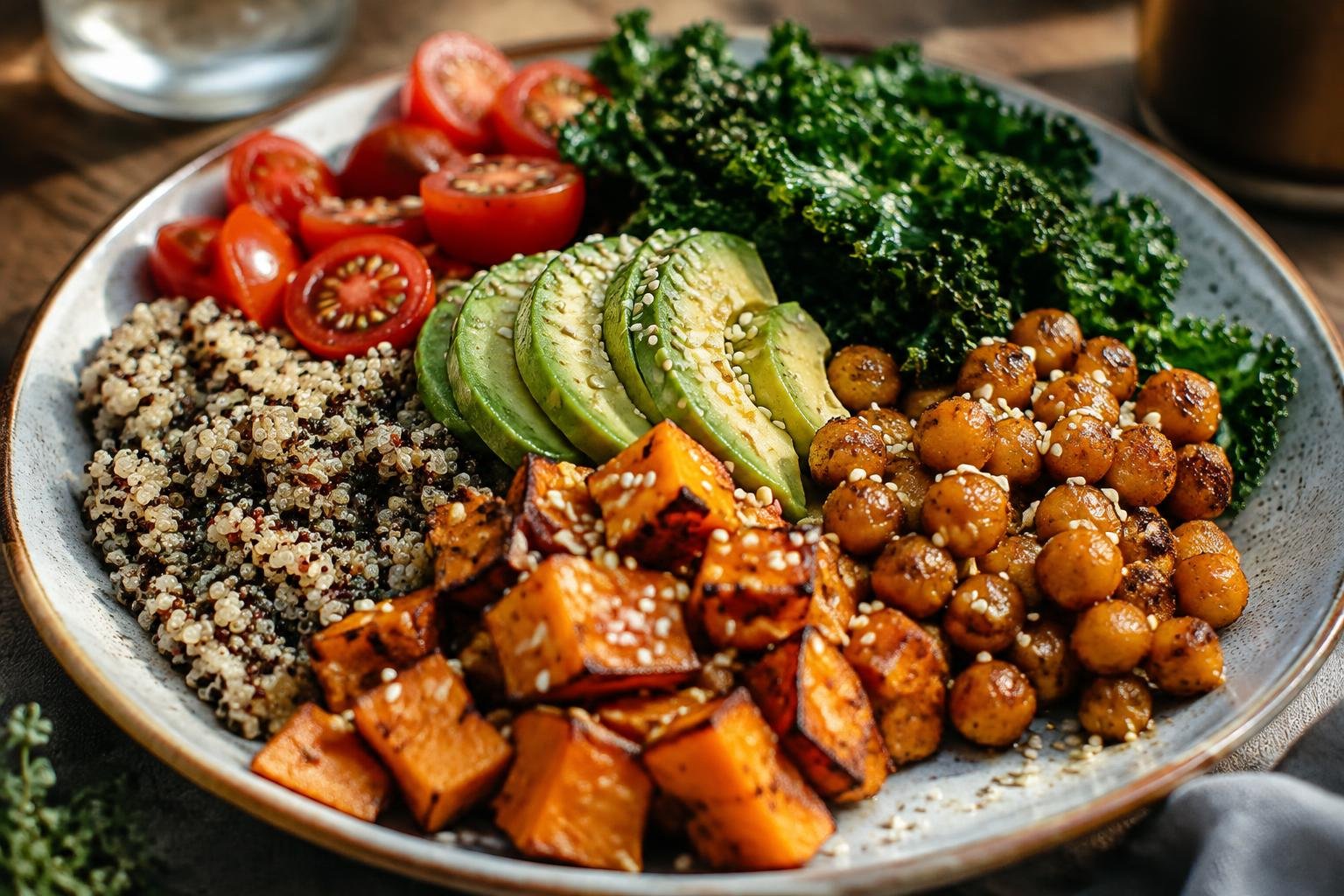
Let your appetite and what’s in the fridge guide the proportions. A bowl can start with brown rice, then add baked tofu, roasted broccoli, and a spoonful of tahini sauce. On a colder day, you might prefer lentils with potatoes and wilted greens. The point is to build a plate you’ll enjoy eating and feel good after.
Pairing Protein, Grains, and Vegetables
Start with a protein that can hold its own: chickpeas, lentils, beans, tempeh, or tofu all work well. Add a grain such as quinoa, barley, or brown rice, then choose vegetables for color and bite. For example, pair black beans and rice with sautéed peppers, or serve crispy tofu over quinoa with roasted cauliflower.
Mixing ingredients across the plate keeps each bite interesting, but you don’t have to use a grain every time. Sweet potatoes, winter squash, and corn can make a satisfying base, too. If you’re serving a bean stew, add greens and a slice of whole grain bread; for a grain bowl, include enough beans or tofu that the base doesn’t do all the work.
Adding Flavor and Texture
Season each component as you cook instead of expecting one sauce to carry the whole dish. A pinch of cumin can warm up black beans, while lemon brightens lentils and steamed greens. Toasted sesame seeds, chopped herbs, or sliced scallions add a fresh finish with little effort.
Texture matters just as much as seasoning. Pair soft beans with crisp cabbage, or creamy roasted squash with crunchy pumpkin seeds. A quick dressing made with tahini, lemon juice, and water can tie ingredients together; add the water slowly until it’s pourable. Keep a few easy finishing touches in mind:
- Add crushed peanuts for crunch.
- Stir chili flakes into warm oil.
- Squeeze lime over a bowl just before serving.
- Scatter chopped parsley or cilantro on top.
Easy Vegan Whole Food Recipes I Keep Coming Back To
The recipes worth repeating are the ones that fit a regular day, not just a quiet Sunday with a clear counter. You can build a satisfying meal from familiar ingredients like oats, beans, brown rice, potatoes, and seasonal vegetables, then change the seasoning to suit your mood. A squeeze of lemon can brighten lentils; smoked paprika gives roasted chickpeas a warmer edge. These small choices keep simple food from feeling dull.
Think of the ideas here as flexible starting points. Use ripe fruit in your breakfast bowl, swap one leafy green for another, or pair a hearty main with whatever crunchy vegetables you have on hand. You don’t need an exact match to make the meal work.
Breakfasts that get the day going
For a filling breakfast, cook rolled oats with water or unsweetened plant milk and top them with banana, chopped walnuts, and cinnamon. If you prefer something savory, mash white beans on whole grain toast with lemon and black pepper, then add sliced tomato or wilted spinach. Both options use everyday ingredients and give you room to adjust the texture and flavor: make the oats thicker, or leave the beans a little chunky.
On mornings when you want a cooler bowl, stir chia seeds into plant milk and let them soften until spoonable; add berries and pumpkin seeds just before eating. You can also turn leftover cooked sweet potato into breakfast by warming it with black beans and a pinch of cumin. A few avocado slices make it feel generous without much fuss.
Weeknight meals and simple snacks
A pot of lentils with diced carrots, onion, and canned tomatoes makes an easy weeknight meal; serve it over brown rice or scoop it up with whole grain bread. For a different flavor, roast a tray of broccoli and cubed potatoes, then add chickpeas and a tahini and lemon drizzle. The same basic ingredients can take on a new character with curry powder, oregano, or a little chili.
When you need a snack, pair apple slices with peanut butter, or season roasted chickpeas with garlic and paprika. Hummus with carrot sticks and cucumber is another dependable choice, especially if you want something savory between meals. Keep the portions practical: a small bowl of chickpeas or one piece of fruit with nut butter is easy to enjoy without turning snack time into another cooking project.
| When | Recipe idea | Everyday ingredients |
|---|---|---|
| Breakfast | Banana walnut oats | Rolled oats, banana, walnuts |
| Breakfast | White bean toast | Beans, whole grain bread, lemon |
| Weeknight meal | Lentils with rice | Lentils, carrots, tomatoes, brown rice |
| Snack | Apple with peanut butter | Apple, peanut butter |
My Take on Cooking These Meals Without the Fuss
Good weeknight cooking depends less on elaborate recipes than on a few decisions made before the pan gets hot. Keep a cutting board clear, set out the ingredients you’ll use, and choose a pot or skillet that fits the job. That small reset saves you from hunting for a can opener while onions start to scorch.
I also like recipes that leave room for judgment. If the lentils need another splash of water, add it; if the greens wilt sooner than expected, take the pan off the heat. You don’t need perfect timing or a sink full of specialty tools. A sharp knife, one dependable pot, and a little flexibility go a long way.
Batch prep that doesn’t take over your weekend
Set a short timer and prep only the ingredients that genuinely slow you down during the week. You might rinse a couple of cans of beans, chop an onion, and wash a bunch of kale, then stop. There’s no need to turn Sunday into an assembly line or portion every meal into matching containers. A small head start is enough.
Choose ingredients that can work in more than one dinner. Cook a pot of brown rice while you chop vegetables, for instance, then use some with a bean bowl and the rest beside a quick skillet meal. Keep the prep focused: wash produce before putting it away, group chopped ingredients by recipe, and leave delicate herbs whole until you’re ready to use them.
Simple swaps when you’re missing an ingredient
Start by matching the ingredient’s job, not its name. If a recipe calls for chickpeas and you’ve got white beans, either will bring body to a soup or grain bowl. No fresh spinach? Stir in frozen spinach near the end, or use chopped kale and give it a few extra minutes to soften.
For sauces, taste as you go rather than reaching for an exact substitute. Lemon juice can brighten a dressing in place of vinegar; a spoonful of tahini can thicken it if you’re out of nut butter. If the mixture turns too dense, loosen it with water a teaspoon at a time. A few practical checks keep swaps from becoming guesswork:
- Match cooking times for vegetables.
- Drain canned beans before adding them.
- Season again after swapping ingredients.
What’s the Best Way to Store and Reheat Them?
A little care after cooking keeps your meals pleasant to eat days later. Cool hot food in shallow containers rather than leaving a full pot on the counter, and divide large batches into portions you’ll actually finish. That way, you won’t need to warm the whole pot just to serve lunch.
Choose storage and reheating methods based on the ingredients. A lentil stew can handle gentle warming, while crisp roasted vegetables are best reheated on a tray. Keep sauces separate when you can, and add fresh herbs or a squeeze of lemon just before serving to brighten the leftovers.
Fridge and freezer basics
Let your food stop steaming before you seal it in containers, but don’t leave it at room temperature for more than two hours. Shallow, airtight containers cool more evenly than a deep stockpot, and clear ones make it easier to spot the roasted squash or chickpea curry you planned to eat. Refrigerate meals promptly and aim to use them within three to four days. If you won’t get to a portion in time, freeze it instead.
Soups, stews, cooked beans, and grain bowls generally freeze well; tender greens and crisp toppings don’t. Freeze single servings in labeled containers, leaving a little room for liquids to expand. Thaw a portion in the fridge overnight, or use your microwave’s defrost setting if you’re short on time. Keep fresh avocado, herbs, and crunchy seeds aside until serving.
| Food | Fridge | Freezer |
|---|---|---|
| Lentil stew | Use within three to four days | Freeze in portions |
| Cooked grains | Store airtight | Freeze flat for quick thawing |
| Roasted vegetables | Keep in a shallow container | Expect a softer texture |
| Fresh toppings | Store separately | Add after reheating |
Reheating without losing flavor
Warm soups and saucy beans in a covered saucepan over medium low heat, stirring now and then so the bottom doesn’t catch. Add a splash of water or broth if the mixture has thickened in the fridge. For microwave reheating, use a microwave safe dish, cover it loosely, and pause to stir halfway through; dense portions can heat unevenly.
For roasted vegetables, tofu, or baked falafel, use an oven or skillet rather than the microwave if you want the edges to stay crisp. Spread food in a single layer and heat until steaming hot throughout. Rice and other cooked grains can dry out, so add a spoonful of water before covering and warming them. Finish with lemon, chopped parsley, or a spoonful of tahini sauce after heating, not before.


To wrap up
Vegan whole food cooking doesn’t have to mean complicated recipes or a pantry full of specialty ingredients. You can build satisfying meals from familiar staples: beans, lentils, brown rice, oats, vegetables, fruit, nuts, and seeds. A pot of chickpeas can become a hearty curry one night and a lunch bowl the next; roasted vegetables pair easily with grains and a simple tahini dressing. These small choices add variety while keeping your meals grounded in minimally processed foods.
As you cook, pay attention to what makes a dish filling and enjoyable for you. Add lentils to soup, keep cooked grains ready for quick meals, and season vegetables with garlic, herbs, citrus, or spices. If a recipe feels bland or leaves you hungry, adjust it with more seasoning, beans, or a satisfying topping such as toasted seeds. Your everyday favorites don’t need to be elaborate. A few dependable ingredients and recipes can make plant based meals practical, nourishing, and easy to return to.