Juicy Chicken Breast Recipes That Never Turn Out Dry
Are you tired of serving chicken breasts that feel like shoe leather? What if you could make your chicken moist and delicious with a few simple tricks?
Cooking tender chicken recipes is easy. With the right techniques, you can make meals that taste like they came from a restaurant. The key is knowing how heat, moisture, and prep work together to make chicken juicy.
Whether you’re new to cooking or have lots of experience, learning to make juicy chicken breasts will improve your skills. This guide will show you how to avoid dry, tough chicken for good.
Key Takeaways
- Learn foolproof methods to keep chicken moist
- Discover cooking techniques that preserve tenderness
- Understand the science behind juicy chicken breasts
- Explore marinades that enhance flavor and moisture
- Prevent common mistakes that lead to dry chicken
Essential Tips for Perfectly Moist Chicken Every Time
Cooking juicy chicken breasts is easier than you think. With the right tips, your meals will go from dry to tender. The key is to know a few moist chicken techniques that chefs love.
Temperature control is key when cooking chicken. First, let your chicken come to room temperature. This step ensures even cooking and prevents dry edges. Use a meat thermometer to check the chicken reaches 165°F without overcooking.
Brining is a powerful secret for juicy chicken. Soak your chicken in a saltwater solution for 30 minutes to an hour before cooking. This keeps the meat moist and flavorful. Try adding herbs or garlic to your brine for extra taste.
Letting your chicken rest after cooking is also important. Let it sit for 5-10 minutes after removing it from heat. This lets the juices spread evenly, making each bite moist and delicious. Cover the chicken loosely with foil to keep it warm during this time.
By following these simple tips, you’ll improve your cooking and make moist chicken every time.
discover exactly how to eat in a way that BOOSTS your metabolism, balances hormones, FIGHTS stubborn belly fat, heals your gut, and increases your energy, regardless of your "bad genetics".
The Science Behind Juicy Chicken Breasts

Chicken cooking science begins with the tiny world of proteins. When you cook chicken, proteins change in a process called denaturation. This change affects how much moisture the meat keeps.
The structure of chicken proteins is key to tender meat. At low heat, proteins relax and hold water. But as heat rises, proteins tighten, which can push out water. This is why keeping the temperature just right is important to avoid dry chicken.
Your cooking method greatly affects how much moisture stays in the meat. Slow, gentle heat lets proteins denature evenly, keeping water inside. Quick, high heat, on the other hand, can make proteins contract too fast, losing moisture and making the chicken tough.
Professional chefs use this science to make chicken always juicy. They respect the protein structure and use methods that keep moisture in. This way, you can make your home cooking incredibly juicy and delicious.
Quick and Easy Marinade Recipes for Succulent Chicken

Turning dry chicken into a delicious meal starts with mastering chicken marinades. These flavor-packed mixtures are your secret to tender, juicy chicken. They can even make tough chicken breast taste amazing, impressing everyone.
Let’s look at some simple marinade recipes that make chicken magic. A classic citrus marinade uses lemon juice, olive oil, garlic, and herbs. The lemon’s acid breaks down tough fibers, making chicken tender. For an Asian twist, try a soy sauce and ginger marinade for deep flavor and moist meat.
Flavorful chicken recipes often use strategic marinating times. Aim for 30 minutes to 2 hours to enhance taste without losing texture. Don’t marinate too long, as acid can make chicken tough. Always marinate in the fridge to keep it safe and tasty.
Try different marinades like:
– Yogurt and herb
– Balsamic vinegar and rosemary
– Honey and mustard
Each one adds unique flavors and tenderizes chicken perfectly.
Great marinades are all about balance. Mix acid, oil, and seasonings for chicken that’s full of flavor and moisture. Your taste buds will love these game-changing chicken marinade techniques!
Pan-Searing Techniques for Restaurant-Quality Results
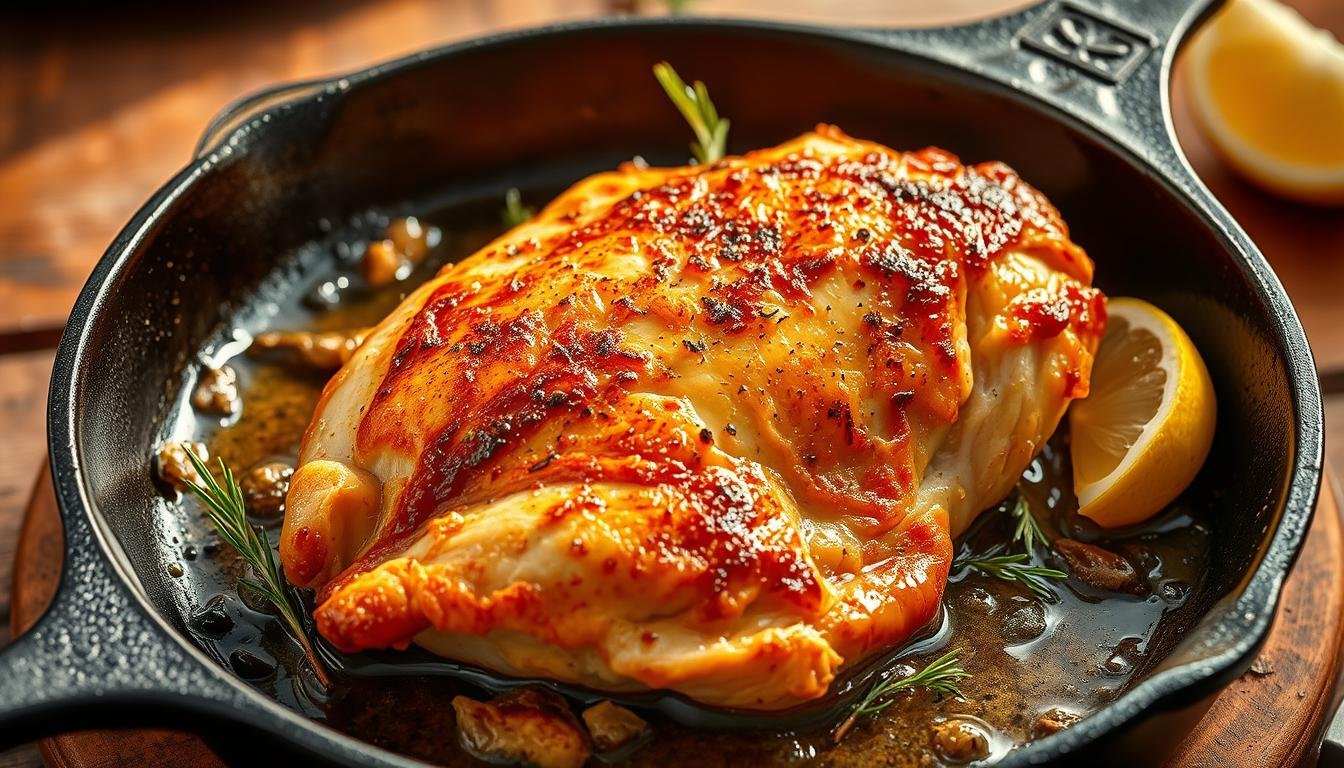
Mastering pan-seared chicken is easier than you might think. The secret to achieving restaurant-quality results starts with selecting the right chicken breast and preparing it correctly. Choose a uniform-sized chicken breast for even cooking and that perfect crispy skin we all love.
Start by patting your chicken breast dry with paper towels. This step removes excess moisture and helps create a beautiful golden-brown crust. Season the meat generously with salt and pepper, ensuring even coverage on both sides. Bringing the chicken to room temperature before cooking is key to a juicy breast.
Heat a heavy-bottomed skillet to medium-high heat with a touch of high-smoke-point oil like avocado or grapeseed. Place your chicken breast skin-side down first to develop that irresistible crispy chicken skin. Cook for about 4-5 minutes without moving the meat, allowing a perfect sear to form. Flip carefully and continue cooking until the internal temperature reaches 165°F.
Pro tip: Let your pan-seared chicken rest for 5-7 minutes after cooking. This allows the juices to redistribute, guaranteeing a tender and juicy chicken breast every single time. With practice, you’ll be creating restaurant-quality pan-seared chicken that will impress your family and friends.
Juicy Chicken Breast Recipes That Never Turn Out Dry

discover exactly how to eat in a way that BOOSTS your metabolism, balances hormones, FIGHTS stubborn belly fat, heals your gut, and increases your energy, regardless of your "bad genetics".
Are you tired of dry, tasteless chicken? Worry no more! These foolproof chicken recipes will make your dinners moist and flavorful. You’ll enjoy Mediterranean, spicy southwestern, and more, every time.
Try a classic herb-roasted chicken breast that stays juicy. Marinate it in olive oil, rosemary, thyme, and garlic for at least 30 minutes. Brining the meat beforehand keeps it moist and flavorful, impressing your family.
Our top pick is a lemon-pepper marinade for chicken breasts. It’s a mix of fresh lemon juice, black pepper, and honey. This combo tenderizes the meat and gives it a crispy outside while keeping it tender inside.
Remember, let your chicken rest for 5-10 minutes after cooking. This lets the juices spread evenly, making each bite juicy and flavorful. With these tips, you’ll never have a dry chicken breast again!
Baking Methods That Lock in Moisture

Mastering oven-baked chicken is easy. With the right techniques, you can make chicken breasts juicy and delicious. The key is to keep moisture in during baking.
Choose the right baking dish first. A ceramic or glass dish with high sides is best. It creates a steamy environment that keeps your chicken tender. Covering the chicken with foil at the start helps keep moisture in, making it succulent.
Temperature control is key for perfect chicken. Preheat your oven to 375°F. Use a meat thermometer to check if it’s done. Remove the chicken when it hits 165°F internal temperature. Let it rest for 5-10 minutes to let juices spread evenly.
Brining is another great technique. Soak your chicken in a saltwater solution for 30 minutes before baking. This step helps the meat stay moist and adds flavor, making your meal tender and delicious.
Sous Vide Secrets for Ultimate Juiciness
Discover the secret to perfectly cooked chicken with sous vide. This method ensures tender chicken breast every time. It’s a game-changer that turns simple meals into gourmet dishes in your kitchen.
Sous vide chicken makes cooking easy. You seal the chicken in a bag and cook it in water at the perfect temperature. This way, your chicken cooks evenly, avoiding dry spots.
To start, you need a few tools: a sous vide cooker, vacuum sealer, and a big pot. Set the cooker to 145°F for juicy chicken. Cooking time is 1-2 hours, based on chicken thickness.
Once cooked, sear the chicken in a hot skillet. This step adds flavor and a crispy outside. It makes your sous vide chicken even more delicious.
With time, you’ll get better at sous vide. Say goodbye to dry chicken. Sous vide makes your home cooking as good as a restaurant’s.
Common Mistakes to Avoid When Cooking Chicken
Cooking chicken can be tricky, and many home chefs struggle with dry, tough meat. It’s important to know the common mistakes to avoid. This way, you can make delicious, juicy chicken every time.
One big mistake is overcooking chicken. Chicken breasts are lean and can quickly become dry and rubbery. Use a meat thermometer to check the internal temperature – 165°F is the safe target. Remove the chicken from heat just before it reaches this point, as residual heat will continue cooking the meat.
Another mistake is skipping the resting period. After cooking, let your chicken rest for 5-10 minutes. This allows juices to redistribute throughout the meat, ensuring each bite stays moist. Cutting into chicken immediately after cooking causes precious moisture to escape, resulting in dry, less flavorful meat.
Proper storage and preparation are key for juicy chicken tips. Avoid freezing and thawing multiple times, which can damage meat texture. Thaw chicken slowly in the refrigerator and pat it dry before cooking to help achieve a perfect sear. Marinating can also help prevent dry chicken by adding moisture and flavor.
By avoiding these common chicken cooking errors, you’ll be well on your way to serving tender, succulent chicken. Practice these techniques, and dry chicken will become a thing of the past.
Conclusion
Learning to cook moist chicken takes time. Your skills will grow as you try out these juicy chicken techniques. Each method, from marinades to precise cooking temperatures, helps you master chicken cooking.
Perfect chicken isn’t about hard steps. It’s about keeping things simple: keeping moisture, choosing good ingredients, and controlling heat. Whether you’re pan-searing, baking, or using sous vide, your dishes will get better.
Don’t be afraid to try new things. Start with easy techniques like marinades or watching the temperature. As you get better, you’ll make chicken breasts that wow everyone. Your kitchen will become a place of creativity and tasty food.
Keep learning these cooking methods. Every try gets you closer to making chicken that’s always juicy. Your hard work will turn simple meals into special moments.
discover exactly how to eat in a way that BOOSTS your metabolism, balances hormones, FIGHTS stubborn belly fat, heals your gut, and increases your energy, regardless of your "bad genetics".