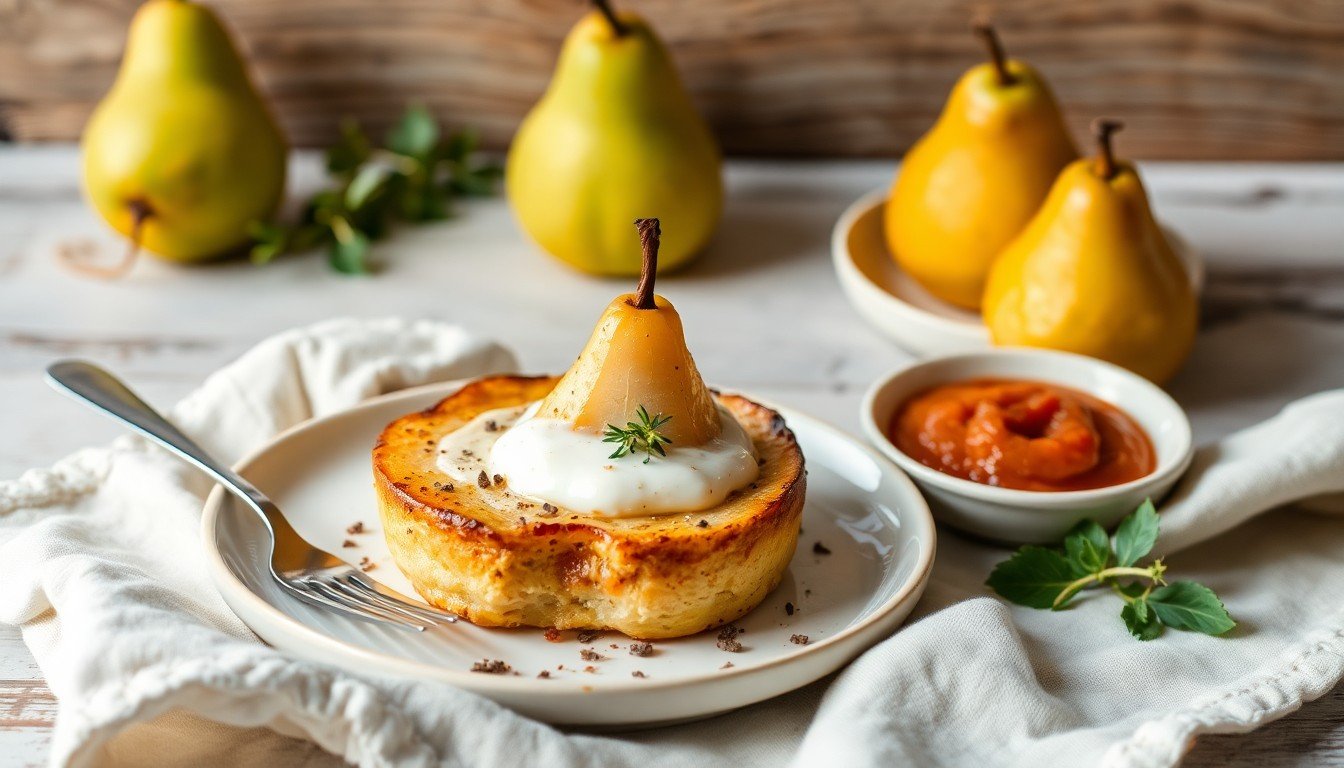
Healthy Baked Pear Dessert
Healthy eating doesn’t mean sacrificing dessert, does it? You’re looking for something sweet, satisfying, and good for you. You’ve found it: the perfect baked pear. This simple, delicious recipe lets you enjoy a guilt-free treat, packed with natural sweetness and warm spices. You’ll love how easy it is to prepare.
Key Takeaways:
* This baked pear dessert is a fantastic way to enjoy something sweet without all the guilt. You’re using natural sugars from the fruit itself, maybe a tiny bit of maple syrup or honey if you want, instead of loads of refined sugar. It’s light, satisfying, and doesn’t leave you feeling sluggish, which is a huge win for a dessert.
* Pears are packed with fiber, and baking them makes that fiber even easier for your body to digest. That means this dessert is actually good for your gut health, helping everything move along smoothly. Plus, you get a nice boost of vitamins and antioxidants, so it’s more than just a tasty treat-it’s nourishing too.
* Making this dessert is super simple and doesn’t require a ton of fancy ingredients or complicated steps. You just halve the pears, scoop out the core, add a few spices or nuts if you like, and bake. It’s perfect for those evenings when you want something warm and comforting but don’t have hours to spend in the kitchen.
Why pears are actually the best fruit for baking
You might immediately think of apples when baking fruit, but let’s be real, pears are where it’s at for a truly exceptional dessert. Their unique qualities make them stand out, creating a baked good that’s both delicious and surprisingly easy to achieve.
Think about it – you want a fruit that complements your spices, holds its shape, and doesn’t require a ton of added sugar. Pears check all those boxes, making them an underrated hero in your kitchen.
They’re naturally sweet so you don’t need much sugar
Many fruits need a hefty dose of sugar to really sing in a baked dish, but not pears. Their inherent sweetness is a game-changer, allowing you to cut back significantly on added sugars without sacrificing flavor.
This means you get to enjoy a dessert that feels indulgent, yet it’s much lighter and healthier. You’re tasting the fruit, pure and simple, which is exactly what you want in a healthy baked pear dessert.
Their texture holds up perfectly in the oven
Ever baked with a fruit only to find it turn into mush? That’s not a problem you’ll have with pears; their firm yet yielding flesh is absolutely ideal for the heat of the oven.
The magic really happens as they soften just enough, becoming tender and juicy without losing their structural integrity. You won’t end up with a watery mess, just perfectly baked fruit every time.
Their unique cell structure allows them to absorb flavors beautifully while maintaining that satisfying bite, which is something many other fruits just can’t manage. They don’t disintegrate, they transform, becoming wonderfully soft and caramelized on the edges without turning into a pulpy disaster. This ensures your dessert has that lovely textural contrast you crave, a soft interior with a slightly firmer exterior, making each bite truly enjoyable.
The real deal about keeping things healthy
You might think “healthy dessert” is an oxymoron, a contradiction in terms, but it really doesn’t have to be. You can satisfy your sweet tooth without feeling guilty or undoing all your good eating habits. It’s about making smarter choices, not giving up delicious treats entirely.
Making small adjustments to classic recipes can transform them into something that truly nourishes your body. You’ll be surprised how easy it is to swap out some less-than-ideal ingredients for things that offer actual nutritional benefits, all while keeping that amazing flavor you crave.
Swapping out heavy butter for better fats
Butter gives things a rich flavor, sure, but it’s also packed with saturated fat, which isn’t always the best for your heart. Imagine getting that same moist, tender texture in your baked goods without all the cholesterol. You absolutely can!
Consider using healthier alternatives like avocado oil or even mashed ripe avocado in some recipes. These options provide beneficial monounsaturated fats and still give you that wonderful mouthfeel. Your body will thank you, and your taste buds won’t even notice the difference – well, in a good way!
Why I think maple syrup beats white sugar every time
You know how white sugar gives you that quick energy spike and then a crash? It’s pretty frustrating, right? Maple syrup, on the other hand, is a natural sweetener that behaves a little differently in your body.
It still contains sugar, obviously, but it also brings some cool minerals to the party, like manganese and zinc. Plus, its glycemic index is a bit lower than refined sugar, meaning it won’t send your blood sugar levels quite as high quite as fast. That makes for a smoother energy release.
Think about it: you’re not just adding sweetness; you’re actually getting a tiny bit of nutrition too. Pure maple syrup comes straight from a tree – how much more natural can you get? It has a complex flavor profile that white sugar just can’t compete with, adding a lovely depth to your baked pears that you wouldn’t get otherwise.
Picking the right pear-honestly, it matters
You’re aiming for that perfect, tender bite, right? The type of pear you choose really dictates the texture and sweetness of your baked dessert, so don’t just grab any old fruit. A little thought now saves you from a mushy or rock-hard disappointment later.
Different pears behave differently under heat, you see. Some hold their shape beautifully, offering a slight chew, while others practically melt into a sweet, saucy dream. Knowing which one does what will make all the difference in your final dish.
Bosc vs. Anjou-which one’s actually better?
Bosc pears are your go-to for structure. Their firm flesh means they’ll keep their elegant shape, even after a good bake, making them ideal for slices or halves that need to look as good as they taste. Plus, their subtly spicy sweetness really shines through.
Anjou pears, on the other hand, soften considerably when baked. They’re fantastic if you’re looking for a more yielding, almost jammy texture. They’ll also contribute a lovely, mild sweetness, which pairs beautifully with warming spices.
How to tell if they’re ripe enough to bake
Checking for ripeness is pretty simple, you just need to know where to look. Gently press on the neck of the pear, right near the stem. If it yields slightly to gentle pressure, you’ve got a winner.
A pear that’s too hard won’t soften properly in the oven, and one that’s too soft will turn to mush. It’s a delicate balance, but that neck test is your best friend here.
The “neck test” is truly the most reliable indicator because pears ripen from the inside out and from the stem end downwards. The broadest part of the pear might still feel firm, but the narrow neck will give you an accurate read on its internal readiness.
My take on the perfect crunchy toppings
A truly great baked pear dessert needs that textural contrast, something crisp to play against the soft, warm fruit. You want a topping that isn’t just an afterthought, but a star in its own right, delivering a satisfying crunch with every spoonful.
You’ll find endless options in the world of crumbles and streusels, but for this recipe, we’re keeping things simple, wholesome, and seriously delicious. It’s about enhancing, not overpowering, those sweet, tender pears.
Seriously easy oat crumble you’ll love
Just five minutes of prep and you’ll have a golden, buttery oat crumble ready for your pears. This simple mixture of oats, a touch of flour, brown sugar, and melted butter comes together quicker than you can preheat your oven.
You’ll adore how the oats toast up, creating an irresistible nutty aroma and a fantastic crunch that perfectly complements the soft, baked pears underneath. It’s a classic for a reason, right?
Why a handful of pecans makes everything better
Adding pecans to your crumble introduces a whole new layer of flavor and texture that you simply can’t miss. Their earthy, slightly sweet notes pair beautifully with the pears and oats, providing a sophisticated depth.
You’ll appreciate that extra bit of satisfying crunch, too, especially when the pecans toast up in the oven. It’s a small addition that makes a big difference, trust me.
Pecans are packed with healthy fats, fiber, and antioxidants, so you’re not just adding flavor and crunch, you’re also giving your dessert a little nutritional boost. They contain vitamins E and A, plus minerals like zinc and magnesium, making them a smart choice for a wholesome treat.
How to make it happen in your kitchen
Baking pears for a healthy dessert is less about complicated techniques and more about understanding a few simple principles. You’re not aiming for a Michelin-star presentation, but rather a comforting, delicious treat that’s surprisingly easy to achieve.
You’ll discover that a little bit of foresight and some intuitive adjustments will make all the difference, transforming fresh pears into a warm, inviting dish that everyone will love. So, let’s get those hands a little messy, shall we?
Prep work that isn’t a total chore
Fifteen minutes is all you really need to get these pears ready for their oven spa day. You’ll just need to wash them thoroughly, then slice them in half right down the middle, stem to base.
Scoop out the core with a melon baller or a small spoon – it’s actually kinda satisfying. That’s it for the heavy lifting, seriously.
My secret trick for the perfect bake time
Knowing your oven is really the key to perfectly baked pears, not some magic timer. You should start checking them around the 25-minute mark, not just blindly following a recipe’s suggested time.
A gentle poke with a fork will tell you everything you need to know; it should slide in easily but still offer a slight resistance, you know? That’s when they’re done, not mushy, not hard, but just right.
You’re looking for that sweet spot where the pear is tender all the way through but still holds its shape beautifully. Every oven is a little different, and even the ripeness of your pears will play a role, so trusting your instincts and that simple fork test will prevent any over or under-baking disasters. It’s truly the best way to ensure that soft, yielding texture that makes this dessert so irresistible.
What should you serve it with?
You’ve got these beautifully baked pears, tender and sweet, a perfect dessert on their own. But what if you want to take them from simply delicious to absolutely unforgettable? Think about textures and temperatures here, creating a contrast that makes each bite even more exciting.
Consider a little something extra, a finishing touch that complements the warm, soft pear without overpowering its natural sweetness. You’re looking for additions that enhance, not mask, the star of the show.
A dollop of Greek yogurt for a protein boost
A generous spoonful of plain Greek yogurt provides a wonderful creamy counterpoint to the warm pears. It’s got that tangy kick that cuts through the sweetness, making the whole dish feel incredibly balanced. Plus, you’re getting a nice little protein bump with your dessert.
This simple addition transforms your baked pear from a treat into a more substantial, satisfying snack or even a light breakfast. It’s a surprisingly versatile pairing, you know?
Why a sprinkle of cinnamon is a total game-changer
Just a pinch of ground cinnamon can really wake up the flavor profile of your baked pears. The spice’s warm, woody notes naturally complement the fruit’s sweetness, creating a cozy, inviting aroma and taste. It’s like a warm hug in a bowl, honestly.
You’ll find that cinnamon doesn’t just add flavor, it enhances the existing notes in the pear, bringing out a deeper, more complex sweetness. It’s a subtle yet powerful ingredient, transforming a simple dessert into something truly special.
This aromatic spice, often associated with comfort foods and autumn, contains compounds that interact beautifully with the natural sugars in pears. It adds a layer of warmth and complexity that makes each bite more intriguing, almost giving the pear a richer, more caramelized flavor without adding any extra sugar. You’re not just tasting pear anymore; you’re experiencing a symphony of comforting, sweet, and subtly spicy notes.


To wrap up
Upon reflecting, you’ve seen just how easy it is to whip up a healthy baked pear dessert, proving that healthy eating doesn’t mean sacrificing flavor or fun. You don’t need a pantry full of exotic ingredients or hours in the kitchen to create something truly satisfying. Just a few simple steps, and you’re well on your way to a treat that tastes indulgent but is genuinely good for you.
You’ve learned that a sweet tooth can be satisfied without all the guilt, right? This dessert shows you how to make smart choices that benefit your body and your taste buds. So, go on, enjoy your delicious, wholesome baked pears – you’ve earned it!