Chickpea Flour Vegan Omelets
Ever thought about making a tasty breakfast that’s also good for you and doesn’t have eggs? Chickpea flour vegan omelets might be what you need. These amazing breakfast options are changing the game, providing a protein-rich, egg-free choice for your morning.
Vegan omelets with chickpea flour are more than a trend. They’re a nutritional powerhouse with great taste and versatility. Whether you’re vegan, trying plant-based foods, or just want to try something new, these omelets are a fantastic egg-free breakfast choice.
Chickpea flour gives these vegan omelets a special texture and lots of nutrients. Both chefs and home cooks are finding out how easy and tasty these breakfasts can be.
Key Takeaways
- Chickpea flour creates a perfect egg-free omelet base
- Vegan omelets offer high protein and nutrient-dense breakfast option
- Easily customizable with various fillings and toppings
- Simple to prepare with minimal cooking skills
- Suitable for multiple dietary preferences
What Makes Chickpea Flour Perfect for Vegan Omelets
Chickpea flour is a top pick for vegan omelets. It’s packed with protein and has special properties. These make it great for tasty, plant-based breakfasts.
It’s not just about texture. Chickpea flour is also a nutritional powerhouse. It has a smooth, fluffy texture like real omelets. Plus, you can add your favorite herbs and spices without changing its taste.
One cup of chickpea flour has about 21 grams of protein. This makes it a great choice for a protein-rich breakfast. Its starch content helps it cook up light and airy, just like traditional omelets.
Cooking with chickpea flour is exciting. It binds ingredients like eggs, making plant-based dishes possible. Whether you’re vegan or just trying new breakfasts, chickpea flour is a tasty, healthy option.
Want to Cook Delicious Plant-Based Meals From Scratch But Have No Idea Where To Start?
Essential Ingredients for Your Chickpea Flour Vegan Omelets
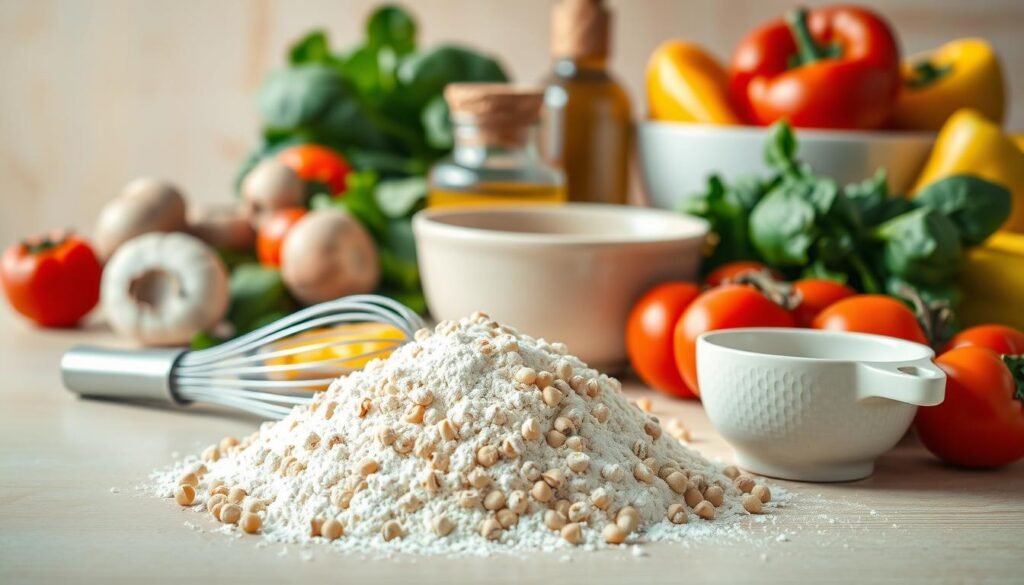
Starting your vegan omelet journey is all about picking the right ingredients. Chickpea flour is the main ingredient, packed with protein to mimic eggs. It’s the base of your tasty breakfast.
To get that omelet taste and feel, you need a few key items. Nutritional yeast gives it a cheesy flavor. Black salt adds a unique egg-like taste, making it taste just like the real thing.
Binding your ingredients together is important. Use unsweetened plant-based milk like almond or soy for a smooth mix. A bit of olive oil or melted vegan butter adds richness and prevents sticking.
Adding some extra ingredients can boost nutrition and taste. Try turmeric for color, garlic powder for depth, and a pinch of salt and pepper. These simple touches turn your basic mix into a gourmet breakfast that everyone will love.
Kitchen Tools and Equipment You’ll Need
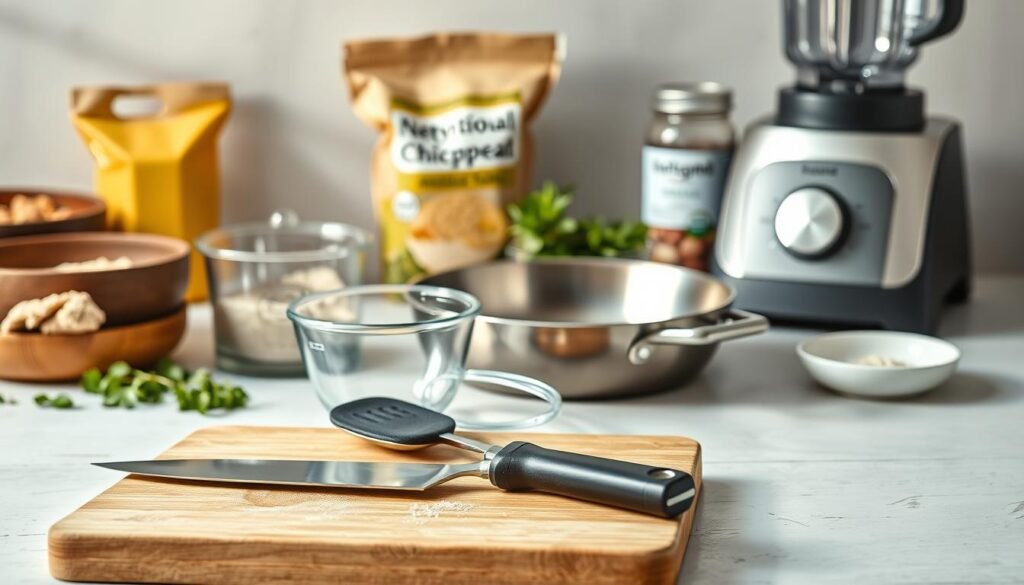
To make tasty chickpea flour vegan omelets, you need the right tools. A top-notch non-stick pan is essential. It makes sure your omelet comes out perfectly without sticking or breaking.
A thin, flexible spatula is also key. Use one made of silicone or rubber. It helps you flip the omelet smoothly, keeping it intact.
You’ll also need a mixing bowl, whisk, and measuring cups. A digital kitchen scale is great for precise measurements. A blender or immersion blender ensures a smooth batter for the best texture.
Optional tools can make your omelet-making better. A digital thermometer helps with cooking temperature. A non-stick silicone mat makes prep easier. These tools can help you get professional results at home.
Step-by-Step Mixing Technique for the Perfect Batter

Want to Cook Delicious Plant-Based Meals From Scratch But Have No Idea Where To Start?
Making a smooth vegan omelet batter is an art. Start by measuring your chickpea flour mix into a large bowl. The trick is to add liquid slowly.
Start by adding water or plant-based milk slowly while whisking. Use a wire whisk or fork to avoid clumps. You want it smooth and slightly thick, like traditional egg batter.
Seasoning is key for flavor. Add salt, black pepper, nutritional yeast, and herbs. Whisk well to mix everything evenly. Let it rest for 5-10 minutes to absorb the liquid and get richer.
Pro tip: If it’s too thick, add more liquid. If too thin, add more chickpea flour. The right consistency makes your omelet cook evenly and taste great.
Mastering the Cooking Temperature and Timing

Temperature control is key when cooking vegan omelets. Start with medium-low heat on your non-stick skillet. This helps you get the perfect texture without burning the batter.
Patience is essential for cooking vegan omelets. Pour the batter into the pan and let it spread. Look for small bubbles on the surface to know it’s time to flip. This usually takes 3-4 minutes.
Use a wide, flat spatula to gently flip the omelet. Aim for a golden-brown outside and a soft inside. If the first side is too dark, your pan is too hot. Adjust the heat and try again.
Pro tip: Let the second side cook for 1-2 minutes until it’s lightly golden. Avoid pressing down on the omelet. This can make it tough.
Getting the perfect vegan omelet takes practice. Don’t worry if your first ones aren’t perfect. With each try, you’ll get better at timing and temperature.
Delicious Filling Ideas for Your Vegan Omelet
Start making your chickpea flour vegan omelet special by picking the right fillings. Try classic mixes like roasted bell peppers, sautéed spinach, and caramelized onions. They add flavor and color to your dish.
Plant-based toppings can take your omelet to the next level. Crumbled tofu scramble adds protein, making it taste like eggs. Nutritional yeast or cashew cheese brings a creamy touch that goes well with chickpea flour.
For bold flavors, mix roasted mushrooms with fresh herbs like thyme or basil. Or, go for Mediterranean flavors with sun-dried tomatoes, olives, and dairy-free pesto. Make sure to chop your ingredients finely so they spread evenly in your omelet.
Don’t be afraid to try new vegan omelet fillings. You can use black beans and corn or marinated artichoke hearts. Your chickpea flour omelet is a blank slate for creativity and healthy eating.
Sauce and Topping Suggestions to Enhance Flavor
Make your chickpea flour vegan omelet stand out with tasty sauces and condiments. The right sauce can take your breakfast from basic to amazing. Try a creamy cashew hollandaise for a tangy, rich flavor.
Creating your own vegan sauces is simple. A white sauce with nutritional yeast gives a cheesy taste that pairs well with the omelet. Try herb-infused cashew cream or zesty chimichurri for more flavor.
Adding fresh toppings can really elevate your omelet. Microgreens add color and nutrition. Vegan bacon bits or roasted veggies bring texture and taste. Chopped chives, fresh dill, or cilantro add a fresh, bright touch.
Be bold with your vegan omelet sauces. A spicy sriracha mayo or smoky roasted red pepper sauce can make breakfast exciting. Your taste buds will love these plant-based condiments.
Storing and Reheating Tips for Leftover Omelets
Storing vegan omelets is easy. After making your tasty chickpea flour omelets, you’ll want to keep them fresh. The trick is to store and reheat them right to keep their texture and taste perfect.
To refrigerate your plant-based breakfast, wrap each omelet in parchment paper or foil. Put them in an airtight container to keep moisture out and flavors in. These omelets stay fresh for 3-4 days in the fridge at 40°F or below.
Freezing is also a good choice for longer storage. Put each omelet on wax paper before freezing them in a bag. Frozen omelets can last up to a month without losing quality. Just remember to label the bag with the date.
When reheating, be gentle. Microwaves can make omelets rubbery. Instead, reheat them in a skillet with a bit of olive oil on medium-low heat. For the oven, wrap them in foil and warm at 350°F for 10 minutes.
Always check the omelet’s internal temperature reaches 165°F when reheating. These easy steps will keep your chickpea flour omelets delicious for any meal.
Troubleshooting Common Issues When Making Chickpea Omelets
Making the perfect chickpea flour vegan omelet can be tricky. Many home cooks face specific problems. But, most of these issues have simple fixes.
If your batter is too thick, add water slowly. Start with a tablespoon at a time, whisking well. This keeps the mix right without making it too thin. For a thinner batter, add more chickpea flour a little at a time.
Sticking is a common problem with vegan omelets. Use a non-stick pan and lightly oil it before cooking. Make sure your pan is at the right temperature – medium-low is best. A well-seasoned cast-iron skillet can also help prevent sticking and give a beautiful golden color.
Filling issues can make your omelet fall apart. Let the base cook a bit before adding fillings. Chop your ingredients small and spread them out evenly. Wait until the top is almost set before folding, which keeps it together.
Practice makes perfect with chickpea flour omelets. Don’t get discouraged by your first tries. Each time you cook, you’ll get better at managing batter, heat, and fillings. Your skills will grow with every omelet you make.
Conclusion
You’ve learned how to make amazing chickpea flour vegan omelets. This will change your breakfasts for the better. Making vegan omelets is more than just a recipe. It’s a journey into a world of tasty, healthy breakfasts.
Starting with chickpea flour omelets opens up a world of flavors. Every time you make them, you’ll get better at cooking. You can also try new things, making each breakfast special.
Keep trying new fillings and spices to get better at plant-based cooking. Your skills will grow, and you’ll love making these omelets. Soon, you’ll be a pro at making delicious vegan omelets.
Success comes from being patient, creative, and open to learning. Your vegan omelet journey is just starting. The fun and possibilities are endless!
Want to Cook Delicious Plant-Based Meals From Scratch But Have No Idea Where To Start?