Best Asian Stir Fry Recipes You Can Master
Are you tired of boring meals that don’t satisfy your taste buds? Want to turn your kitchen into a culinary adventure? The best Asian stir fry recipes can make that happen. They offer a world of flavors, textures, and nutrition that’s easy to make.
Stir frying is more than just cooking. It’s an art that combines fresh ingredients, fast cooking, and bold flavors. Whether you’re new to cooking or experienced, mastering these dishes will boost your skills. It will also impress your loved ones.
This guide will teach you everything about making delicious Asian stir fry recipes. You’ll learn about the right equipment and secret ingredients. Soon, you’ll be able to make restaurant-quality meals at home in no time.
Key Takeaways
- Learn quick and authentic Asian stir fry techniques
- Discover versatile recipes for all skill levels
- Understand the health benefits of stir frying
- Master essential cooking equipment and tools
- Explore vibrant flavor combinations in Asian cuisine
Essential Stir Fry Equipment and Kitchen Setup
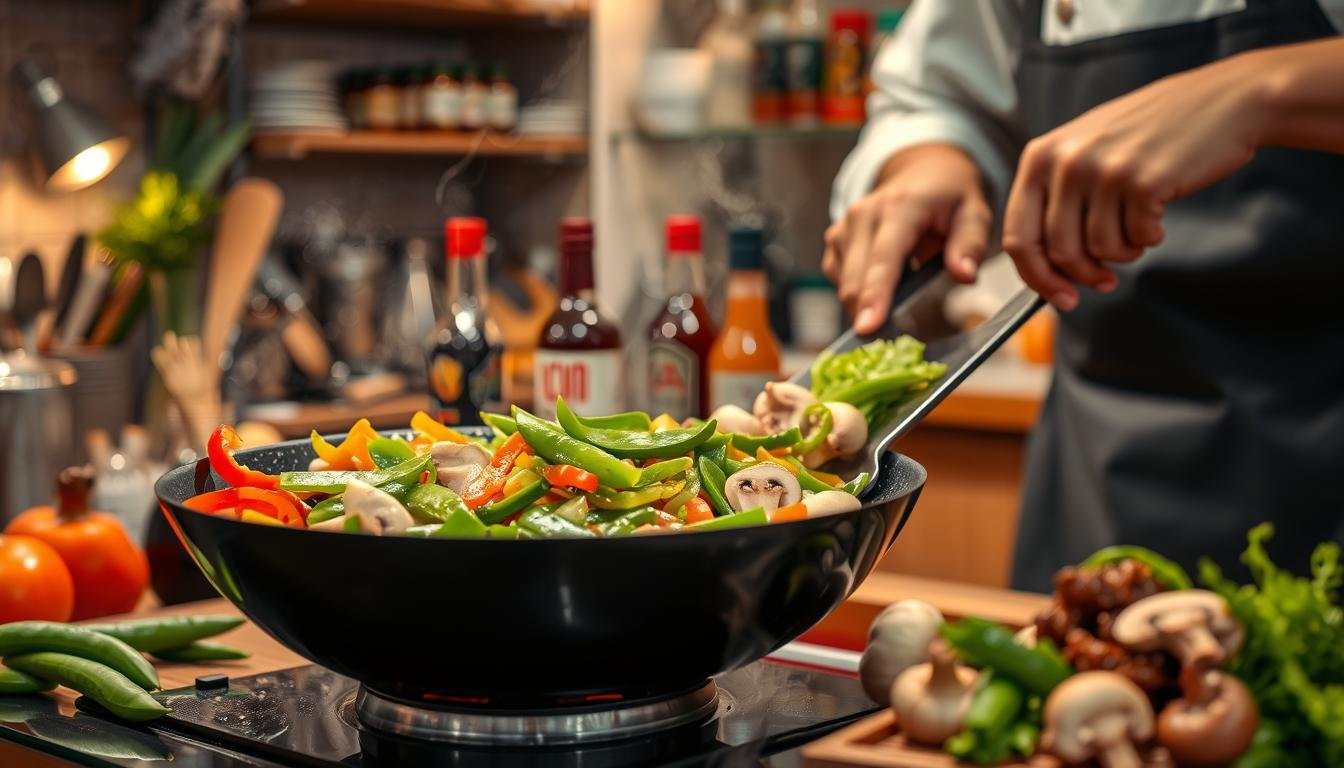
Starting with the right equipment is key to mastering the wok. Your journey into Asian cooking begins with the essential tool in your kitchen. A quality wok can make stir frying both enjoyable and efficient.
Carbon steel woks are the top choice for home cooks. They offer great heat distribution and create the perfect wok hei flavor. Stainless steel and non-stick woks are good for beginners, but carbon steel is preferred by pros.
For mastering the wok, you’ll need a few essential tools. A long-handled wok spatula helps with quick ingredient flipping. A sturdy strainer is key for draining and rinsing. High-heat oils like peanut or avocado oil are essential for top-notch results.
Proper wok maintenance is important. Season your carbon steel wok with oil and heat it until it darkens. This prevents rust and creates a non-stick surface. Store it dry and avoid soap to keep the seasoning.
Setting up your kitchen for efficiency is vital. Prep your ingredients and keep them within reach. Use high heat and have everything ready before cooking. Safety first – wear an apron and have pot holders ready when cooking with the wok.
Mastering Basic Stir Fry Techniques
Want to Cook Delicious Plant-Based Meals From Scratch But Have No Idea Where To Start?
Stir fry cooking techniques are the secret to making restaurant-quality meals at home. The first step is preparation. Before cooking, chop, measure, and have all ingredients ready. This is called mise en place, helping you cook quickly and precisely.
Managing heat is key in stir fry cooking. Your wok or pan must be very hot before adding oil. Chefs use the “hot wok, cold oil” rule to prevent sticking and get a perfect sear. Heat your wok until it smokes, then add a thin layer of oil.
The art of tossing ingredients is vital in stir fry. Use a spatula or quick wrist movements to keep food moving. This prevents burning and ensures even cooking. Add ingredients in order: proteins first, then harder vegetables, and delicate ones last.
Practice is essential in mastering stir fry techniques. Don’t hesitate to try new things and adjust your cooking. With patience, you’ll get the hang of stir frying’s quick, high-heat method.
Best Asian Stir Fry Recipes You Can Master
Explore the world of Asian stir fry recipes in your kitchen. Asian cuisine is full of tasty and simple dishes. They will boost your cooking skills and wow your loved ones.
Begin with Chinese Kung Pao Chicken. It’s spicy, savory, and packed with chicken, peanuts, and veggies in a tangy sauce. The secret is cooking it fast at high heat. This keeps the flavors and texture just right.
Thai food fans should try Pad See Ew. It’s a stir fry with wide rice noodles, chicken or beef, and sweet, slightly charred flavors. You’ll learn to get that perfect wok-kissed taste.
Vietnamese Lemongrass Beef is another great choice. Marinated beef is cooked with lemongrass, making a zesty, aromatic dish. It will take you on a taste trip to Southeast Asia.
These recipes teach you stir fry basics and introduce you to Asian cooking traditions. With practice, you’ll make meals as good as restaurants at home.
Secret Ingredients for Authentic Asian Flavors
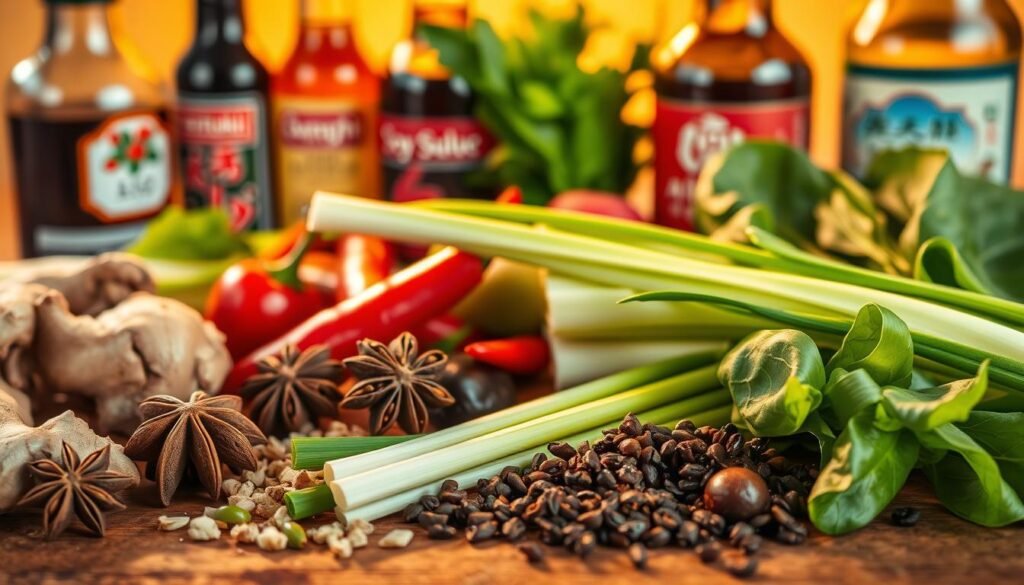
Unlocking authentic Asian flavors begins with key ingredients. These turn simple stir fries into culinary wonders. Your kitchen can become a gateway to rich Asian cuisine with a few essential items.
Soy sauce is at the core of authentic Asian flavors, adding umami and saltiness. Dark soy sauce adds complexity and color, while light soy sauce brightens dishes. Oyster sauce brings a rich, caramelized depth to proteins and vegetables.
Rice wine and Chinese black vinegar are essential for home cooks. They add subtle sweetness and tangy notes, balancing your stir fry. Shrimp paste and Sichuan peppercorns introduce bold, unique flavors that set regional Asian cooking apart.
You don’t need to go far to find these ingredients. Many local supermarkets have international sections with these items. Online retailers also offer easy access to hard-to-find condiments, making your stir fry extraordinary.
Start with small amounts and mix different ingredients to find your unique flavors. Your taste buds will love the journey!
Quick and Easy Weeknight Stir Fry Solutions
Busy weeknights need smart cooking. Stir fry dishes are perfect for fast, tasty meals. They can be made in minutes with a few simple techniques.
Meal prep is essential for quick stir fry meals. Spend a bit of time on the weekend chopping veggies and prepping proteins. Store them in airtight containers to save time during the week. Marinate chicken or tofu in advance for extra flavor without extra work.
Your pantry is a secret for fast stir fry cooking. Keep soy sauce, sesame oil, and pre-minced garlic handy. Frozen veggies are also a time-saver without losing flavor. Mix these with prepped proteins for a quick, healthy meal.
Versatile stir fry sauces are great for weeknights. Make a basic sauce with soy sauce, rice vinegar, and honey. It works with many proteins and veggies. Make a batch on Sunday for flavor throughout the week.
Stir frying is all about high heat and quick cooking. Make sure all ingredients are chopped the same size. Have everything ready before you start. Cook on high heat for the best results. With these tips, you’ll make delicious stir fry meals fast and flavorful.
Vegetarian and Vegan Stir Fry Variations
Want to Cook Delicious Plant-Based Meals From Scratch But Have No Idea Where To Start?
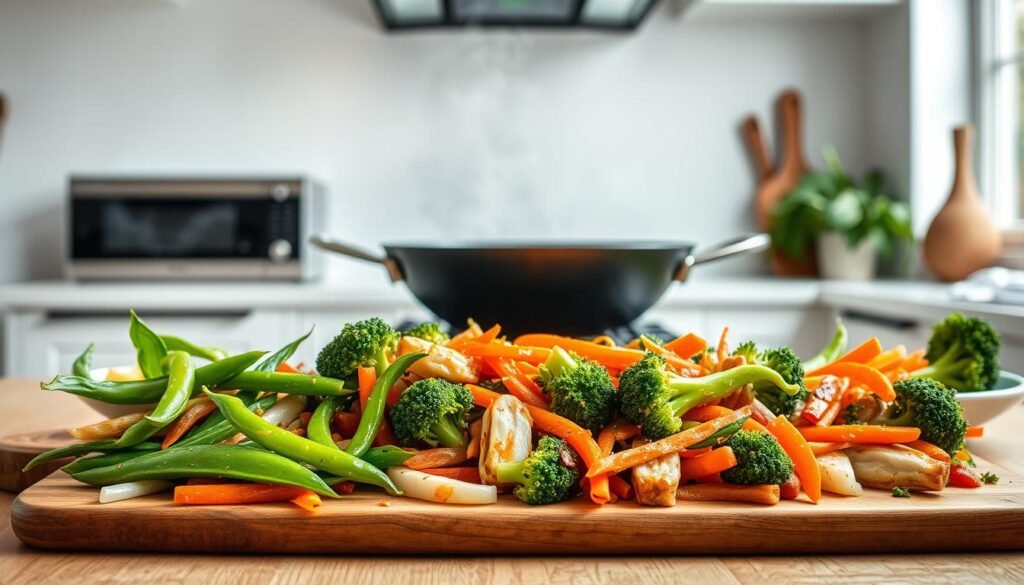
Plant-based eaters, rejoice! Vegetable stir fries open a world of flavors and textures. They’re more than just side dishes. Start your culinary journey by learning to turn simple veggies into gourmet meals.
Tofu is a top choice for vegetarian stir fries. Choose firm or extra-firm tofu for a great texture. Press it dry to get a crispy finish in your wok.
Try tempeh and seitan for more protein in your stir fries. They add a meaty bite and lots of nutrients. Use bok choy, Chinese broccoli, and water spinach to make dishes that pop with Asian flavors.
Mastering vegetable stir fries means quick cooking. Use high heat to keep veggies crisp and colors bright. Cut veggies the same size for even cooking. Add harder veggies first, and save greens for last.
Your plant-based stir fry can be just as tasty as meat-based ones. With the right ingredients and techniques, you’ll make meals that are healthy, tasty, and beautiful.
Essential Stir Fry Sauce Combinations
Making tasty stir fry sauces can take your cooking to the next level. It’s all about finding the right balance of flavors. This will make your stir fry sauces and marinades stand out.
Begin with soy sauce, rice vinegar, and sesame oil. These basics are great for making stir fry sauces that go well with many ingredients. Try adding honey for sweetness, chili paste for spice, or ginger for a zesty flavor.
When making marinades, think about what protein you’re using. Chicken does well with garlic, ginger, and light soy sauce. Beef likes stronger flavors like oyster sauce and black pepper. Seafood benefits from lighter, citrusy sauces that highlight its taste.
Here’s a tip: Make your stir fry sauces ahead of time and keep them in airtight containers. This lets the flavors mix and intensify. With time, you’ll create a sauce that’s a favorite in your kitchen.
Protein Selection and Preparation Guide
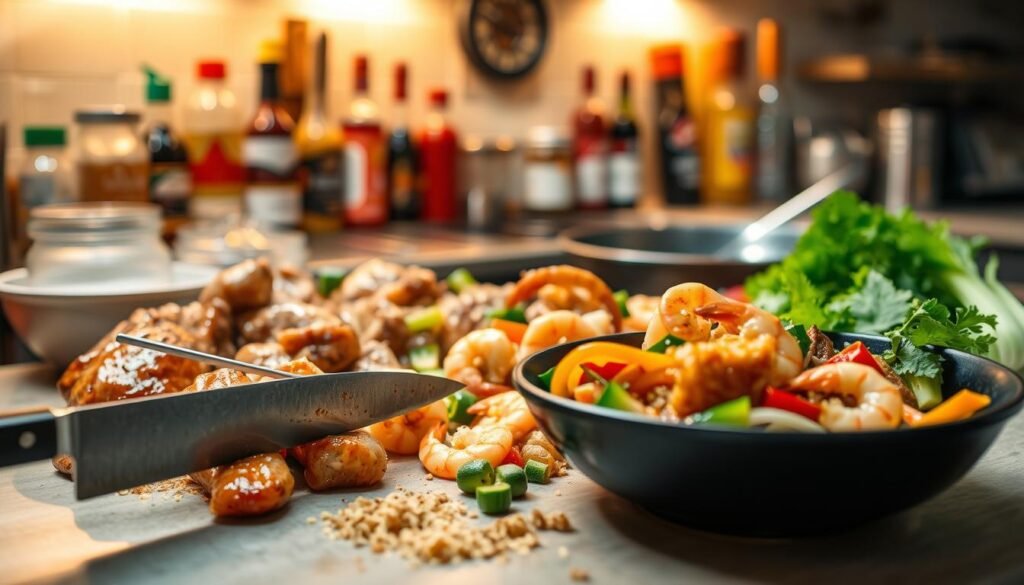
Choosing the right protein is key for tasty protein-packed stir fries. Chicken, beef, and shrimp are top picks for their flavor and texture. Opt for fresh cuts with little fat for the best taste.
How you slice your meat is important. Cut meats against the grain into thin, even pieces, about 1/4 inch thick. This helps them cook fast and stay tender. Slice chicken breast diagonally and beef sirloin into precise cuts.
Marinating your protein can take your stir fries to the next level. Mix soy sauce, garlic, ginger, and a bit of cornstarch for a marinade. Let it sit for 15-30 minutes before cooking to enhance flavor and tenderness.
Remember, food safety is essential when working with raw proteins. Use separate cutting boards, wash your hands well, and cook meats to the right temperature. Chicken should be 165°F, beef 145°F, and shrimp until it’s pink and firm.
Pro tip: Try using tofu or duck for something different in your stir fries. These options can add a fun twist to your meals and keep them exciting.
Seasonal Vegetable Combinations for Stir Fry
Creating healthy stir fry meals means using seasonal produce. Each season brings unique vegetables that can change your cooking. Spring offers tender asparagus, sugar snap peas, and baby spinach for light stir fries.
Summer brings zucchini, bell peppers, and cherry tomatoes. These add vibrant colors and crisp textures. They taste great and are full of nutrients. Make sure to chop them into similar sizes for even cooking.
Fall brings hearty vegetables like butternut squash, Brussels sprouts, and kale. These add depth and warmth to your stir fries. Pair them with chicken or tofu for balanced nutrition.
Winter stir fries feature root vegetables like carrots, parsnips, and sweet potatoes. Their sweetness caramelizes when cooked quickly. Try different seasonal combinations to keep your meals interesting and nutritious.
The secret to great stir fries is using fresh, quality ingredients. Cook them quickly to keep their nutrients and textures. Your seasonal vegetable stir fry is a tasty trip through nature’s changes.
Common Stir Fry Mistakes to Avoid
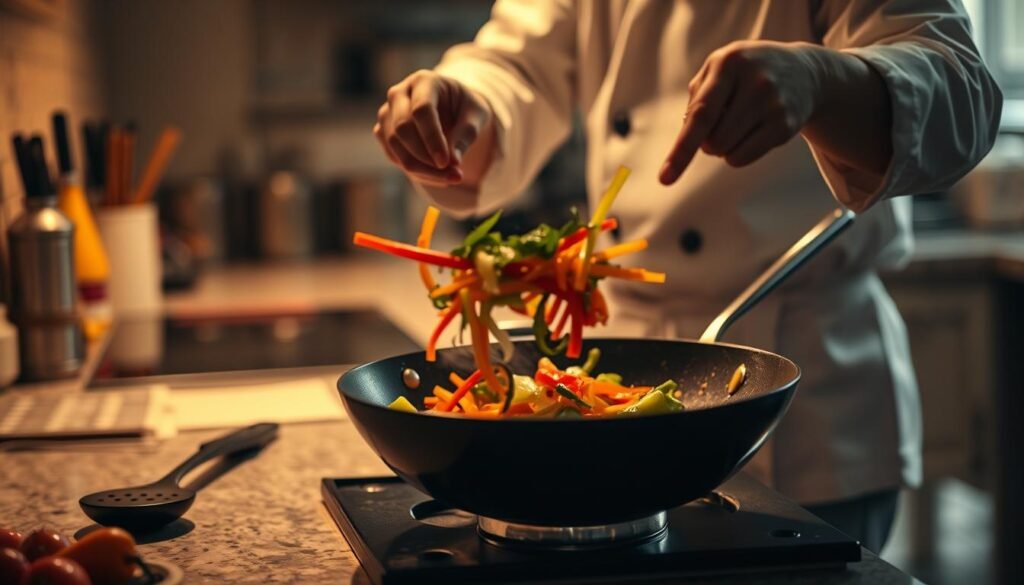
Mastering stir fry cooking techniques takes practice. Many home cooks make simple errors that can ruin an excellent meal. Your wok skills can dramatically improve by understanding and avoiding these common pitfalls.
Overcrowding the wok is a top mistake in stir fry cooking techniques. When you add too many ingredients at once, they steam instead of searing. This leads to soggy vegetables and bland-tasting protein. The key is to cook in small batches, allowing each ingredient to develop a beautiful golden-brown color and crisp texture.
Temperature control is critical in stir fry cooking techniques. Not preheating your wok can cause ingredients to stick and cook unevenly. Start with a hot wok and add oil that can withstand high heat, like peanut or avocado oil. These oils have high smoke points and help create that perfect restaurant-style sear.
Another frequent error is cutting ingredients inconsistently. Uneven chopping means some pieces will overcook while others remain undercooked. Take time to slice vegetables and proteins into uniform, bite-sized pieces. This ensures even cooking and a professional-looking final dish.
Lastly, don’t be afraid to keep your ingredients moving. Constant stirring prevents burning and helps distribute heat evenly. With practice, you’ll develop the confidence to create restaurant-quality stir fry meals right in your own kitchen.
Advanced Wok Techniques for Restaurant-Style Results
Want to make your stir fries as good as those in restaurants? You need to master the wok with advanced techniques. These methods turn simple ingredients into amazing dishes, just like professional chefs do.
Velveting is a key technique for tender meat. It involves coating proteins in a mix of cornstarch and egg white. This creates a moisture seal that keeps meat juicy during high-heat cooking.
Dry-frying is another advanced method that intensifies flavors. It uses little oil and high heat to create a deep caramelization. The trick is to keep moving the ingredients and control the heat well.
Wok-smoking adds a new level to your cooking. It uses tea leaves, rice, or spices to infuse meats and veggies with smoky flavors. This technique needs careful heat control and quick action to avoid burning and achieve great flavor.
Mastering the wok is not just about techniques. It’s about getting to know your cooking tool well. By practicing these methods often, you’ll make your kitchen as good as a restaurant.
Conclusion
You’ve now explored the exciting world of stir fry cooking. You’ve learned how to make restaurant-quality Asian dishes at home. The best Asian stir fry recipes are now within your reach.
Stir frying is more than just a cooking method. It’s a culinary adventure that brings speed, nutrition, and incredible taste to your table. You can now make delicious meals in minutes, turning weeknight dinners into something special.
Remember, mastering the best Asian stir fry recipes takes practice. Each time you cook, you’ll become more confident. You can experiment with different proteins, vegetables, and sauce combinations.
Your culinary journey is about exploration, creativity, and enjoying the process. It’s about creating delectable meals that bring joy to your table.
Keep experimenting and stay curious. Don’t be afraid to put your own spin on traditional recipes. Your kitchen is now a playground for culinary creativity. The world of Asian stir fry is yours to discover and delight in.
Want to Cook Delicious Plant-Based Meals From Scratch But Have No Idea Where To Start?